The key facts
- The EU norm is 12 µg of PAHs; after the French Ministry of Agriculture required testing the sausage whole, readings rose from 6–8 to 120–150 µg
- France did not request an exemption, unlike Ireland, Croatia, Cyprus, Spain, Poland, Portugal, Finland and Sweden
- Producer Maison de l'Andouille has cut output by 30% and is preparing for possible closure
A sausage between tradition and EU rules
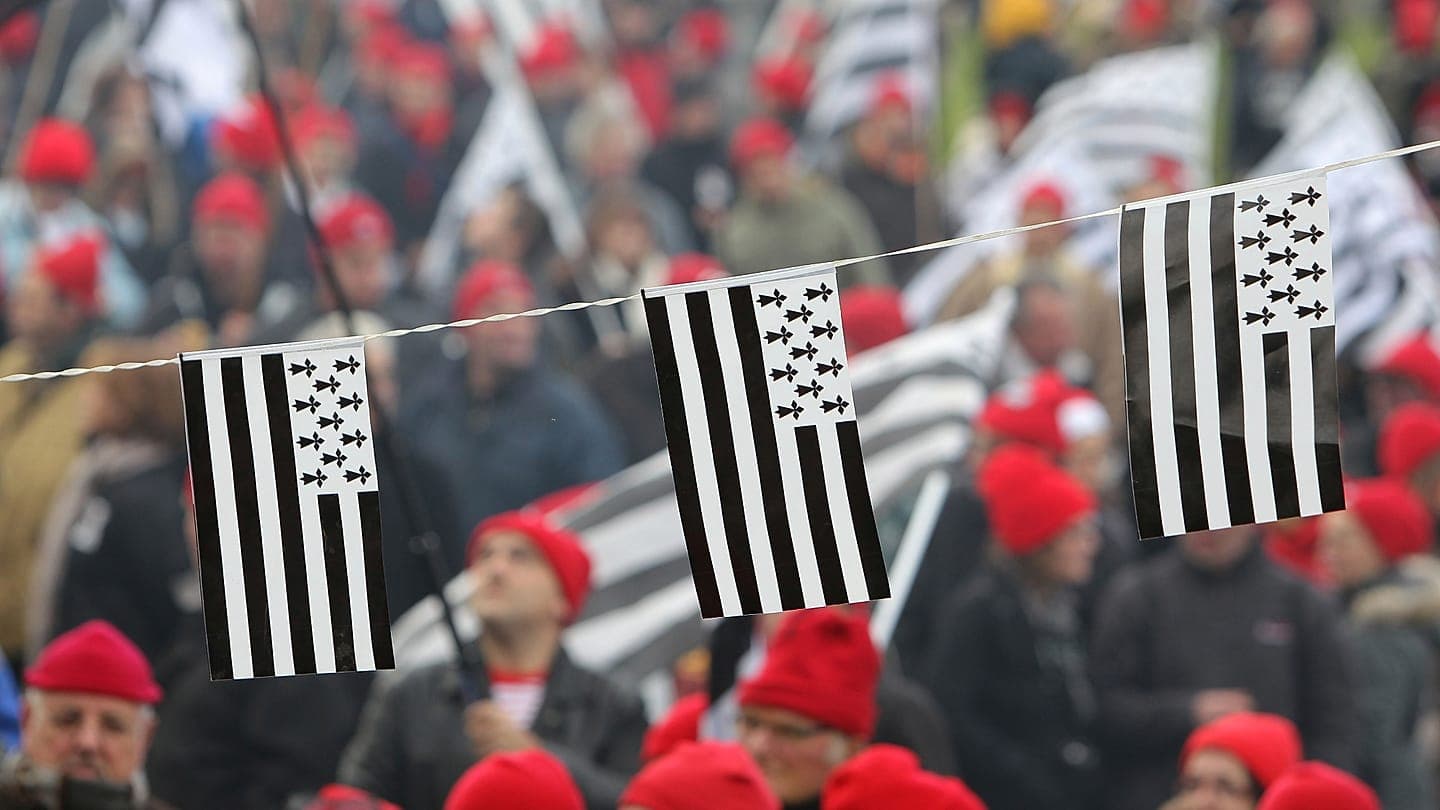
Andouille de Guémené is a smoked pork sausage from the Breton town of Guémené-sur-Scorff, which has been smoked over beechwood for centuries. This method leaves soot on the surface and raises the content of polycyclic aromatic hydrocarbons (PAHs) — potentially carcinogenic compounds. The EU norm limits the level of certain PAHs to 12 micrograms, and the product, whose flavour depends on smoking, is now under threat of a ban.
The producer's fears
Benoît Rivalan, owner of the century-old Maison de l'Andouille, fears the French authorities may shut down his business. According to him, 'we are on their radar', although the company has implemented a technology: during smoking, a protective cover resembling a compression stocking is placed over each sausage, trapping about 80% of the PAHs while preserving the flavour. Rivalan warns that further measures could destroy the traditional wood-fire production method. He has already cut production by 30% and reduced staff: 'If we are forced to close, it is better to lay off 14 people than 19, as before'.
Who is to blame: Brussels or Paris?
The story of Brussels bureaucrats threatening a Breton speciality has gained popularity among Franco-Eurosceptic right-wing forces. But the reality is more complex: EU rules allow countries to request exemptions for traditionally smoked products, and France has never done so, as a European Commission spokesperson confirmed, noting that 'France can still request such an exemption'. Right-wing local councillor Paul Légeril, a knight of the brotherhood of andouille tasters founded in 1994, told Euronews that 'successive French governments refused to apply for an exemption for French smoked products', and that blaming Brussels is convenient, whereas the real problem lies in how Paris applies the regulation.
Dispute over testing methodology
For years, producers tested the sausage without the casing to demonstrate compliance with the norms, but the French Ministry of Agriculture demanded it be tested whole, arguing that consumers eat the casing too. According to Rivalan, 'we went from levels of 6–8 micrograms to 120–150 micrograms of PAHs'. Légeril called such an interpretation 'overly zealous', since soot settles on the casing rather than penetrating the product, and criticised the authorities' refusal to accept a label advising limited consumption of the casing.
Pressure on Paris
President of the Brittany regional council, left-wing politician Loïg Chesnais-Girard, sent the government a letter on 28 September calling for an exemption to be requested from Brussels. Last week, all political parties of the region except the Greens adopted a resolution in support of this appeal. It states that 'food safety must remain an absolute priority, but regulations must take into account the specificities of traditional production methods and the very limited health risks from consuming such a product'. Socialist senator Simon Uzena told Euronews: 'It is perfectly obvious: France has not done its job regarding smoked andouille. It has not carried the voice of these regions'.
Other countries already have exemptions
Exemptions for traditionally smoked meat products, which cannot be altered without a substantial loss of flavour, have already been granted to Ireland, Croatia, Cyprus, Spain, Poland and Portugal; Finland and Sweden obtained relaxations for products smoked over smouldering wood or other plant material. The EU regulation notes that without such exemptions 'traditionally smoked products would disappear from the market, leading to the closure of many small and medium-sized enterprises'. The future of andouille de Guémené remains uncertain and, it seems, depends not so much on Brussels as on the willingness of the French government to request the exemption already provided for by EU law.