The key facts
- Prime Minister Sébastien Lecornu imposed partial curfews in Paris, Lyon, Lille and Nice while Macron is in the Persian Gulf
- Politicians from right to left, including former prime ministers Philippe and Attal, say Macron has lost authority six months before the election
- Trump suggested that 'someone else' should negotiate on behalf of Ukraine; a one-year-old child was killed in a drone strike in the Kharkiv region
Unrest in France and political crisis
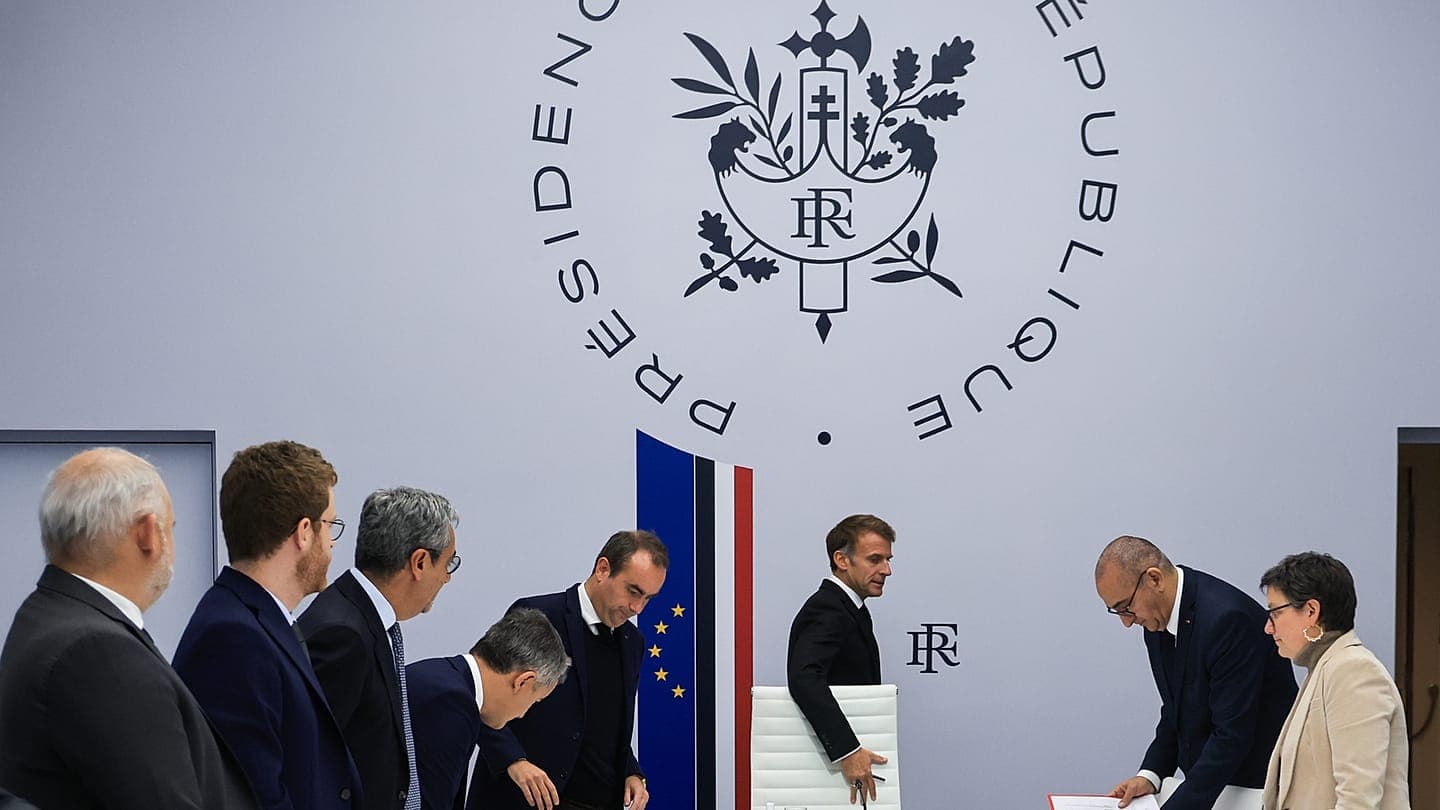
France is recovering from unprecedented violence over the past weekend, which, according to Euronews, shook the country. Questions are arising about political responsibility and how the events will affect the presidential election, which will take place in six months. President Emmanuel Macron, who is preparing to leave in the spring, is being criticized for his decision to travel to the Persian Gulf — the Élysée Palace explains the trip as necessary to secure energy supplies amid rising prices. According to the outlet, even senior members of his government acknowledge shortcomings in the authorities' response.
Criticism from all sides
Potential presidential candidates across the political spectrum claim that Macron has lost authority and that his response was belated — including his former prime ministers Édouard Philippe and Gabriel Attal. National Rally leader Jordan Bardella said the government is 'collapsing under its own weight'. The left expressed a similar position: Socialist candidate Raphaël Glucksmann said he 'had the feeling that France was dissolving, that the Republic was falling apart, that the state no longer exists'.
Lecornu leads the restoration of order
While Macron is in the Persian Gulf, Prime Minister Sébastien Lecornu is leading efforts to restore public order from Paris. He announced partial curfews, which came into force the previous evening in Paris, Lyon, Lille and Nice. The unrest, which also spread to Italy and Belgium, affected the European Parliament's plenary session in Strasbourg: the previous evening MEPs held emergency debates. The European Trade Union Confederation announced a demonstration outside the parliament building in the morning.
Trump criticizes Zelensky amid new strikes on Ukraine
US President Donald Trump criticized Ukrainian leader Volodymyr Zelensky, saying: 'It's time for someone else to negotiate on behalf of Ukraine,' adding that Russia 'was essentially fine on Ukraine, they weren't doing much.' Zelensky, meanwhile, published a photograph of one-year-old Angelina in a stroller — she was killed in a Russian drone strike on a park near a café in the Kharkiv region. Her mother Inna later died in hospital; an 11-year-old girl was also killed and 14 people were wounded, including six children, Zelensky said, calling what happened 'pure cruelty' and urging Washington to maintain sanctions and strengthen air defense assistance. Trump also floated a trilateral meeting with Vladimir Putin and Xi Jinping in China next month on the sidelines of the APEC summit in Shenzhen.
Ukraine talks: meeting in Norway
According to Reuters, citing two official sources, US special envoy Steve Witkoff will travel to Norway this week for talks on ending the war. Zelensky, Norwegian Prime Minister Jonas Gahr Støre, representatives of the 'E4' (the UK, France, Germany, Poland), the EU and NATO are expected to take part. Special envoy Jared Kushner will join online due to illness. According to US media reports, the talks in Oslo will continue discussions in Miami, where Zelensky committed to studying the peace proposals of the American negotiators. The meeting resulted from intensified technical contacts between the US, Ukraine and the Europeans in recent weeks.
Other EU news
The European Commission said it remains an 'extremely competitive issuer' in the bond market: the yield on 10-year EU bonds rose from 2.8% in January to 3.44% in September, which is lower than in most European countries. Brussels is preparing to help close Ukraine's €70 billion funding gap — likely through joint debt or the use of frozen Russian assets. The EU will also present an Arctic strategy with a plan for a protected undersea cable from Greenland to Europe, with the prospect of extending it via Canada to Japan and South Korea. Slovakia and Hungary called on Brussels to soften the rules on phasing out Russian gas, citing their lack of access to the sea. Albanian Prime Minister Edi Rama accused participants of anti-government protests of crossing a 'red line' after clashes with police. In addition, MEPs included the International Criminal Court and its staff, Tanzanian activist Tundu Lissu, and Taraneh and Romina Rahimi, representing those persecuted by the Iranian regime, in the shortlist for the Sakharov Prize.