The key facts
- The first-ever trilateral meeting of Trump, Xi and Putin will take place in Shenzhen on the sidelines of the APEC summit; bilateral talks and a working lunch between Trump and Xi are scheduled beforehand
- Trump is seeking an extension of the agreement on stable rare earth supplies and the creation of an AI safety communication channel
- The trilateral portion is devoted to nuclear disarmament and the war in Iran; Trump intends to persuade Putin and Xi to pressure Tehran
First-Ever Trilateral Meeting on the Sidelines of APEC
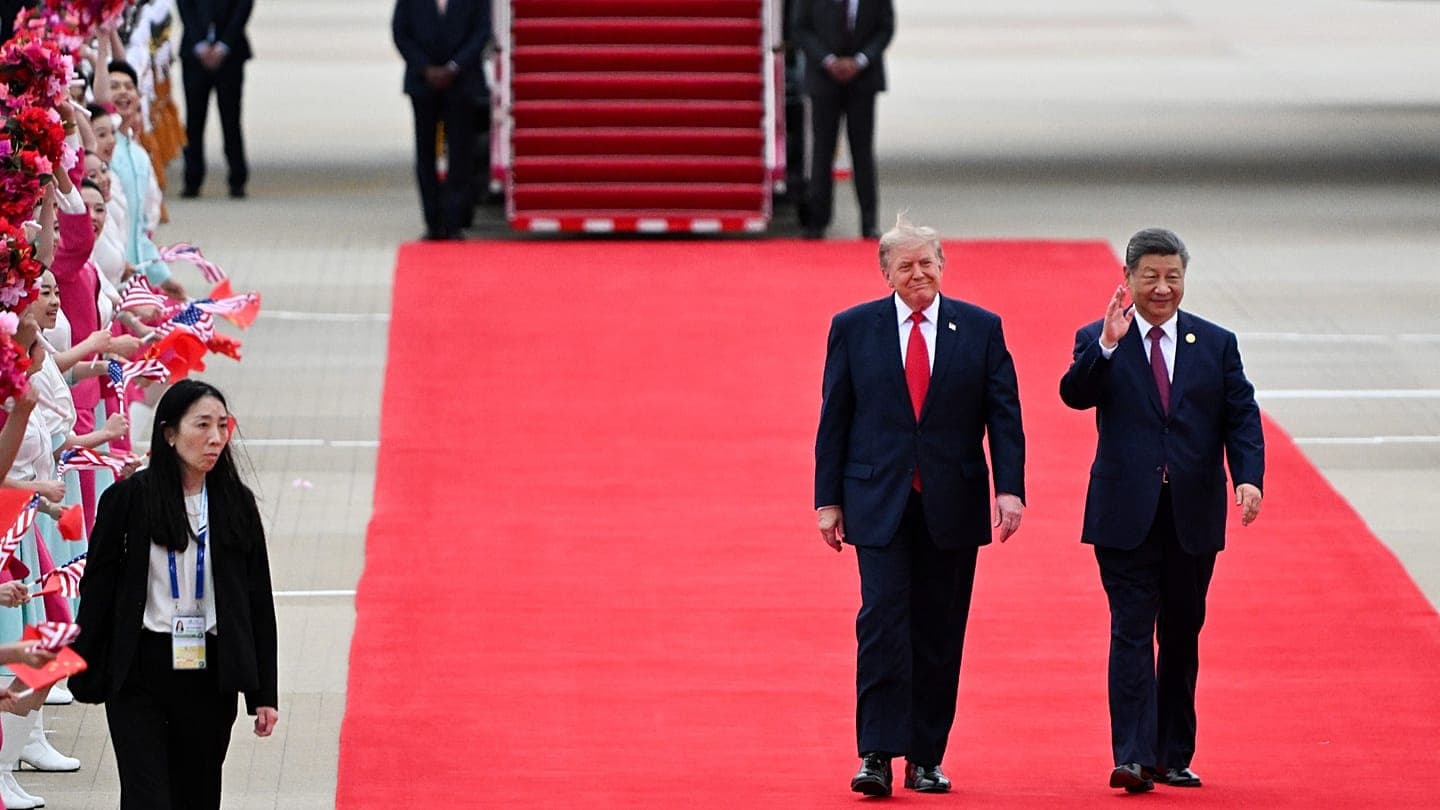
US President Donald Trump will hold the first-ever trilateral meeting with Chinese leader Xi Jinping and Russian President Vladimir Putin on Thursday. The venue chosen is Shenzhen — China's hub of technological innovation, where the Asia-Pacific Economic Cooperation (APEC) summit events are taking place. Before the trilateral talks, Trump will hold a bilateral meeting and a working lunch with Xi Jinping.
Rare Earths and AI on the Bilateral Agenda
Trump's main goal in the meeting with Xi is to extend the agreement on stable and uninterrupted supplies of rare earth metals to the US. These materials are critically important for American defense systems. Artificial intelligence will be a separate topic: Trump seeks to finalize an AI safety communication channel, the foundation of which was laid at the September summit in Washington.
Expert: Concessions Benefit China
Jonathan Wachtel, a foreign policy analyst who previously worked at the State Department and consults for the UN, believes that extending the rare earth deal would serve China's interests. 'The Chinese should show flexibility on rare earths. There is no point in antagonizing the US so much that America continues to redouble its efforts and build its own supply chain,' he said. According to him, the US has already begun developing its own critical minerals production, and if the deal is extended there will be 'some room for maneuver' taking both sides' interests into account.
AI Rivalry Clouds the Talks
The Trump administration has made clear that talks on semiconductor and chip exports are not on the meeting agenda. Nevertheless, the AI race will inevitably form the backdrop of the bilateral talks — including because of the scandal surrounding former Nvidia head Jensen Huang and an alleged Chinese spy. The White House said Trump will not raise the Huang topic in trade talks, but recent events have created an awkward atmosphere. Wachtel warns that behind the stated goal of establishing dialogue lies fierce rivalry: 'We are two nations competing for primacy in this AI race. At the moment, the US has a clear advantage in certain areas.' He is cautious about substantive cooperation on AI safety amid claims that China is able to place its agents alongside American tech company top executives.
Nuclear Disarmament and the War in Iran
The trilateral meeting will focus on reducing nuclear weapons and the war in Iran. Trump wants to bring China into nuclear arms control talks, but Beijing has previously resisted this, largely due to the modest size of its arsenal. As China's nuclear arsenal grows rapidly, Trump is pushing Xi, in the words of one senior official, to 'sit at the adults' table' and recognize China's growing responsibility in nuclear matters. Wachtel suggests the effort could end either as a success in the spirit of Soviet-American agreements or as a failure: China, in his view, does not want to join now, since it seeks to build up its military power and be perceived as a larger superpower. On the war in Iran, Trump told journalists that he intends to call on Putin and Xi to use their leverage over Tehran to 'end this, finish it.' China provides Iran with significant economic support, while Russia maintains oil ties with Tehran. Wachtel notes that ending Iran's nuclear development serves the interests of all three countries: 'For China and Russia, it really makes no sense to tolerate the idea of a nuclear Iran.'
A 'Yalta Photograph': The Meeting Does Not Mean Unity
Wachtel, who has helped organize numerous international meetings, believes the talks can be productive if they do not boil down to a photo op. 'This meeting resembles the famous Yalta photograph of Stalin, Churchill and Roosevelt. It was wonderful as an attempt to figure out how to end World War II. But it was definitely not a picture capturing a rosy future for decades to come,' the analyst said. According to him, the leaders' meeting itself does not mean their unity: 'There is tension, there is competition.'