The key facts
- EU growth in 2026 raised from 1.1% to 1.4%, eurozone from 0.9% to 1.2%
- Inflation in the EU: 3.3% in 2026, 3.2% in 2027, returning to 2.3% only in 2028
- The EU budget deficit will rise from 3.1% of GDP in 2025 to 3.6% in 2026
EU economy weathered the shock better than expected
The European Commission published its autumn forecast on Tuesday, according to which the EU economy will grow by 1.4% in 2026, up from the 1.1% predicted in May,while the eurozone will grow by 1.2% instead of the previous 0.9%. As Euronews reports, the bloc weathered the energy shock caused by the war with Iran better than expected in the spring. Exports did the main work: European companies sell equipment for power generation, cooling, and chips for AI data centers and power grids around the world. The Turkish agency Anadolu adds that growth was supported by the recovery in consumption and global investment in AI and electrification infrastructure.
Inflation will stay high for longer
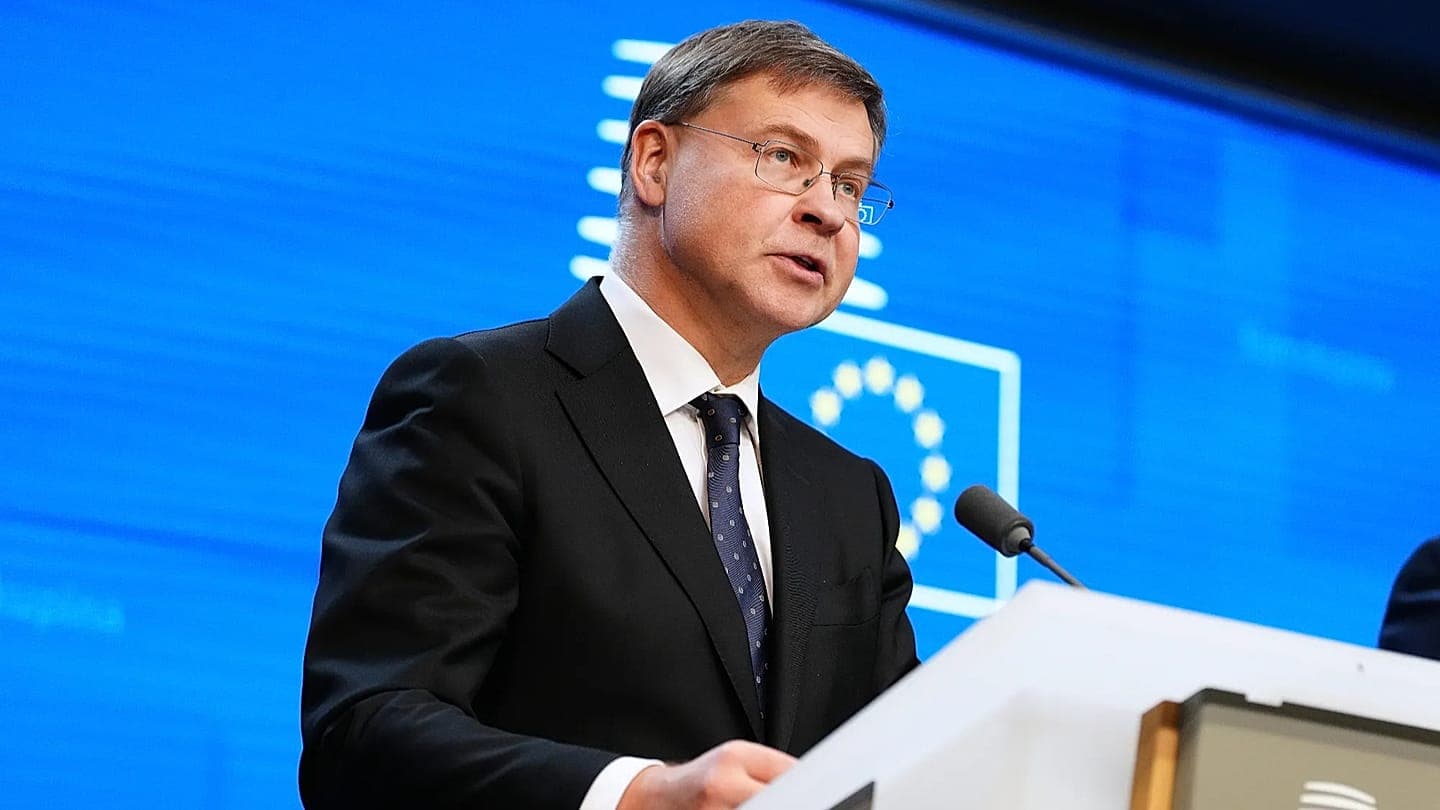
The flip side of resilience is inflation. In October, inflation in the eurozone reached 4% — a three-year high,according to a preliminary Eurostat estimate (the final figure will be published on Wednesday). The Commission expects inflation in the EU to average 3.3% this year and 3.2% in 2027 — versus the 2.4% forecast in May for next year — and to return to 2.3% only by 2028. A peak above 4% is forecast around the turn of 2026 and 2027. Petrol and diesel prices should gradually decline, but gas and electricity bills for households will likely keep rising, as wholesale prices reach consumers with a delay. Food inflation will rise from just above 2% to about 3% in 2027 after the summer heat and drought that hit harvests and the rising cost of fertilizers. Economy Commissioner Valdis Dombrovskis stressed that poor households suffer the most, since food and energy take up a large share of their budgets.
The inflation forecast may turn out to be too high
The Commission itself admits that its inflation forecast is already outdated. According to the report, since its cut-off date of October 29, oil and gas prices have fallen by about 20% after the US midterm elections,which reduced fears of new strikes on Iran. If this persists, inflation next year could be roughly a quarter of a percentage point below the forecast. Monetary policy is also putting pressure on prices: the European Central Bank has already raised rates twice this year,and markets expect further moves, which weighs on housing construction and demand for credit.
Budgets under strain, labor market holding steady
EU public finances are under growing pressure: the aggregate budget deficit will rise from 3.1% of GDP last year to 3.6% this year due to growing defense spending, interest payments, and support for households and businesses suffering from high energy bills. Interest payments will absorb 2.4% of GDP by 2028 — the highest in more than a decade — while public debt will rise from 82.6% to 85.6% of GDP. Dombrovskis warned that «we have reached a critical moment for fiscal policy» and urged governments to stick to cautious budgets under EU rules, which the Commission will assess next week. Meanwhile, the labor market remains resilient: the EU will add about 800,000 jobs, and unemployment stays just above 6% — near a historic low, although it is creeping up among young people. Real incomes after inflation will grow by only 0.6% this year and next, versus 1.7% in 2025, and in eight countries, including Spain and Italy, wages will fall in real terms this year.
Who is growing faster and who is lagging behind
Among the four largest eurozone economies, Spain is growing fastest this year — at 2.6%, followed by Germany at 1.3% and Italy at 1.0%. France is lagging with 0.4%, a deficit of 5.5% of GDP, and a forecast of unemployment rising to 9.8% by 2028. Anadolu separately gives a forecast for Turkey: growth of 2.8% in 2026, accelerating to 3.9% by 2028, with inflation at 31.2% this year, falling to 19.5% by 2028; consumption there is held back by high energy prices and tight monetary policy, while tourism and exports have suffered from regional instability.