The key facts
- The project to modernize 95 pumping stations in five regions ($37 million) has been moved from VEB.RF to a new lender at 4% interest per annum
- The minister did not name the new bank and did not disclose the final terms of the loan
- In parallel, a project for 110 stations with the EBRD worth up to $250 million is being discussed
What happened
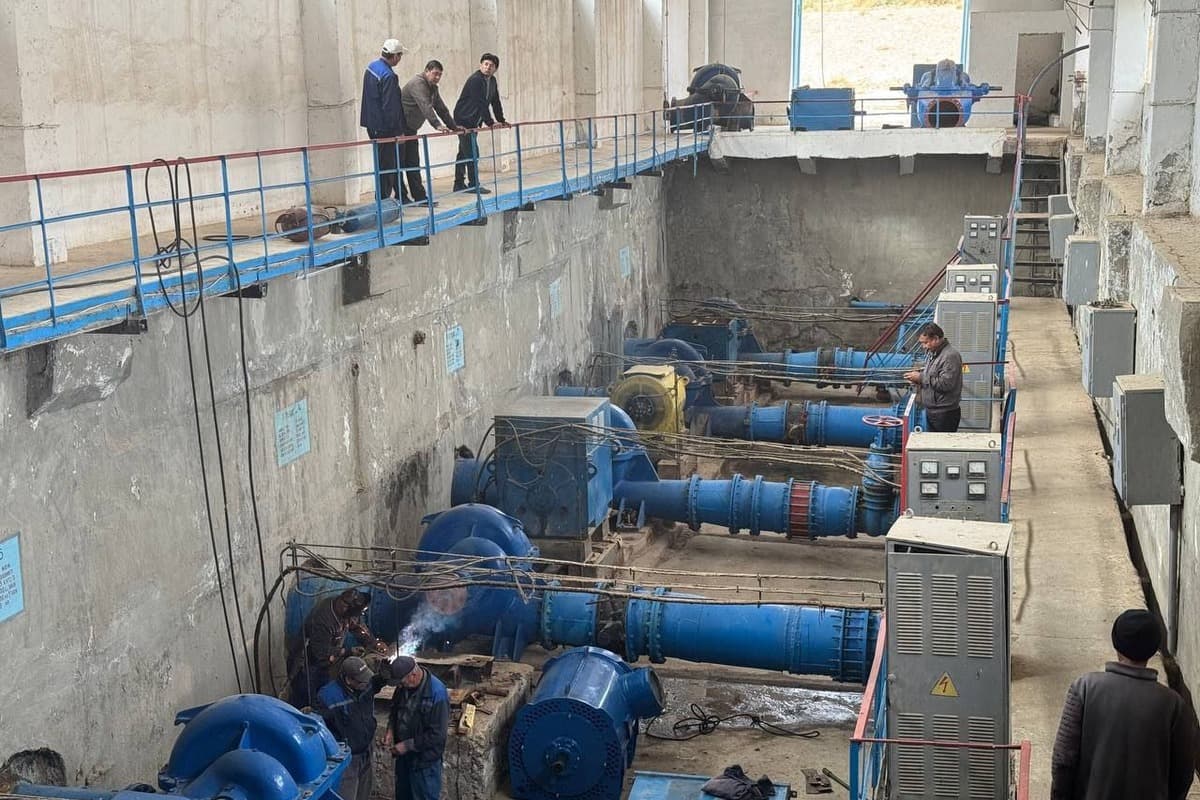
Uzbekistan has abandoned the previous financing scheme for the modernization of 95 pumping stations due to sanctions against Russia and the rising cost of loans. This was announced on November 11 by Water Management Minister Shavkat Khamraev during a 'government hour' in the Legislative Chamber of the Oliy Majlis. The occasion was a question from deputy Imomnazar Tursunov of the Uzbekistan People's Democratic Party, who drew attention to delays in the implementation of the ministry's investment projects: according to the presented data, not a single sum of the $37 million project to modernize 95 pumping stations has been spent.
New financing scheme
The minister explained that, due to sanctions against Russia and rising interest rates, the $37 million will be raised not from a Russian bank but from a new one — the loan is issued at 4% interest per annum. The project's implementation is being postponed to 2027. Khamraev did not specify the name of the new bank, the final loan amount, its repayment period, or other financing terms.
Project history: from VEB.RF to Eurasian banks
The project was originally planned to be financed with the participation of the Russian bank VEB.RF. On July 29, 2021, President Shavkat Mirziyoyev signed a decree on the modernization of pumping stations in the Bukhara, Navoi, Kashkadarya, Samarkand and Surkhandarya regions: three groups of facilities (29, 24 and 42 stations) with a total cost of 213.5 million euros, of which 146 million euros were to be provided as a VEB.RF loan at 2% interest per annum with a 10-year repayment period. In September 2021, the loan agreement was signed. The modernization was expected to improve water supply to 355 thousand hectares of agricultural land and bring another 40 thousand hectares back into use; the installation of 455 energy-efficient pumping units with savings of 40 million kWh per year was envisaged.
How sanctions changed the project's fate
On February 22, 2022, the US Treasury imposed blocking sanctions on VEB.RF, restricting its international operations. Already on December 1, 2022, the President of Uzbekistan signed a decree that declared void the 2021 decision on the project with VEB.RF — citing the need to improve the management of foreign investment projects in water management. In June 2026, the water management ministry signed a memorandum on preparing a project to modernize the same 95 stations with the Eurasian Development Bank (Russia's share — 42.3%, Kazakhstan's — 35.2%, Uzbekistan's — 5.6%) and the Eurasian Fund for Stabilization and Development. Now, according to the minister, the lender will be a 'new bank' at 4% interest per annum — its name has not yet been disclosed.
Parallel project with the EBRD
Another project was also discussed at the same session — the modernization of 110 pumping stations with the participation of the European Bank for Reconstruction and Development. In 2025, the EBRD approved a loan of up to $250 million for these purposes. According to the minister, in November 2026 tender procedures were ongoing, and the works are planned to be completed in 2027–2028.
Why this matters
Pumping stations are critically important for irrigation in Uzbekistan: due to the complex terrain and uneven distribution of water resources, water must be supplied to fields in many districts by electric pumps. According to World Bank data, about 2.4 million hectares — 56% of all irrigated land — depend on pumped irrigation. According to the ministry, it operates 1,698 pumping stations with 5,204 units, which consumed 6.4 billion kWh of electricity in 2025 (8.3 billion kWh in 2018); according to the World Bank's estimate, irrigation consumes about 16% of the country's total electricity. Moreover, at the time of the adoption of the water management development concept for 2020–2030, 94% of the stations had already exceeded their standard service life. By 2030, the consumption of state pumping stations is planned to be reduced to 6 billion kWh per year.