
The key facts
- AI-related Asian stocks fell: SK Hynix −7%, Kioxia −7.8%, Advantest −10%
- Brent slipped 0.6% to $95.3, gold fell 0.2% to $3,873 per ounce, and the dollar index hit 103.5 — its highest since April 2025
- This week brings Nvidia's earnings report, Anthropic's IPO, Fed meeting minutes and Trump's meetings at the APEC summit
Nvidia resignation weighs on the tech sector
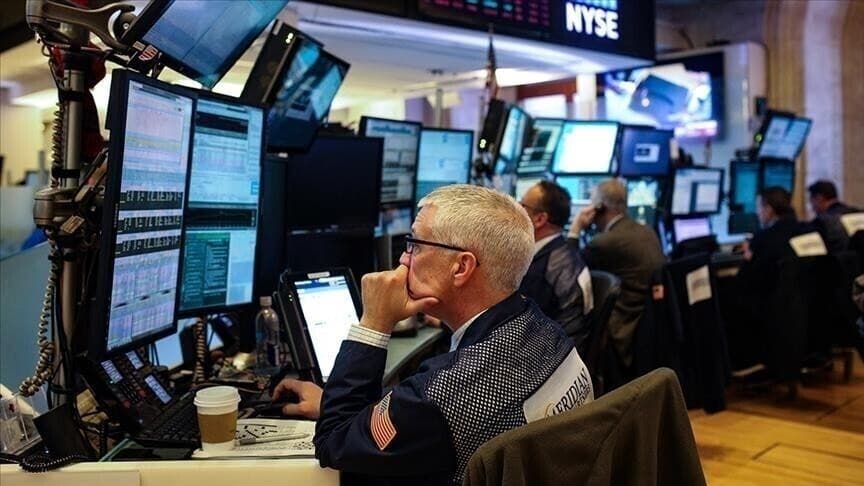
Global markets began the new week mixed amid uncertainty in the technology sector, economic statistics and geopolitical risks, Anadolu reports. The trigger was the resignation of Nvidia CEO Jensen Huang: according to reports that emerged, following a scandal over an alleged extramarital affair, his management team is working on his return. This same week, Nvidia is preparing to release its earnings report, and the sector faces another test — the anticipated initial public offering of Anthropic, the developer of Claude.
Focus on the Fed and economic data
Technology and AI companies opened Monday lower, and investors' attention shifted to upcoming remarks by Federal Reserve Chair Kevin Warsh on the impact of AI on productivity growth, employment and economic growth. His words are expected to clarify the inflation trajectory and possible steps at the Fed's December meeting; the meeting minutes will also be released later this week. US indices began the week on a negative note: earlier, the S&P 500 fell 0.4%, the Nasdaq 0.91%, while the Dow Jones gained 0.1%. The yield on 10-year US Treasury bonds, which jumped to 5.18% on November 6 — a one-month high — stabilized at 5.16%. Gold fell 0.2% to $3,873 per ounce after dropping last week to $3,852 — a one-year low — while the dollar index reached 103.5, its highest level since April 2025.
Europe and Asia: diverging dynamics
European indices opened the week higher, although yields on 10-year German, UK and French bonds moved up amid tech news and geopolitics. According to data published last week, the eurozone grew 0.4% in the third quarter — the pace slowed compared with the previous quarter, although annual growth accelerated from 1.2% to 1.3%; the probability of an ECB rate hike in December remains high. In Asia, by contrast, almost all markets traded in the red except Hong Kong: the Nikkei 225 lost 2.1%, the Kospi 3.4%, the Shanghai Composite 0.5%, while the Hang Seng gained 0.9. AI-related stocks were hit by a selloff on fears that the turmoil at Nvidia could hurt semiconductor demand: SK Hynix fell 7%, Kioxia 7.8%, and Advantest 10%. Japan's economy contracted 0.1% in the third quarter, contrary to expectations, while China's industrial production rose 4.8% year-on-year in October and retail sales 0.4%, both below forecasts.
Geopolitics and commodity markets
Geopolitical tensions were stoked by the US Embassy in Bahrain, which urged citizens to remain highly vigilant due to potential threats from Iran and Yemen's Houthis. Despite rising risks, pressure on oil persists due to growing supply: Brent for January delivery traded at $95.3 per barrel, down 0.6%. Later this week, US President Donald Trump will meet with his Chinese and Russian counterparts at the APEC summit