The key facts
- Gabon's minister Olouna at COP31 in Turkey: after the Paris Agreement, commitments are not being fulfilled in practice
- Gabon's priorities: adaptation, financing for forest protection, partnerships to implement climate plans
- According to UNEP, developing countries need $305 billion a year for adaptation by 2035; they received $28.2–31.7 billion in 2024
Africa Is Waiting for Action 'on the Ground'
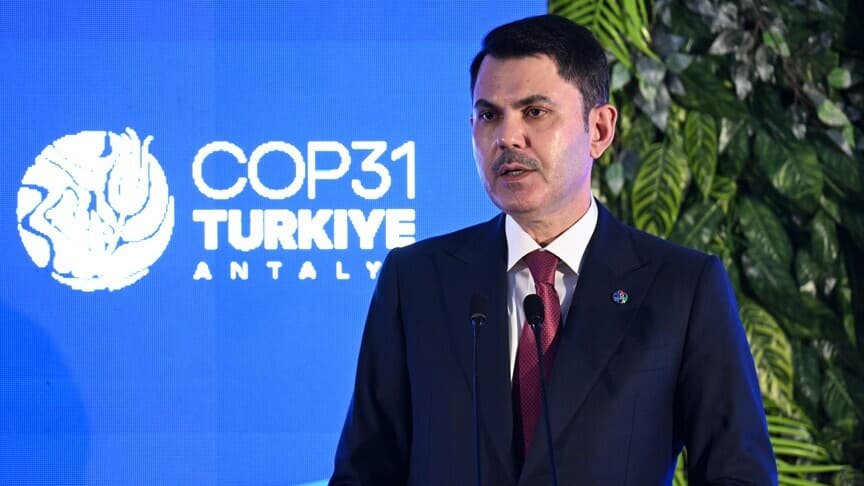
More than a decade after the Paris Agreement, African countries are still waiting for international climate commitments to start delivering results in practice. This statement was made by Gabon's Minister of Environment and Climate Stanislas Steven Mouba Olouna at the COP31 climate summit taking place in Turkey. 'Africa has been speaking and advocating since the Paris Agreement, but we do not see anything happening on the ground,' he said.
Gabon's Priorities and a Call for a Single Voice
The minister named three of Gabon's priorities at the summit: advancing adaptation to climate change, more effective financing of forest protection, and building partnerships capable of putting climate plans into practice. 'We need this COP to also advance the adaptation agenda,' he added. Olouna called on African countries to develop a common position in Antalya and asked the Turkish COP31 presidency to ensure that the continent's priorities are heard: 'We need the African voice to be heard loud and clear. We need to speak with one voice.' According to him, the negotiations in Antalya will set the framework for COP32, which Ethiopia will host next year. Gabon, the minister noted, will support the agenda of the Turkish presidency, highlighting energy and waste management as priorities for African countries, and wants to expand cooperation with Turkey into fisheries and other sectors, building on Turkish investment in infrastructure.
The Scale of the Problem: WMO and UNEP Data
The context of the minister's statements is supported by data from international organizations cited in the report. According to the World Meteorological Organization, Africa is warming faster than the global average: in 2025, extreme weather and climate events affected at least 13 million people on the continent, with floods accounting for more than half of recorded cases. Only 40% of African countries had multi-hazard early warning systems. At a COP31 event on early warning, WMO Secretary-General Celeste Saulo cited Madagascar and Zimbabwe as examples of how forecasts allow governments and humanitarian agencies to act earlier — in particular, to release humanitarian funds before a drought sets in. The UN Environment Programme (UNEP) estimates developing countries' adaptation financing needs at $305 billion annually by 2035, whereas in 2024 they received between $28.2 billion and $31.7 billion in international public financing. Even if the COP30 goal of tripling this amount by 2035 is achieved, UNEP estimates this would cover less than a third of projected needs.
Gabon Seeks Market-Based Financing for Forests
A separate topic is financing for forest conservation. According to the minister, forests cover 88% of Gabon's territory, and the country, which has kept deforestation low for decades, is looking for more effective ways to finance their protection. In 2021, Gabon received the first payment of $17 million under a $150 million agreement with the Central African Forest Initiative after independent experts confirmed reductions in emissions from deforestation and forest degradation. In August, Gabon launched a separate conservation partnership project, Gabon Infini, which aims to attract up to $200 million over ten years. The minister said Gabon wants to complement philanthropic financing and payments for verified results with market mechanisms: 'We need the market to recognize the role our forest plays in order to mobilize additional financing.' He also noted that Gabon's national climate plan requires significant investment in energy production, reducing gas flaring in the oil industry, and developing sectors such as ecotourism, and he called for partnerships capable of 'bringing innovation to the ground.'