The key facts
- According to the 2024 JIM study, 91% of German teenagers aged 12–19 use at least one AI application, and 74% use it for homework and studying
- A September PISA report noted that schoolchildren who use AI chatbots score lower on average in science; German 15-year-olds posted the worst result in the 25-year history of the study
- New York Mayor Zohran Mamdani banned AI in public schools through grade 8 for the 2026 and 2027 school years; in Germany, the Standing Conference of Ministers of Education (KMK) has limited itself to general formulations since 2024
Schoolchildren who no longer think for themselves
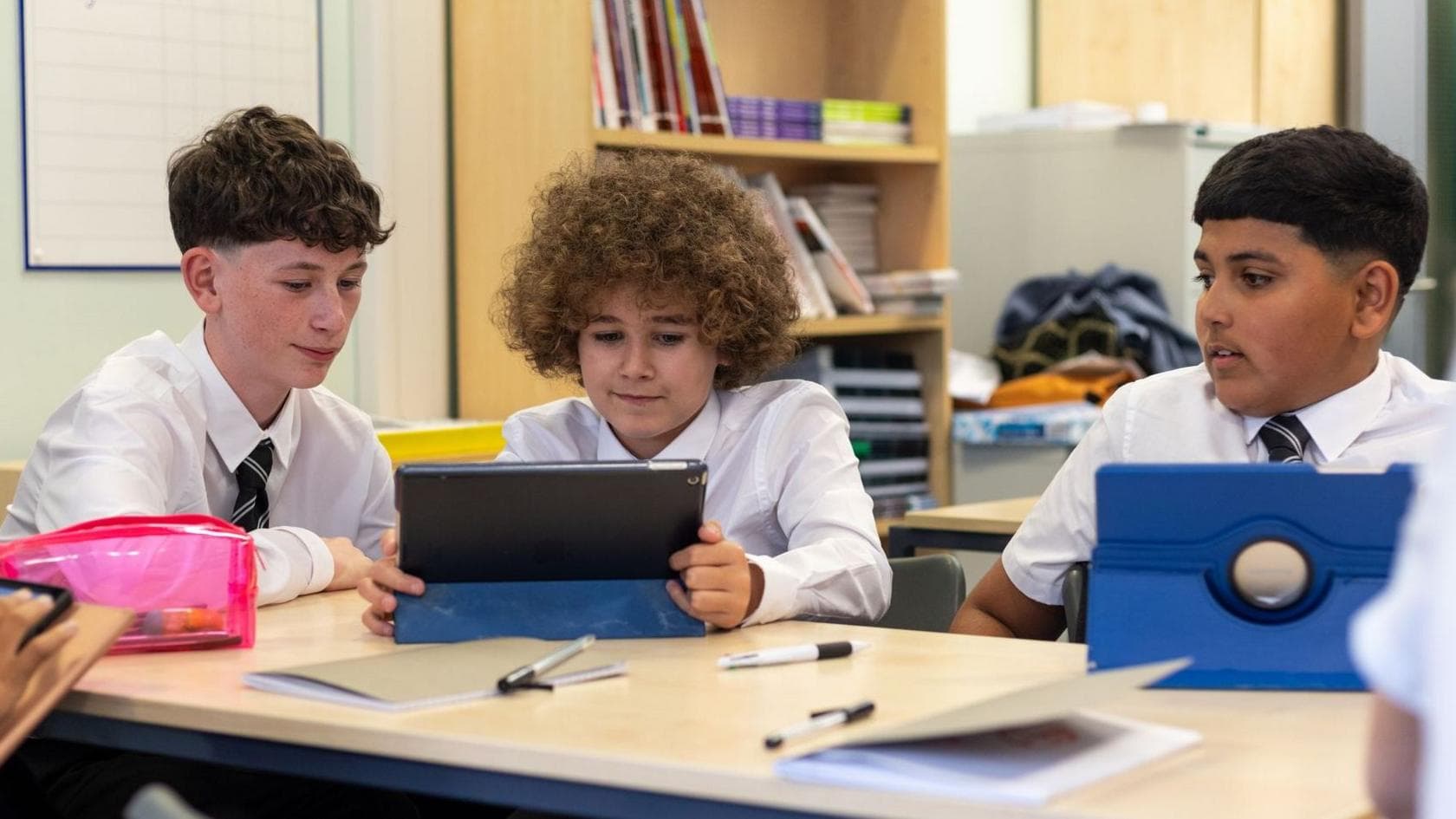
Fifteen-year-old Jakob, a student at a German Gymnasium, has been using AI tools together with his classmates for the past two and a half years. 'Today I had a French test, and yesterday I asked ChatGPT to explain a lot of topics to me again,' he told DW, asking not to be named: he does not want to publicly admit to using AI for homework. According to him, in math, German, English, chemistry, and even physics, the solution or the path to it is available 'in one click.' Jakob claims he turned to AI 'only when I was really stuck,' and admits that when AI does all the work, it becomes a problem — 'students who get good grades usually don't do that.'
'Cognitive outsourcing' and falling results
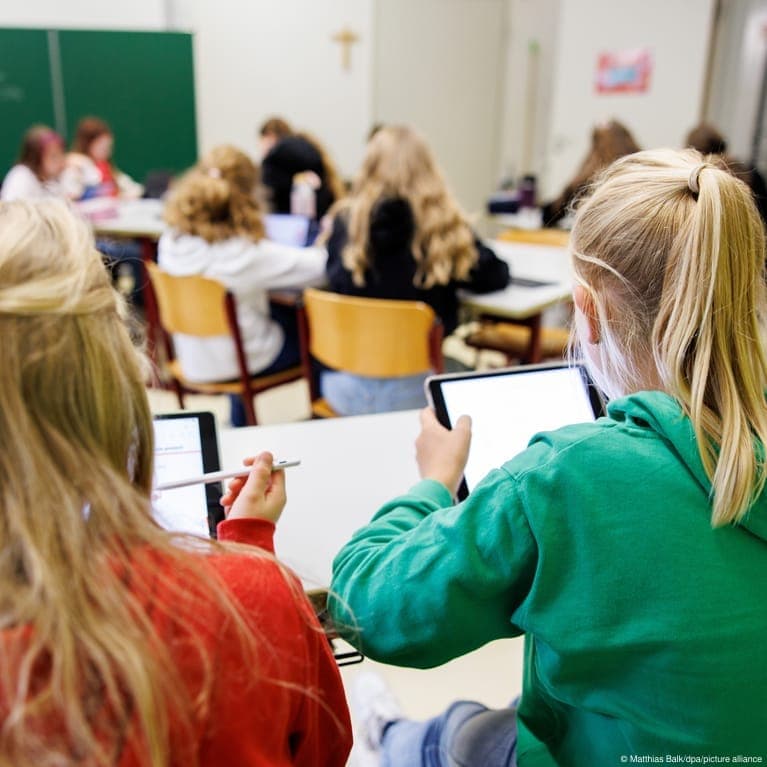
In science, this is called 'cognitive outsourcing': thinking is shifted onto a device. The difference is that a calculator or a notebook takes over only one or two steps, whereas a large language model is capable of carrying out the entire solution process from start to finish. Franziska Müller (name changed), a German teacher with many years of experience, complains that some of her students 'can no longer think independently': in class they type questions into tablets and phones, and when called to the board they read out AI-prepared answers, hoping no one will notice. In her observation, students understand texts worse, 'because they read less and have AI retell almost everything.'
What the research says
Several studies come to similar conclusions. In the September report of PISA — the largest international comparative study of 15-year-old schoolchildren, involving more than 90 countries — OECD Director for Education Andreas Schleicher wrote in October: 'Students who report using AI chatbots score lower on average in science than those who do not use AI' — including the use of AI for retelling texts, preliminary research on a new topic, and drafts of written assignments. This year, German 15-year-olds posted the worst PISA results in the 25-year history of the study. Schleicher explained: 'Just as we do not become fitter by watching sports but by doing it ourselves, learning does not come from consuming content but requires productive cognitive engagement of the mind with new material.' A study by the American think tank Brookings argues that the risks of AI in education outweigh the benefits: students lose 'fundamental cognitive and durable skills,' as well as critical thinking, memory, perseverance, and independence of judgment.
A ban in New York and cautious recommendations in Germany
New York Mayor Zohran Mamdani banned the use of AI in public schools through grade 8 (roughly ages 14–15) for the 2026 and 2027 school years. Not everyone considers this the right path. Julian Hinn, a German teacher who teaches teenagers aged 15–18, notes that students can still use AI applications on their phones, and 'anyone who thinks they won't use it at home is ignoring reality.' The German annual JIM study on teenagers' media use confirms the scale: 91% of the surveyed 12–19-year-olds use at least one AI application, and 74% use it for homework and studying. The most recent such study is dated 2024, so the figures may be even higher. Education in Germany is the responsibility of the federal states, but the Standing Conference of Ministers of Education (KMK) has been issuing statements on the use of AI since 2024 — though rather vague ones: schoolchildren should merely be 'included' in critical, reflective, and responsible interaction with AI.
Teachers look for balance
The teachers themselves acknowledge the power of AI. 'AI simply explains things far better than textbooks,' says Jakob. Hinn agrees: 'AI can respond far better to students' language and needs.' Therefore, he proposes integrating AI into lessons from grade 10 (about 15–16 years old), but not earlier, while basic skills are being formed, and in the upper grades teaching students to critically evaluate the quality of AI solutions. Müller has also partially integrated AI into lessons for her senior students, but at certain stages she bans it completely so that students think for themselves. Both teachers emphasize personal autonomy: AI may not be used in exams, and it is precisely there that it becomes clear whether a student is capable of solving tasks independently. Müller recalls a student who, after a poor exam, admitted he was upset: 'He felt that, because of AI, he simply could no longer think on his own.'
The Matthew effect: AI amplifies inequality
A separate problem is inequality. According to the Brookings study, students with basic skills can use AI to deepen their knowledge and progress faster, while children with gaps adopt AI's mistakes, delegate their thinking, and fall even further behind. PISA also notes that children from more affluent families often start with an advantage, and AI can widen this gap. This is called the Matthew effect — after the Bible verse Matthew 25:29: early success in learning leads to better progress in the future, while early difficulties lead to growing lag. While Germany limits itself to general recommendations and concrete bans like New York's remain the exception, the question of exactly how schools will regulate AI remains open.