The key facts
- The Conservatives promise to stop on-screen exams and cap secondary school pupils' screen time at two hours a day
- The plans are based on a letter from more than 150 clinicians about the harm of screen time in schools
- The Department for Education said it will publish screen guidance for children aged 5–18 in the new year
The Conservatives' pledges
The UK Conservative Party has pledged that, if it returns to power, it will halt the rollout of on-screen exams and reduce the amount of coursework in school assessments — in its words, so that pupils do not become 'overly dependent on generative AI platforms'. As BBC News reports, the party also intends to draw up guidance under which laptops and tablets would not be 'the default' in classrooms. Shadow Education Secretary Laura Trott cited recent warnings from doctors that excessive screen time can harm children's health, adding that 'everything in schools must be safe for children and raise standards'.
Details of the plan
According to the announcement made on Sunday, secondary school pupils' screen time would be capped at no more than two hours a day, while primary schools would be required to use screens to a minimum — for example, only in computing lessons. The Conservatives also proposed redirecting £900 million, which they claim the government spends on educational technology, into a £250 million fund to buy new textbooks. The Department for Education countered that schools themselves decide how much to spend on educational technology (including not only screens but also, for example, information management systems) from their own budgets: 'Schools themselves decide how to use funding in the interests of pupils'.
Context: exams and health
The overwhelming majority of exams in the UK today are taken on paper, in writing. Under the previous government, the regulator Ofqual launched a consultation on introducing on-screen exams, but stressed that paper 'will remain central' and that the most widely taken subjects will not move to digital formats in the foreseeable future. The Conservatives' announcement followed an open letter from more than 150 clinicians to the education and health secretaries, in which they said they were prescribing children glasses, hearing aids and speech therapy because of a problem 'unintentionally exacerbated in our schools'. The party said it was drawing on the work of the group Health Professionals for Safer Screens; its founder, Dr Rebecca Foljahn, noted that excessive focus on content distracts from the fact that daily screen time in itself affects a child's health.
What is happening now
According to the latest government survey, in 2024 89% of teachers used interactive whiteboards, but the majority — 79% in primary and 69% in secondary school — said pupils used individual devices in fewer than a quarter of lessons or not at all. The current government is developing its own guidance on children's screen time: according to a department spokesperson, clear recommendations for children aged 5 to 18 will be published in the new year, complementing the guidance already issued for children under 5. Earlier, in June, a ban on smartphones came into force in schools in England, placing legal responsibility for a 'phone-free' day on schools and trusts, and in March a ban on social media for under-16s will take effect. Education in the UK is a devolved matter, with each of the four nations running its own system.
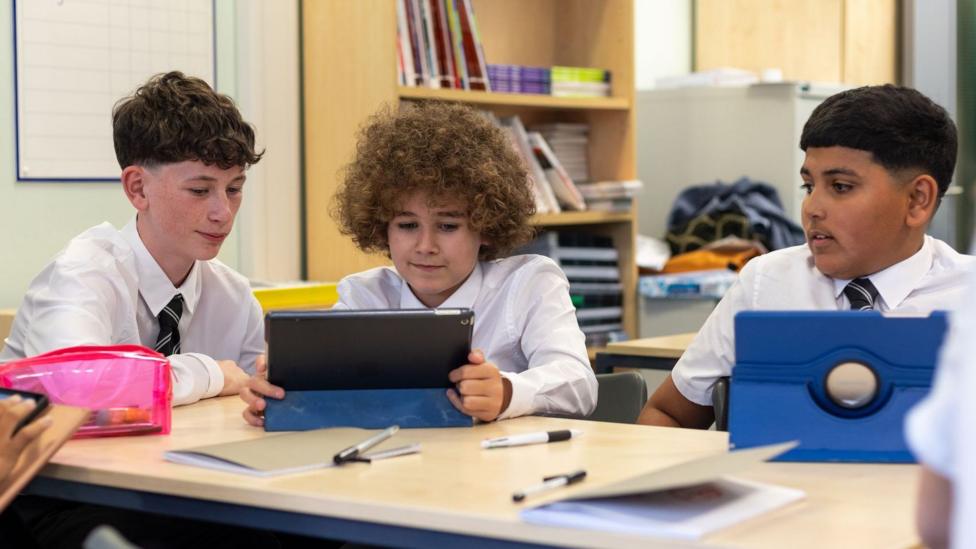 Image source, Getty Images