The key facts
- 1,580 migrants arrived in the Canary Islands in a single day, most of them on El Hierro
- From Friday to Saturday, more than 2,300 people arrived on the islands
- Despite the surge, migration from January to October 31 fell by 5.5% compared with last year
Mass arrival on El Hierro
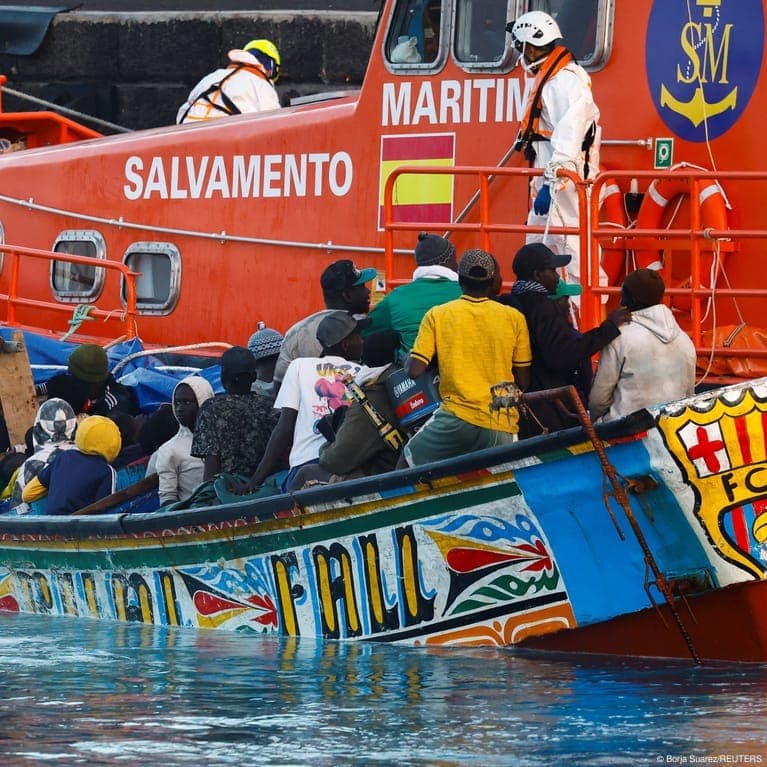
Nearly 1,600 migrants arrived in the Spanish Canary Islands in a single day. According to the Spanish Society of Maritime Safety and Rescue, cited by the EFE agency, 1,580 people came ashore on Saturday. Most of them landed on El Hierro — the smallest and westernmost island of the archipelago, whose population is about 12,000 people. The migrants arrived on 15 wooden fishing boats; most came from West African countries, including Senegal, Gambia and Guinea.
The authorities' response
From Friday to Saturday, a total of more than 2,300 migrants arrived on the islands, according to Spanish authorities. Spain's Minister of Territorial Policy, Ángel Víctor Torres Pérez, visited La Restinga at the southern tip of El Hierro on Sunday, met with residents and thanked them for their
Context: statistics and political background
Despite the sharp weekend surge, the overall picture is different: from January to October 31, the number of arrivals in the Canary Islands fell by 5.5% compared with the same period last year. The shortest distance between the archipelago and Africa is about 100 kilometres, making the islands one of the main migration routes. The surge in arrivals followed a migration crisis in another Spanish territory — Ceuta, where at the end of July an estimated 80,000 people, mostly young Moroccans, crossed the border from neighbouring Morocco. Spain's Prime Minister Pedro Sánchez was criticised by the opposition for his actions during that period. Migration, along with housing, is expected to be one of the main issues for voters in Spain's snap elections scheduled for the end of this month.