The key facts
- El-Sisi's decree added 'reducing the national debt' as a permitted use for 112 million sq. m of land on the Gulf of Suez
- The finance ministry is considering PPPs, usage rights and swapping investments for debt, but gave no timelines or value
- In June 2025, 174 million sq. m in Ras Shukeir were allocated for the same purpose; a lawmaker demands a report on the outcome
Land as a tool for reducing debt
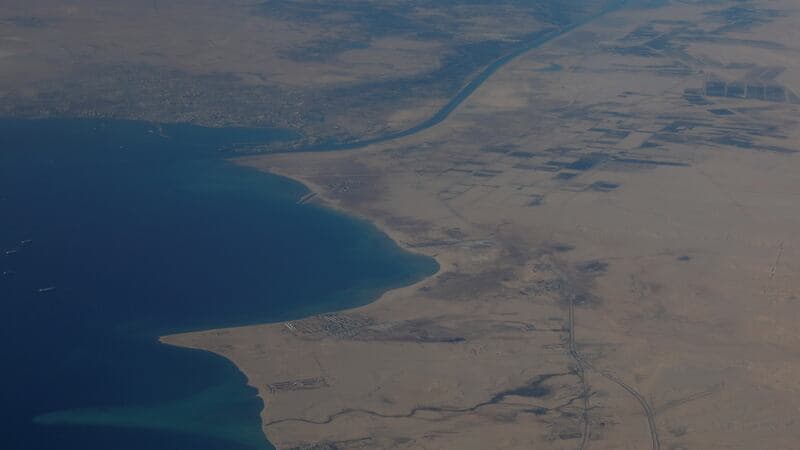
Egypt has reserved a large tract of state-owned land on the Red Sea coast to use it for reducing the national debt. A decree signed by President Abdel Fattah El-Sisi and published last week covers about 112 million square meters on the shore of the Gulf of Suez and adds 'reducing the national debt' to the list of permitted uses for this territory. The National reports this.
The finance ministry's plan without timelines or figures
Finance Minister Ahmed Kouchouk said the ministry is preparing a 'strategic development plan for the Red Sea district' allocated for debt reduction. In a LinkedIn post, he listed possible mechanisms: partnerships with the private sector, granting usage rights, and 'swapping part of the investments for outstanding debts.' According to him, the revenues will go toward improving debt metrics and freeing up funds for social programs and public services. However, the minister did not name either timelines or an estimated value of the tract.
A parliamentarian's request and the 2025 precedent
Mohamed Fouad, a member of the House of Representatives' economic affairs committee, submitted an official request-briefing to the speaker of parliament with questions: how the land will be used to reduce debt, how this will affect the overall volume of borrowing, and whether previous allocations produced results. 'I submitted the request to understand the details of the allocation of 112 million meters of land on the Red Sea for debt reduction and to find out what happened to the old land,' he said on a popular talk show on Sunday evening.
Comparison with past deals
There is already a precedent: in June 2025, about 174 million square meters of land in Ras Shukeir were allocated for debt reduction and Islamic finance; the local Islamic bond program, according to state media, raised about 26.8 billion Egyptian pounds ($502 million) in its first placements over the past year. In scale, both tracts are comparable to the coastal land behind Egypt's largest investment deals with Gulf countries, but they are used differently: in February 2024, Abu Dhabi's ADQ agreed to pay $24 billion for development rights over about 170 million square meters in Ras El-Hekma on the Mediterranean Sea (plus the conversion of $11 billion in deposits into investments while Egypt retains a 35% stake), and in November 2025 Qatari Diar signed a deal worth $29.7 billion for the development of about 20 million square meters in Alamein, including $3.5 billion in cash for the land.
Debt targets and a dispute over methodology
After the decree, Prime Minister Mostafa Madbouly held a meeting with Kouchouk on the recommendations of the 'Egypt-2026' forum regarding debt reduction and called this task a government priority, instructing that a detailed plan with tasks for each ministry be prepared for presentation to the president. The forum's recommendations envision reducing the national debt to roughly 69.5% of GDP by 2030 from the current 81.9% and introducing debt ceilings. Kouchouk noted that over three years the national debt has fallen from 96% of GDP, and the 2025/26 fiscal year budget is in surplus excluding interest payments. The National, however, points out that the minister was referring to the budget sector debt — the narrowest measure, which excludes the finances of the central bank and government agencies; the broader measure of general government debt includes, among others, the oil authority, whose budgets strongly affect Egypt's finances. Budget sector debt at the end of March stood at 17.85 trillion Egyptian pounds ($328 billion), of which 4.17 trillion ($76.6 billion) was external.