The key facts
- The transition away from fossil fuels (TAFF) is not on the official COP31 agenda, which closes on 20 November
- Finland published a national TAFF roadmap, but without a legally binding deadline
- Turkey's energy minister said that a fossil fuel phase-out 'makes no sense' without finance and technology for developing countries
The summit shies away from its main topic
The first week of the climate summit COP31 in Antalya is coming to a close, and despite warnings about breaching the 1.5℃ warming threshold, leaders are trying not to mention fossil fuels. The transition away from fossil fuels (TAFF) is not on the official agenda, but it has already become one of the main points of tension amid rising oil and gas prices following the US-led war against Iran.
Von der Leyen's speech without a word about fossil fuels
European Commission President Ursula von der Leyen addressed the leaders on Wednesday, 11 November, calling the string of extreme weather events and deadly wildfires that devastated Europe and the rest of the world a 'summer of truth'. 'We are at a global tipping point. The latest UN report makes it clear: we are heading towards overshooting the 1.5℃ goal, and every fraction of a degree matters,' she said. Among the EU's priorities at the summit she named accelerating electrification and 'strengthening global partnerships', but never once mentioned fossil fuels. According to the UN, coal, oil and gas account for about 68% of global greenhouse gas emissions and almost 90% of carbon dioxide emissions. Von der Leyen was accused of 'missing the mark' and using a 'celebratory tone' against the backdrop of stagnating EU climate finance. CAN Europe director Chiara Martinelli warned that electrification without being linked to the fossil fuel transition gives industry 'cover to keep profiting as before'.
Finland sets an example
Against this backdrop, Finland presented a new national roadmap for phasing out fossil fuels at the summit, following the example of France, Germany and the Netherlands. Brazil, which previously chaired the COP and presented a global TAFF roadmap, is also working on its own, as are a number of Pacific island states. More than 96% of Finland's electricity is already generated from non-fossil sources — one of the highest figures in the world — although the energy intensity of its economy and per capita consumption remain high due to heavy industry, long distances and heating demand. In 2025, the largest single energy source was wood fuel — 28% of total consumption, nuclear power — 27%, and fossil fuels — 18%. Finland, which intends to become carbon neutral by 2035, has not set a legally binding deadline for phasing out fossil fuels. Its roadmap follows the Santa Marta process, launched after all mentions of such a roadmap were removed from the final text of COP30 in Belém. Romain Ioualalen of Oil Change International called the growing number of countries planning a future without fossil fuels positive, but stressed that the roadmaps must be 'something more than a mere repetition of already existing policies'.
Turkey: coal, oil and a demand for finance
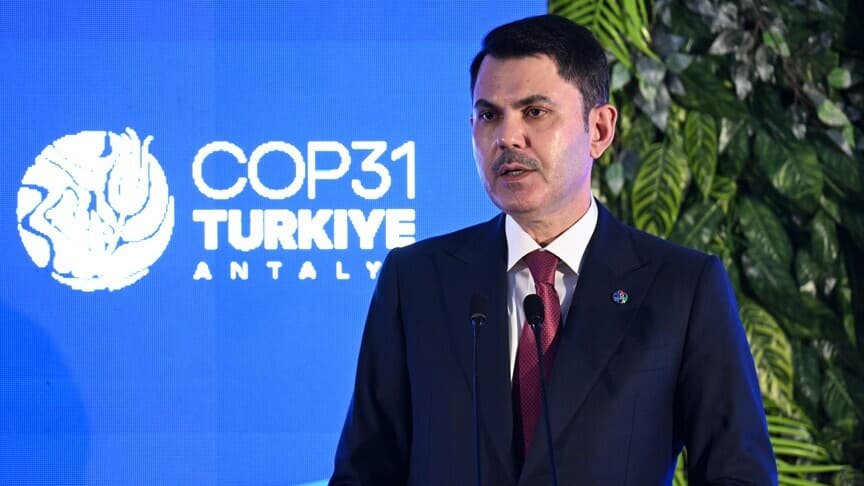
The summit's co-organiser Turkey is criticised for its heavy dependence on coal, which remains its largest source of electricity: the country's national climate plan allows for an increase, not a reduction, in emissions, and fossil fuel exploration continues both in the Black Sea and in the south of the country. On the opening day of COP31, 9 November, President Recep Tayyip Erdoğan celebrated the discovery of oil on the country's territory. Turkey, France, the US and Italy, according to reports, brought fossil fuel industry lobbyists to the summit. On 12 November, Turkey's energy minister Alparslan Bayraktar told AFP that developing countries need access to technology and finance, otherwise the transition to clean energy is impossible: 'Without that, telling people they don't need to consume coal... simply makes no sense.' He added that building nuclear power plants requires 'a huge amount of financing'.
Finance — the most contentious issue
Finance is expected to be one of the most contentious issues in Antalya, especially funds for adaptation and for loss and damage for developing countries and small island states. At COP29 in Baku in 2024, developed countries agreed to mobilise at least $300 billion a year for developing countries by 2035 as part of a broader $1.3 trillion goal. At COP30, governments agreed to strive for at least tripling adaptation finance by 2035, but did not define the baseline, the payers or the mechanisms for delivering the funds. Analysts call 'a realistic path to a meaningful outcome' anchoring the tripling promise with a baseline of $40 billion and a minimum share of grants as opposed to loans. However, according to a UNEP report published a few days before the summit, even tripling the current volume of international public adaptation finance would cover only 23–29% of developing countries' needs.
The '35 by 35' initiative and criticism of electrification
Turkey is promoting the '35 by 35' initiative: the share of global energy consumption covered by electricity should rise from about 23% to 35% by 2035. The goal has been publicly endorsed by more than a dozen countries and several small island states, including UK Prime Minister Andy Burnham — a few weeks after his government approved the controversial Rosebank (Jackdaw) gas field in the North Sea. Von der Leyen also endorsed the goal, calling it achievable and beneficial for EU energy security. Critics warn that electrification on its own will not rid the world of fossil fuels and could become a pretext for counting the expansion of gas generation as progress. 'Shifting from oil and gas to electricity cuts emissions only if that electricity is clean,' said Strategic Perspectives executive director Linda Kalcher, adding that growing data centre demand is fuelling calls for new fossil fuel capacity. COP31 will conclude on 20 November.