The key facts
- Trump will arrive in Manila on November 17; the APEC summit in Shenzhen will take place on November 18–19
- Trump arrives in Manila on November 17; the APEC summit in Shenzhen takes place November 18–19
- China has extended the suspension of a number of trade measures until January 10, 2027
- A possible Trump–Xi–Putin meeting remains unconfirmed; Beijing rejects trilateral nuclear talks
Itinerary and goals of the trip
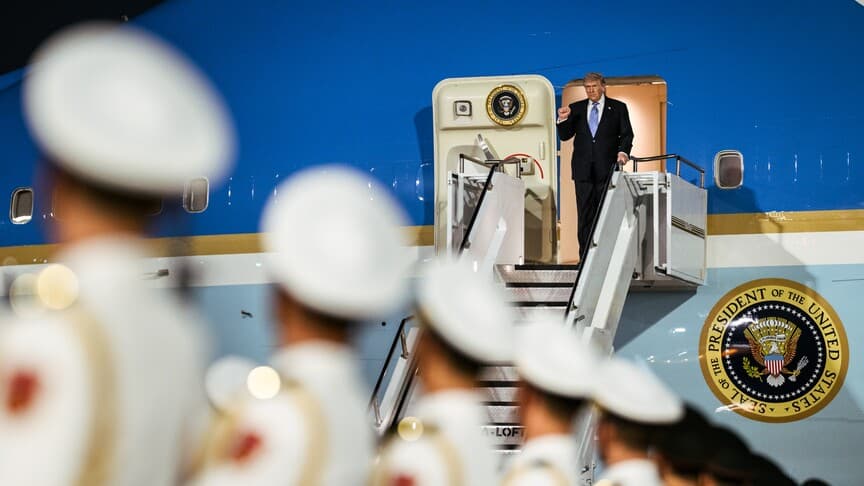
US President Donald Trump will travel to Asia next week, Anadolu reports. Under the plan, he will arrive in Manila on November 17, where he will meet with Philippine President Ferdinand Marcos Jr. and take part in the ASEAN–US summit, and then head to Shenzhen for the APEC summit on November 18–19.
Manila: defense and 'commercial diplomacy'
The Philippines is a treaty ally of the United States, and clashes between Chinese and Philippine vessels in the South China Sea raise the importance of defense cooperation. The country's Defense Secretary Gilberto Teodoro hinted that a new American assistance package could be announced during the visit — in the form of equipment and capabilities rather than cash grants (citing ABS-CBN News). According to Victor Cha of the Center for Strategic and International Studies, Washington also hopes to encourage Southeast Asian countries to adopt American AI technologies, possibly using development aid as an incentive. Cha himself stressed that this is an aspiration of the administration, not an arrangement already accepted by the countries of the region, and called the Philippine stop potentially the most important point of the trip.
Meeting with Xi and the state of the trade truce
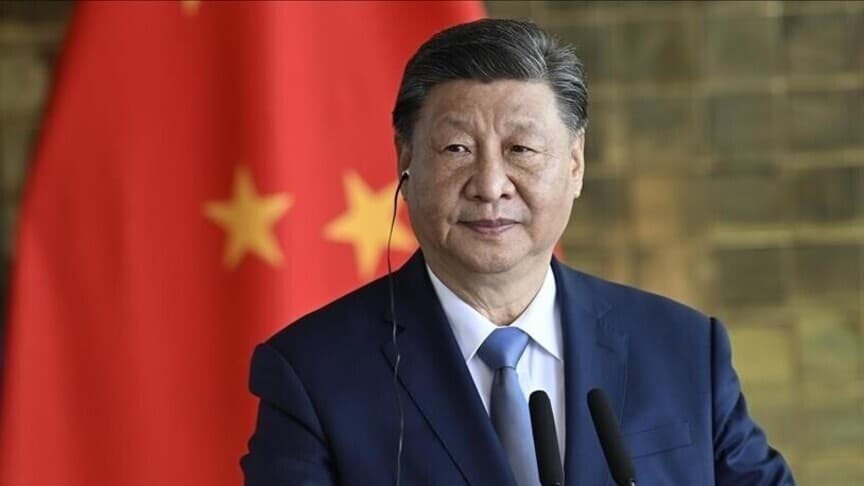
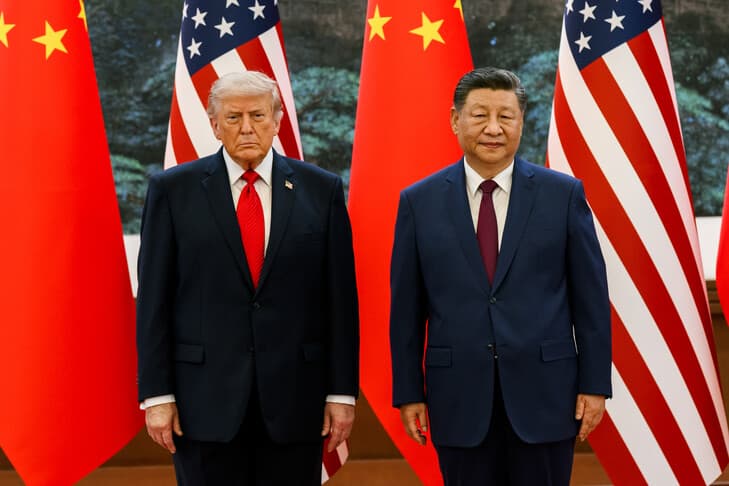
Talks with Xi Jinping in Shenzhen will be the leaders' third meeting this year — after Beijing in May and Washington in September. A detailed agenda has not been announced, but on November 6 Treasury Secretary Scott Bessent and Trade Representative Jamieson Greer pressed Beijing in talks with Chinese Vice Premier He Lifeng, demanding fulfillment of commitments on agricultural purchases, rare earths and other critical minerals. In Cha's assessment, the administration is lowering expectations of a breakthrough, presenting the meeting as a brief contact to maintain the truce; more substantive discussions may take place at the G20 summit in Florida in December.
What the truce has locked in
The truce suspends part of the trade war measures rather than removing all barriers. China announced that a number of suspensions have been extended until January 10, 2027: this concerns the additional 24% tariffs on American imports (while the 10% duty remains), as well as part of the export restrictions and port fees. The agreement on mutual tariff reductions worth $60 billion, discussed in September, has not yet been finalized. Rare earth exports remain a sensitive point: according to the International Energy Agency, China accounted for 91% of global refined production of magnetic rare earth metals in 2024, and the extension does not lift all restrictions.
Chips, Taiwan and a possible triangle with Putin
Beyond minerals, disagreements remain over advanced semiconductors and Taiwan. Trump approved conditional sales of Nvidia H200 chips to China, which drew criticism in Congress, and after reports of contacts between former Nvidia head Jensen Huang and a suspected Chinese agent, lawmakers from both parties are demanding tighter restrictions. On Taiwan, Washington maintains unofficial relations and defense equipment supplies; in May Trump described a $14 billion arms package as 'frozen' and a bargaining chip, after which Secretary of State Marco Rubio assured Congress that the policy had not changed.
A possible meeting with Putin remains open
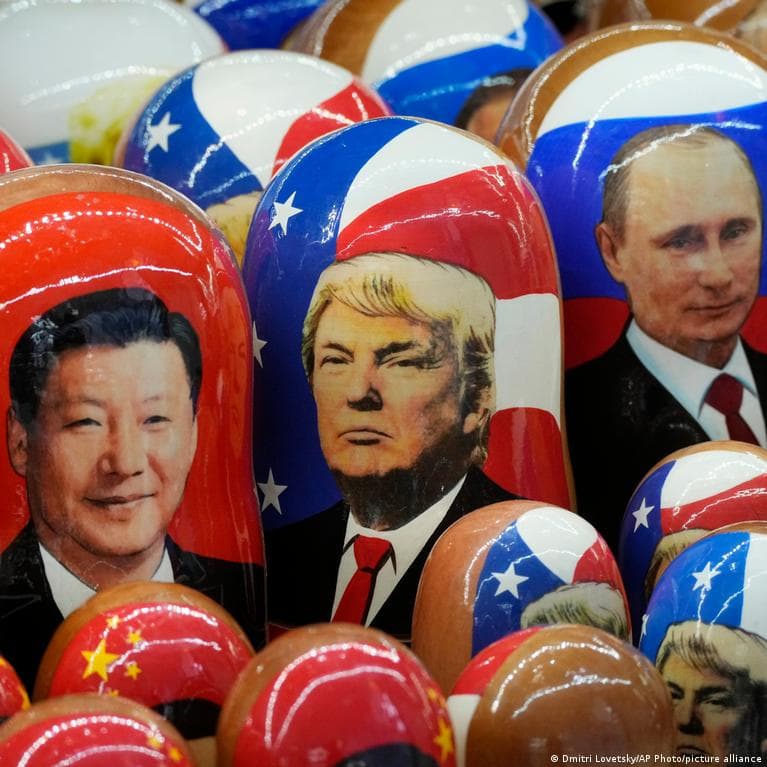
The most widely discussed uncertainty is a possible meeting between Trump, Xi and Putin. Kremlin spokesman Dmitry Peskov previously told the Financial Times that 'work on organizing such a meeting is underway,' while Trump has publicly spoken about expected talks with Xi and Putin, naming the war in Iran and denuclearization as possible topics. After Rubio's conversation with Chinese Foreign Minister Wang Yi on November 11, the State Department said that contacts at the leaders' level were discussed, including a potential trilateral meeting with Russia; the Chinese side described the call as positive but mentioned neither a trilateral format nor denuclearization. Alicja Bachulska, an expert at the European Council on Foreign Relations, warned that even a symbolic meeting could harm Beijing's relations with Europe, reinforcing fears that Europeans are being sidelined in discussions of the war in Ukraine. A separate obstacle is the expiration of the New START treaty on February 5 without a successor agreement: Washington wants to see China in arms control talks, but Beijing considers such a format unfair, and China's Foreign Ministry stated on October 16 that the demand to join trilateral negotiations is 'neither fair, nor reasonable, nor realistic.' Thus, by the start of the trip only the itinerary and the extension of the truce have been confirmed, while both the trilateral summit and any substantive breakthrough in Shenzhen remain matters of discussion.