The key facts
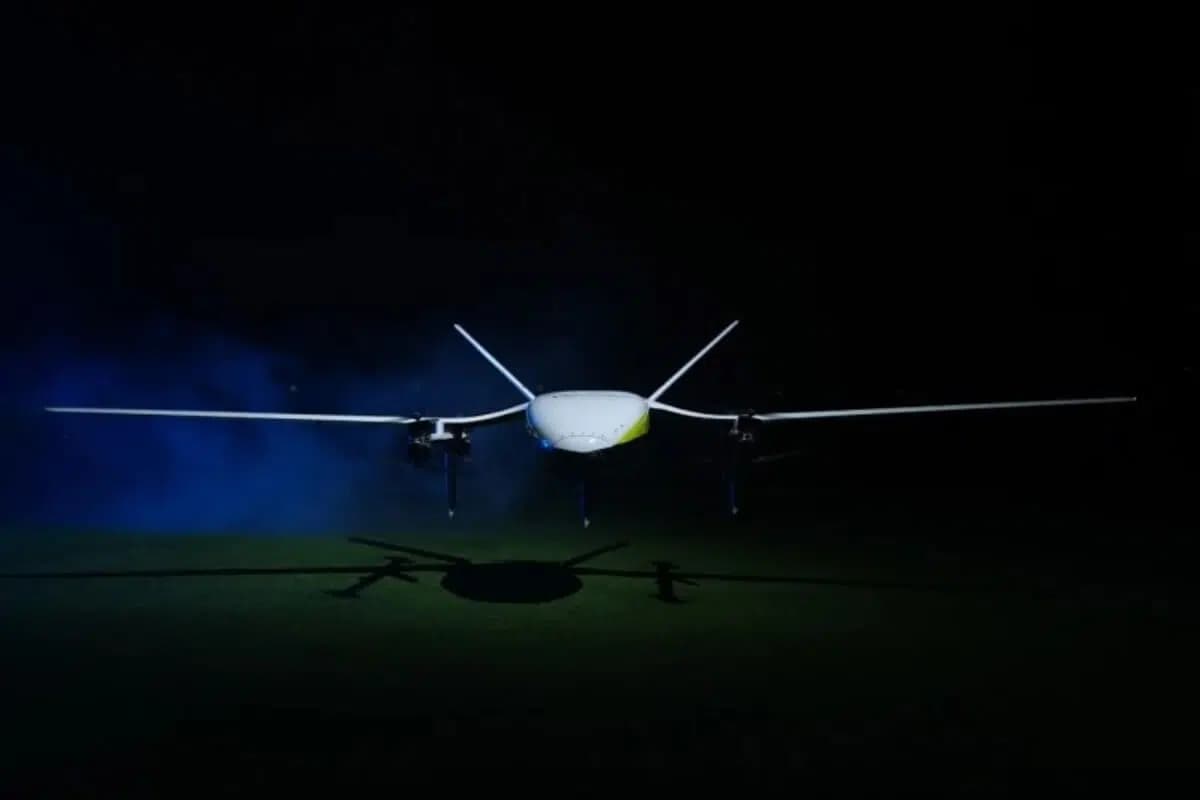
- Skyreach is a hybrid VTOL aircraft with a 6.7 m wingspan and a 198-liter cargo bay
- 2,000 km is achievable only with a 4.5 kg payload; with 23 kg — about 1,255 km, with 36 kg — 450 km
- A flight hour costs about $300, and the company plans to reduce it to $100 in the future
Skyreach announcement
The startup Skyways has unveiled the Skyreach cargo drone — a hybrid vertical takeoff and landing (VTOL) aircraft that, according to the company, can cover more than 2,000 km and perform such flights autonomously, at roughly half the cost of hiring a crewed helicopter. Kun.uz reports this citing the company's announcement. This refers to scenarios such as urgently delivering a spare part to an offshore oil and gas platform or supplying troops in a combat zone — missions that today usually require ordering a crewed helicopter.
How the aircraft is built
Eight electric motors lift the Skyreach into the air like a multirotor, while a two-stroke engine running on aviation fuel is used for horizontal flight; a generator recharges the batteries in flight, so no grid connection or battery replacement is needed between missions. The wingspan is 6.7 meters. Cargo with a volume of 198 liters is loaded from the top, and the bottom of the bay opens: the drone can drop the cargo in flight or lower it on a cable. According to the company, the aircraft operates in winds up to 75 km/h and at temperatures from −21 to +49 °C, and with a minimal payload it can stay airborne for more than 18 hours.
Cost and payload limitations
Skyways did not disclose the price of the aircraft itself, nor did it specify which helicopter the claimed twofold cost reduction is compared against. However, according to CEO Charles Aknin, an hour of Skyreach flight currently costs about $300, and the company plans to reduce this to $100 through increased autonomy. The key caveat concerns range: the 2,000-plus kilometers are achievable only on a one-way flight with a 4.5 kg payload. With a 23 kg load, the range drops to about 1,255 km, and with 36 kg — to 450 km. The reason is weight limitations: the aircraft's maximum takeoff weight is 163 kg, of which fuel and cargo together account for about 45 kg. These specifications are given in the company's technical specification.
Military interest
Despite its modest payload capacity, the aircraft has already attracted interest from representatives of the US Marine Corps, Navy, and Air Force. The company has begun flights with customers on the new platform, but the timeline for serial deliveries and commercial terms are not disclosed in the published materials.