The key facts
- MOL says it is technically ready to phase out Russian oil by the end of 2027 and for the first time intends to seek EU funding for diversification
- According to the European Commission, Russia's share in the EU's oil imports fell from 27% in 2021 to 2%; Hungary and Slovakia remain the main recipients of oil via the Druzhba pipeline
- MOL has asked the European Commission to mediate in a dispute with the Croatian operator JANAF over the Adria oil pipeline
Readiness by 2027 and a warning about risks
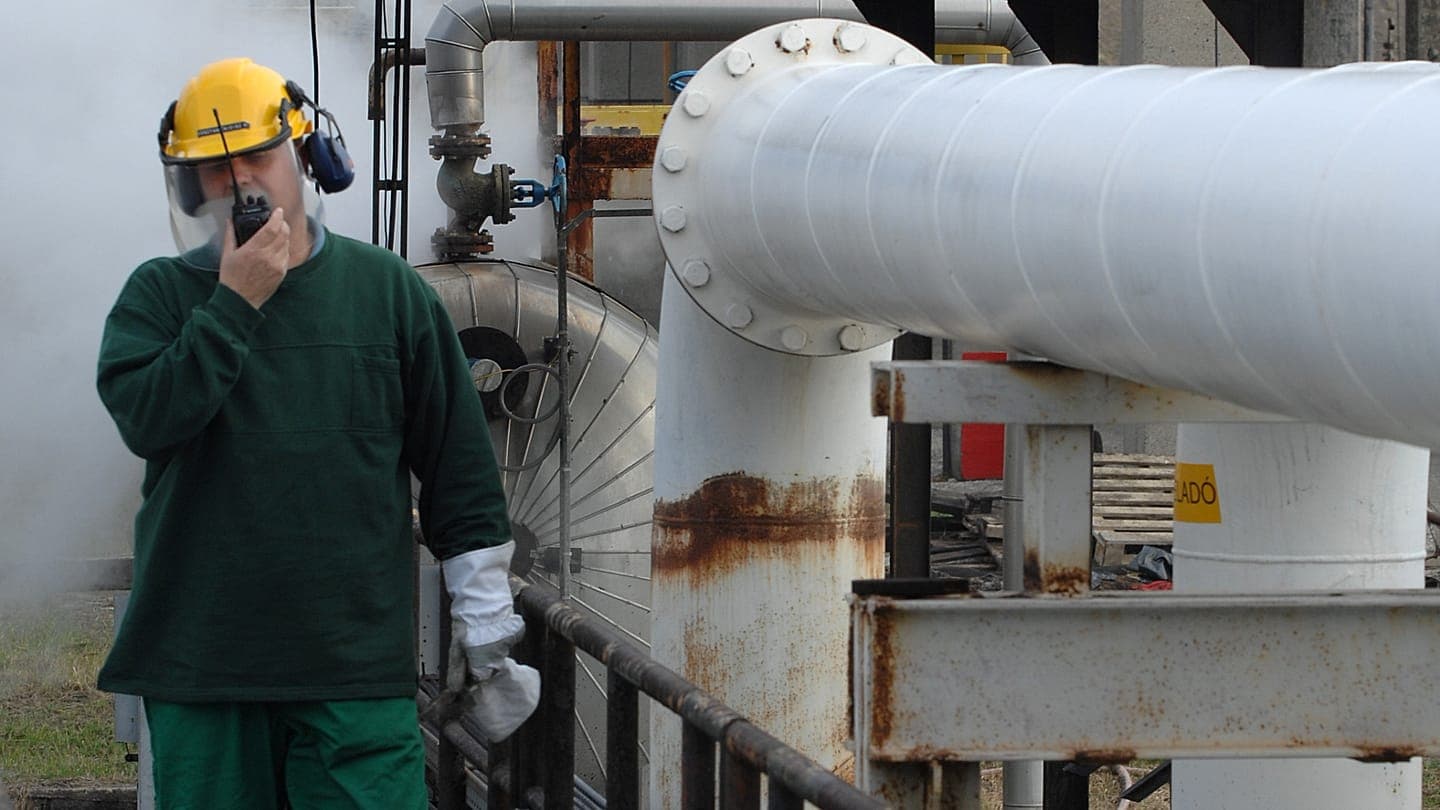
The Hungarian oil and gas company MOL has stated that by the end of 2027 it will be technically ready to stop importing Russian oil. In an interview with Euronews, the company's CEO György Bacsa warned that reducing dependence on Russian oil could lead to higher energy costs, social discontent and political instability in Hungary and Slovakia — the two EU countries that still remain largely dependent on Russian supplies. 'This could indeed set these economies back, which could lead to a political crisis, and the consequences of a political crisis would be unpredictable,' Bacsa said. According to the European Commission, Russia's share in the EU's oil imports fell from 27% in 2021 to 2%, while Hungary and Slovakia remain the only union countries importing significant volumes of Russian oil via the Druzhba pipeline. In Hungary, petrol and diesel prices rose sharply this year, drawing criticism from the opposition.
A change of course after a change of government
With a new government in office in Budapest, MOL intends for the first time to seek EU funding for energy diversification. This marks a departure from the era of Viktor Orbán, when Hungary remained heavily dependent on Russian oil and stayed out of a number of EU energy initiatives. Bacsa stressed that MOL complies with all EU rules and sanctions and seeks to diversify its energy sources, but noted: 'In the current crisis this is no longer a secondary matter, where you are simply willing to pay 10 or 20 percent more for green or non-Russian energy.' He declined to give details on Russian oil pricing; the Urals grade is currently trading at around $60 per barrel — roughly 34% below Brent. According to a 2025 IMF study, a complete cutoff of Russian energy supplies could increase Hungary's energy costs by about 15% by 2030.
Dispute over funding and pipelines
Bacsa said that EU restrictions on fossil fuel projects prevent MOL from obtaining funding to expand the pipeline network needed for diversification. In his words, Central and Eastern Europe lags behind Western Europe in pipeline infrastructure, and he advocates a targeted European programme to connect gas, electricity and oil networks. A European Commission representative did not rule out discussing such projects but stressed that the priority remains reducing dependence on Russian energy: 'I cannot answer right away whether we will have funding or what options exist.' A key element of MOL's strategy is the Adria oil pipeline from Croatia to Hungary, which could become an alternative to Druzhba. MOL and the Croatian state operator JANAF have argued for years over transport capacity, tariffs and the carriage of Russian oil; MOL has asked the European Commission to mediate in the dispute over capacity testing on the Croatian section. 'For us, the question of whether we can now pass the JANAF test is extremely important,' Bacsa said. The company is also interested in connecting Hungary to the TAL pipeline from Trieste to Germany and would welcome an extension of Druzhba from Brody to Odesa.