The key facts
- The Commission expects to complete the remaining RRF assessments, including Hungary's, by the end of November; the assessment could be published as early as next week
- Budapest could receive up to 100% of the requested €10 billion: no
- Another €2.2 billion remains blocked due to unfulfilled conditions on academic freedom and LGBTI+ rights
What is known about the upcoming approval
The European Commission is ready to approve by the end of November nearly all of Hungary's €10 billion tranche from the Recovery and Resilience Facility (RRF), Commission officials confirmed to Euronews. According to one official familiar with the matter, speaking on condition of anonymity, the Commission expects to complete the remaining RRF assessments, including Hungary's, by the end of November and has
The path to unlocking the funds
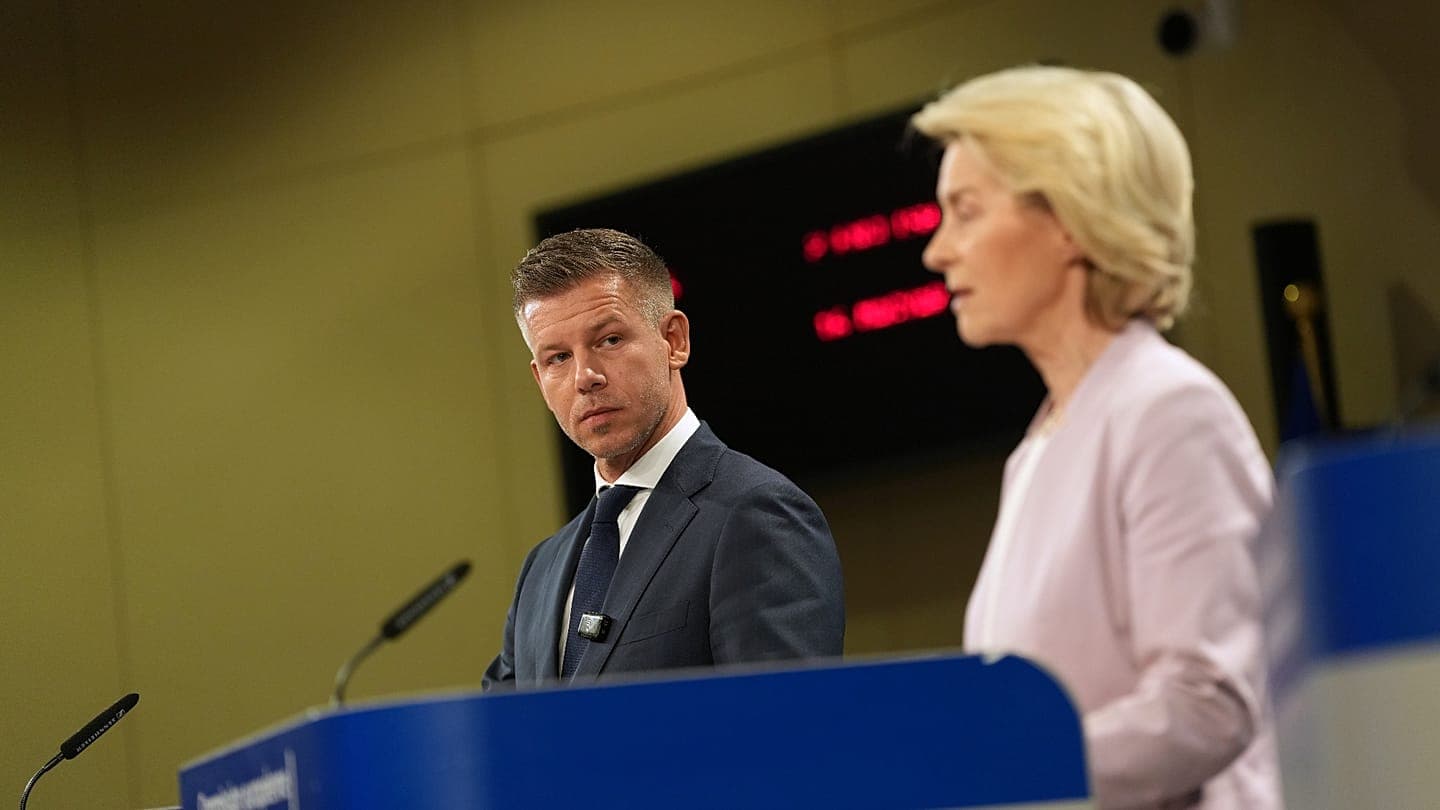
Prime Minister Péter Magyar, who came to power after a convincing victory in the April elections, campaigned with a promise to unlock EU funds frozen during 16 years of Viktor Orbán's rule. In May, Magyar and European Commission President Ursula von der Leyen agreed to release €16.4 billion that had been withheld over concerns about the rule of law and corruption under the Orbán government. Of that amount, €10 billion is due under the RRF programme. At the end of August, Hungary announced it had fulfilled the EU's conditions, after which the Commission launched its verification procedure.
How Budapest met the conditions
One of the main ways Budapest was able to meet the funding requirements was by allowing capital injections through investment institutions — something Euronews reported back in May. In the revised recovery plan adopted in August, €3.6 billion — more than a third of the total amount — was redirected to capital injections into the Hungarian Development Bank and the wholly state-owned railway company Rolling Stock Company. In addition, Hungary had to fulfil 27 so-called
What else remains blocked and what comes next
After the Commission's positive recommendation, the payment must also be approved by the EU member states. In September, the Commission already unlocked €4.2 billion in frozen cohesion funds after Magyar's government carried out rule-of-law and anti-corruption reforms. Another €2.2 billion remains blocked: conditions related to academic freedom and LGBTI+ rights have not been met, and Budapest has not yet provided evidence of carrying out these reforms. Euronews requested comment from the Hungarian government but had not received a response at the time of publication.