The key facts
- Merz: in the coming weeks, concrete peace talks with Europe's participation will take place for the first time; Germany will certainly be part of them
- Jared Kushner said Ukraine and Russia agreed to expand the next round of talks to include European countries
- Merz rejected discussing a new security architecture with Russia, calling NATO the security guarantee
Promise of talks with Europe's participation
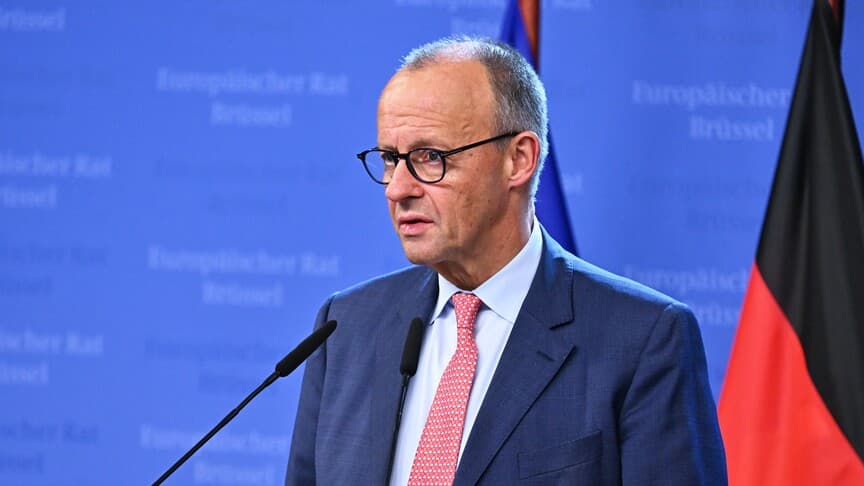
German Chancellor Friedrich Merz said on Friday that in the coming weeks, for the first time, concrete peace talks between Ukraine and Russia will take place with the participation of European countries. Speaking to journalists in Dublin after an informal summit of EU leaders, he pointed to progress in diplomatic efforts and said that American envoys Steve Witkoff and Jared Kushner had informed European officials about their meetings with Russian President Vladimir Putin in Moscow, Anadolu reports.
Who will be at the table
“In the coming weeks, concrete peace talks are to take place for the first time, at which Europe will be represented,” Merz said. According to him, a group of European countries that were present in Abu Dhabi this week will likely take part, and Germany will “certainly” be part of it. As Anadolu reports, Kushner had already said on Thursday evening that Ukraine and Russia had agreed to expand the next round of talks to include European countries. He and Witkoff, after their meetings in Moscow, arrived in Dublin for the European summit to hold consultations with European representatives.
Rejection of talks on a new security architecture
While welcoming the diplomatic progress, Merz rejected Moscow's proposal for broad talks with European countries on restructuring the continent's security system. “Russia wants to discuss issues of the European security architecture. We do not need to discuss this — it already exists: it is NATO, namely the European component of NATO,” he said. According to him, the Europeans gathered in Dublin are united in the view that the 1975 Helsinki peace order was destroyed “by Moscow, and by Moscow alone.” “Europe's security will continue to be guaranteed above all by a strong, unified, and, moreover, European NATO,” the chancellor emphasized.