The key facts
- Jensen Huang stepped down as CEO, president, and board member of Nvidia; Colette Kress is temporarily leading the company
- Jensen Huang stepped down as Nvidia's CEO, president, and board member; Colette Kress has taken over the company on an interim basis
- The crisis is linked to an investigation into Lisa Huang's alleged ties to Chinese intelligence; the US Justice Department has not yet reached conclusions
- The crisis is tied to an investigation into Alice Huang's alleged ties to Chinese intelligence; the US Department of Justice has not yet drawn conclusions
- Nvidia controls about 81% of the market for AI data center chips, and the leadership change affects the entire industry
Resignation after 33 years
On November 12, Nvidia announced that Jensen Huang is stepping down from the posts of CEO, president, and board member — a position he had held for 33 years since founding the company. Vice president and CFO Colette Kress has been appointed interim head, and she will retain her previous role. Harvey Jones became the first chairman of the board. The company is searching for a new CEO and is considering candidates both inside and outside Nvidia. The official statement does not say why he resigned. All of this was examined in detail by Spot.uz.
What preceded the departure
The crisis began with reports of Huang's extramarital affair with his namesake Lisa Huang — a Chinese entrepreneur who, since March 2023, had been the controlling shareholder of the Singaporean cloud provider Megaspeed, the largest buyer of Nvidia chips in Southeast Asia. On October 29, The New York Times reported that US intelligence agencies consider her an agent of Chinese intelligence; according to the Financial Times, she had a romantic relationship with the head of Nvidia and may have been gathering information in Beijing's interests. The newspaper later clarified: information about the alleged recruitment was contained in a memorandum circulated among American officials in the spring of 2026; the operation's goal was allegedly to obtain data on Huang and American AI chips and, possibly, to influence Nvidia on the issue of supplying the most advanced chips to China, where they are currently banned (the less powerful H200 is sold under license with a 25% revenue share paid to the US government).
Reaction and investigation
On November 8, Huang sent employees a letter with an admission: 'I cheated on my wife. My actions hurt her and our children. There is no excuse for my actions.' The same day, Nvidia announced an independent investigation with outside lawyers, and the board of directors at that time expressed confidence in Huang and kept him in office — until the resignation announcement on November 12. On November 9, US President Trump said he had spoken with Huang, who assured him that he had not known about Lisa Huang's alleged ties to intelligence; Trump said the FBI was handling the situation and expressed confidence in the head of Nvidia. China's Foreign Ministry called the espionage reports slander against China. Megaspeed stated that checks had not revealed illegal chip supplies, and Nvidia, after reviewing this company's use of its chips, also found no violations — although American authorities suspect Megaspeed of helping Chinese companies circumvent export bans. On November 12, Attorney General Todd Blanche said the Justice Department had not yet concluded whether Lisa Huang was a Chinese spy.
Stakes for the AI market
Nvidia is the main supplier of chips for artificial intelligence: according to IDC estimates, in 2026 it holds about 81% of the market for AI data center chips. In fiscal 2026, revenue grew 65% to $215.9 billion, with nearly 90% coming from data center sales; in 2025 the company became the first in history to be worth more than $5 trillion. In addition to selling chips, Nvidia finances its customers: in January it invested $2 billion in the cloud provider CoreWeave, with which it has a $6.3 billion agreement to buy back capacity not leased to other clients; in February 2026, OpenAI raised $110 billion, of which $30 billion was invested by Nvidia; in March the company announced its intention to invest $2 billion in Nebius. Morningstar analyst Brian Colello, even before the resignation, assessed that the largest tech companies are unlikely to sharply cut purchases because of the investigation, but without Huang's personal involvement, raising capital for AI infrastructure may become harder and more expensive. In its resignation statement, the board of directors said it expects uninterrupted operations and fulfillment of obligations to clients; the company did not report any cancellation of investment agreements.
Who's next, and what about Huang himself
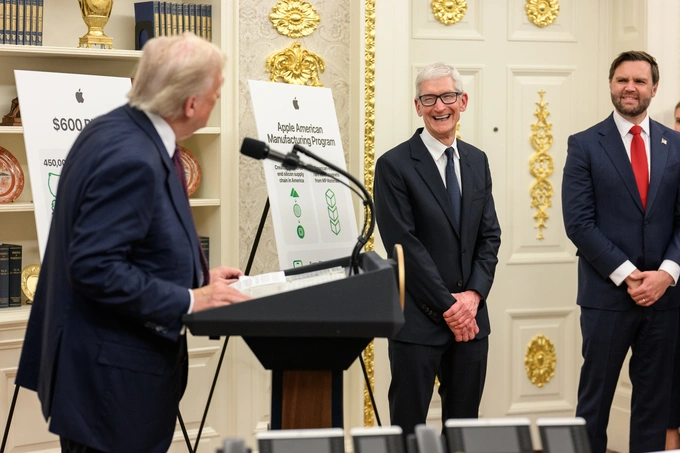
Trump named his own candidate: in his words, only former Apple head Tim Cook could replace Huang — 'A legend succeeds a legend!' Inc columnist Jason Aten considers such a scenario unlikely. Four names are most frequently mentioned: Nvidia vice president Ian Buck (one of the creators of CUDA), interim head Colette Kress, Arm CEO Rene Haas, and Apple's hardware director Johny Srouji. Huang himself remains the largest individual shareholder with a 3.56% stake, but without a seat on the board of directors. Shareholders have already filed class-action lawsuits, claiming the company concealed information about the executive's relationships and the risks involved; these allegations do not mean that a court has established any wrongdoing. In addition, three committees of the House of Representatives summoned Huang for a closed-door interview. The resignation does not mean that the espionage or illegal supply allegations have been proven, and the investigation is ongoing.