The key facts
- The lower house of the Dutch parliament passed an amendment redistributing about €1 billion of the tax burden from income to wealth
- The lower house of the Dutch parliament adopted an amendment shifting about €1 billion of the tax burden from income to wealth
- The VVD threatened to leave the coalition; Prime Minister Rob Jetten will meet with coalition partners
- The VVD threatened to leave the coalition; Prime Minister Rob Jetten will hold a meeting with coalition partners
- The bill still has to pass the upper house; the crisis could lead to the fourth election in five years
A coalition on the brink of collapse
The government of the Netherlands has been plunged into crisis after the proposed 'millionaires' tax' exposed such deep divisions that the three-party coalition risks falling apart less than nine months after taking office. The National reports.
The substance of the amendment and the vote
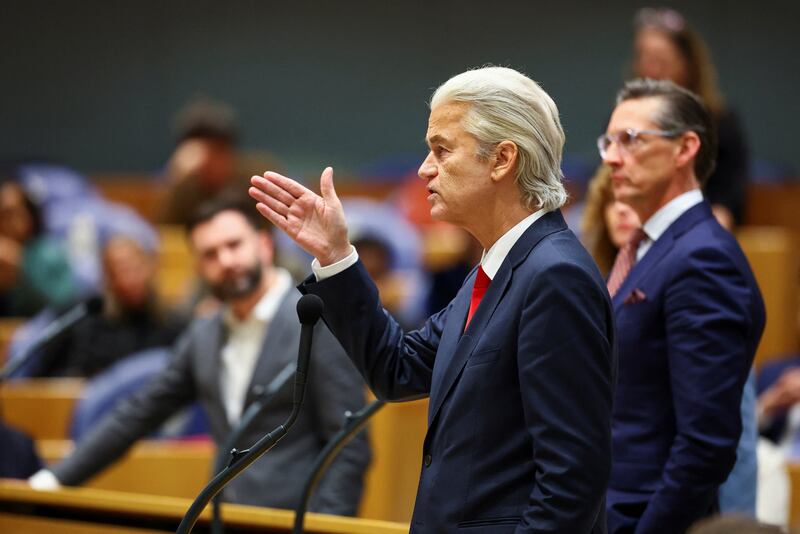
The dispute flared up over a deal with the centre-left opposition: in exchange for supporting the 2027 tax plan, opposition parties secured a tax increase on wealth. Late on Thursday evening, the lower house of parliament narrowly passed a left-wing bill that shifts the tax burden from income to wealth-related taxes. Prime Minister Rob Jetten and his centrist D66 joined forces with the Christian Democrats and the centre-left opposition, while the conservative People's Party (VVD), the third force in the ruling coalition, threatened to leave the government if the amendment were adopted.
What the 'millionaires' tax' proposes
The contested element of the legislation is being called the 'millionaires' tax'. It provides for taxing income from assets above €60,000 (about $66,555) per year at a rate of 38.5% — one of the highest in the eurozone. The rate below the threshold will drop to 35.5%, whereas a flat rate of 36% currently applies regardless of the amount. According to calculations by the parties that backed the amendment, the budgetary effect of the proposal would be a redistribution of about €1 billion of the tax burden from income to wealth. The bill is also aimed at combating evasion of inheritance tax through so-called 'paper gifts' — money that is legally gifted but never actually handed over.
Reaction and attempts to save the government
After the vote, VVD politicians said they needed time to decide on their next steps: the bill still has to pass the upper house before it becomes law. VVD leader Ruben Brekelmans called the outcome of the vote 'disappointing' and said the party was forced to seriously reconsider its position. 'First I will consult carefully with my party and my faction. I will not jump to hasty conclusions,' The National quoted him as saying on air on the Dutch broadcaster NOS. Jetten, who became the youngest prime minister in Dutch history in February at the age of 38, will try to save his minority government at a meeting with coalition partners on Friday.
Criticism and context
Some participants in the debate condemned the unfolding crisis, pointing to the modest scale of the changes. Jesse Klaver, leader of the progressive PRO party — the largest opposition party in both chambers and one of the participants in the deal on the amendment — said during the debates: 'Triggering a cabinet crisis or derailing the tax plan because the millionaires' tax goes too far is inexplicable to the Netherlands and to voters on the right, in the centre and on the left.' In his words, adopting such an amendment, which would scare off investors, 'will be very bad for the economy'. ING Group chief economist Marieke Blom noted that, in terms of the substance and scale, 'there would be no reason to bring down the government over this': the changes are symbolic rather than economically significant, and the more pressing risk is a new period of stagnation and regulatory uncertainty.
Background and possible consequences
The Dutch government had already abandoned plans to introduce a capital gains tax from 2028: the scheme for taxing growth in the value of shares, bonds and cryptocurrencies — even without their sale — was scrapped after warnings of a possible mass exodus of investors. The current crisis reflects the balance of power in a fragmented parliament, where bargaining over a wide range of issues at every vote leads to deadlock: Jetten's government holds no majority in either chamber and is forced to rely on support from parties on the left and right. The crisis could lead to new elections — the fourth in the past five years — after the two previous governments also proved short-lived. However, new elections are not guaranteed: the parties may attempt to form a new government based on the current composition of the lower house, although this would likely produce yet another minority government — an option that the opposition-leading PRO immediately ruled out on Thursday.