The key facts
- At the ceremony marking the 160th anniversary of Sun Yat-sen's birth, Xi Jinping called reunification with Taiwan an 'unshakable historical mission' of the Communist Party
- The speech contained no mention of the use of force, which DW notes against the backdrop of Xi's earlier statements
- Taiwan rejected Beijing's claims; the same day, a 'joint combat readiness patrol' near the island was reported
Speech marking the 160th anniversary of Sun Yat-sen's birth
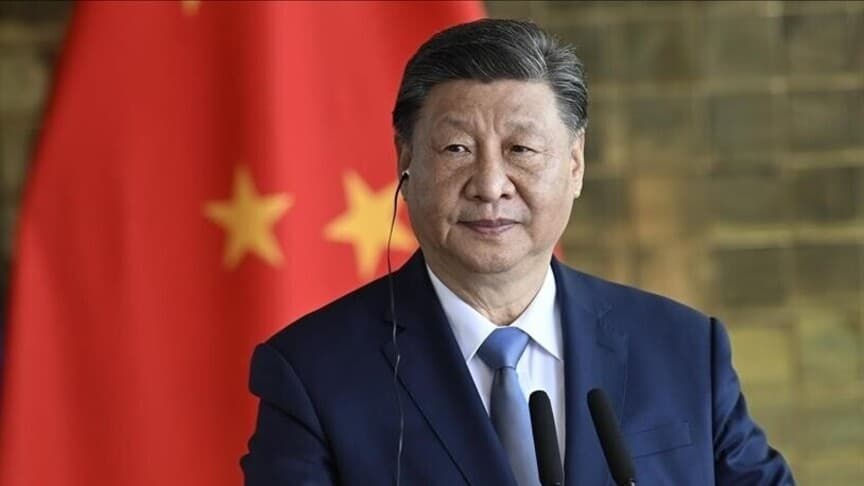
On Thursday, PRC Chairman Xi Jinping declared that 'resolving the Taiwan question and achieving the complete reunification of the motherland' is an 'unshakable historical mission' of the Communist Party of China. The speech was delivered in Beijing at a ceremony marking the 160th anniversary of the birth of Sun Yat-sen — the revolutionary who led the 1911 uprising and brought an end to imperial rule in China. This was reported by the Xinhua news agency, which is cited by the Turkish outlet Anadolu.
What exactly Xi said
According to Anadolu, Xi described reunification as the common aspiration of the Chinese people and a necessary step toward national rejuvenation, and he called on residents on both sides of the Taiwan Strait and overseas Chinese communities to oppose supporters of Taiwan's independence. Deutsche Welle provides additional quotes: 'Historical trends are unstoppable. The complete reunification of our motherland must be accomplished, and it can, without doubt, be accomplished,' Xi said. He also pledged to 'leave no room' for 'separatist activities in any form supporting Taiwan's independence' and stated that Beijing 'will fully take into account the realities of Taiwan and the interests and feelings of compatriots in Taiwan.'
A notable absence: no mention of force
Deutsche Welle notes that the speech contained no mention of military force — even though Xi has previously stated more than once that Beijing does not renounce its use to establish control over the island. The outlet also recalls that China regularly holds military exercises near Taiwan and in the Taiwan Strait, which are seen as pressure on Taipei and possible rehearsal of a forceful operation. The tafs.uz editorial team notes: Xi's rhetoric toward Taiwan itself, according to Taiwan's Mainland Affairs Council, has not changed, so it was precisely the absence of forceful rhetoric in this speech that became the main distinguishing detail.
Taipei's reaction and military activity
Taiwanese authorities promptly rejected Beijing's statements: the Mainland Affairs Council confirmed that neither the government nor the people of Taiwan would agree to submit to Communist Party rule. The council's spokesperson, Liang Wen-chieh, told journalists that the wording about 'reunification' differs little from previous statements. That same Thursday, Taiwan reported that Chinese fighter jets and drones, together with warships, had begun 'joint combat readiness patrols' near the island.
Context: Sun Yat-sen's legacy and the APEC summit
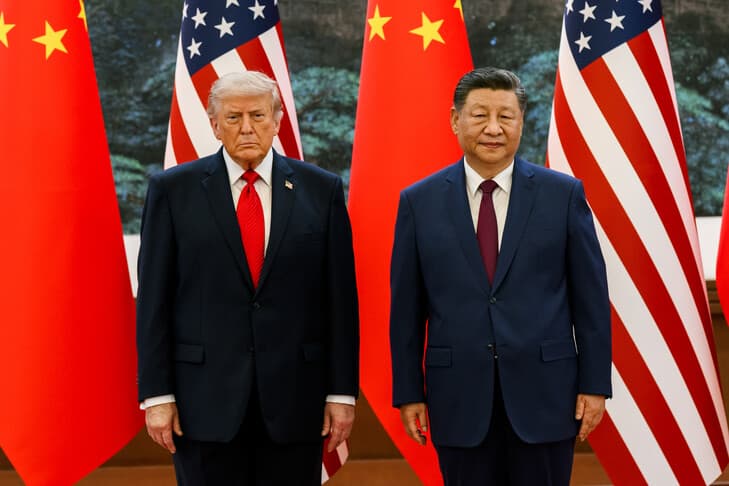
Both outlets emphasize the symbolic nature of the venue: both the PRC and the Republic of China on Taiwan consider themselves heirs to Sun Yat-sen's political legacy, whose 1911 revolution led to the founding of the Republic of China in 1912. The Kuomintang party he founded is now in opposition in Taiwan. Deutsche Welle also points out that Xi's speech came ahead of the APEC summit in Shenzhen, where the Chinese leader is expected to meet with US President Donald Trump; the United States has supported Taiwan for decades by supplying the island with weapons.