The key facts
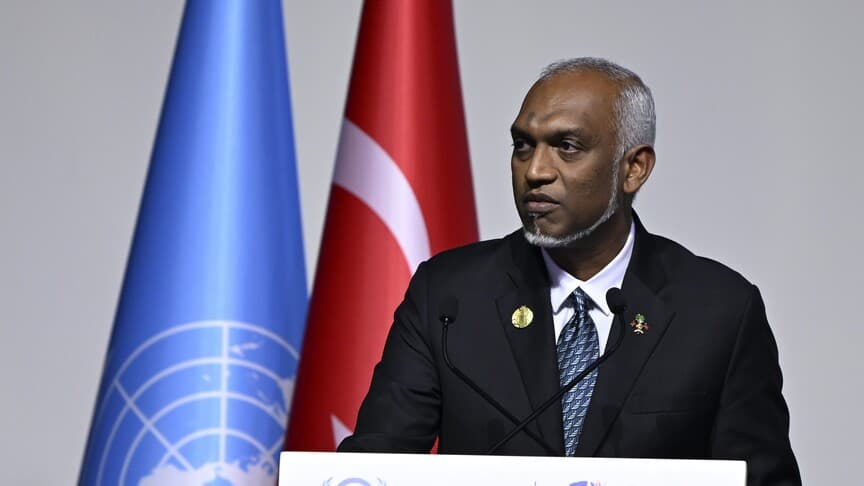
- Maldivian President Mohamed Muizzu said at COP31 in Antalya that small island states should choose their development partners themselves
- Hilda Heine called for tripling adaptation financing to at least $120 billion per year by 2035
- The presidents of Palau and the Marshall Islands supported Taiwan's participation in climate negotiations
Speeches at the Antalya Summit
At the COP31 climate summit in Antalya, Turkey, leaders of small island states and Nepal called on the international community to fulfill previously made climate commitments. Maldivian President Mohamed Muizzu said on Wednesday that small island developing states need a global system that allows them to determine their own development partners. “The Maldives are not asking for sympathy. We demand justice, accountability and action to fulfill treaty obligations,” he said.
Demands on Financing and the Financial System
Muizzu urged developed countries to fulfill their climate financing commitments and to reform the international financial architecture, taking into account the particular vulnerability of small island states. According to him, international financial institutions and rating agencies should change their approach to assessing climate investments, and turning promises into measurable progress requires sufficient financing, technology transfer and political will.
Pacific States: Financing, Coal and Taiwan
President of the Marshall Islands Hilda Heine called on developed countries to triple annual adaptation financing — to at least $120 billion by 2035 — and to make loss and damage response funds more accessible to small island states. She also advocated including Taiwan in global climate discussions, saying that “all voices must be heard,” and stressed that the Pacific region opposes coal production and gas exports: “every country has the right to development, but no one has the right to pollute their neighbors.” President of Palau Surangel Whipps also supported Taiwan's participation in COP and other UN conferences, calling it a “strong and important partner” in disaster resilience, energy transition and food security. He called for limiting warming beyond 1.5°C, expanding renewable energy and strengthening science-based measures. President of Micronesia Wesley Simina called for rapid reductions in methane emissions, improved energy efficiency and an equitable phase-out of fossil fuels, as well as predictable financing with priority given to freshwater, coastal protection, resilient infrastructure, healthcare and food security.
Nepal: From Sympathy to Action
Nepal's Foreign Minister Shisir Khanal, speaking on Monday at an open plenary session, called on COP31 to turn global “sympathy into a system,” recalling the wave of sympathy following the devastating floods in August. He proposed a special work program on mountain climate, strengthened adaptation financing and protection of fragile mountain ecosystems, and also urged preserving the 1.5°C goal and supporting Nepal's recovery.