The key facts
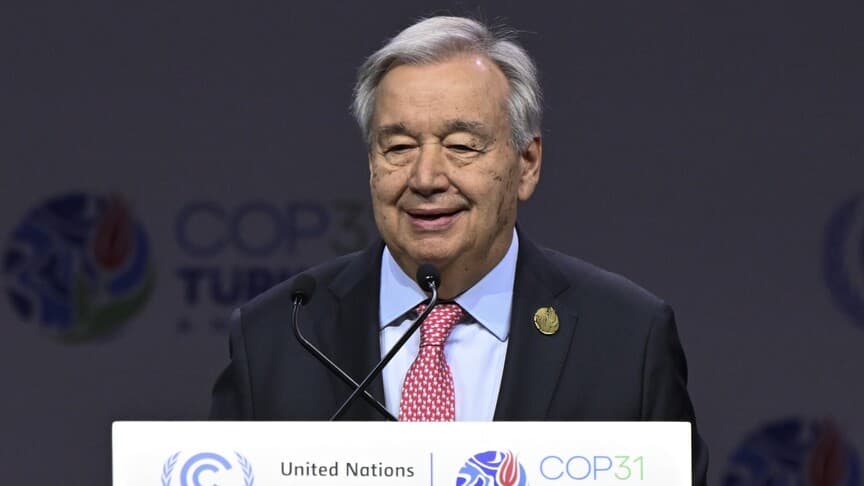
- Speaking at COP31 in Antalya, Guterres said the climate crisis is 'outpacing' global efforts
- He proposed a 'Pact for Climate Justice' with four priority areas
- The UN Secretary-General compared the profits of the nine largest oil companies ($95 billion in a single quarter) with the roughly $600 million in an international fund to help vulnerable countries
UN Secretary-General: the climate crisis is outpacing global efforts
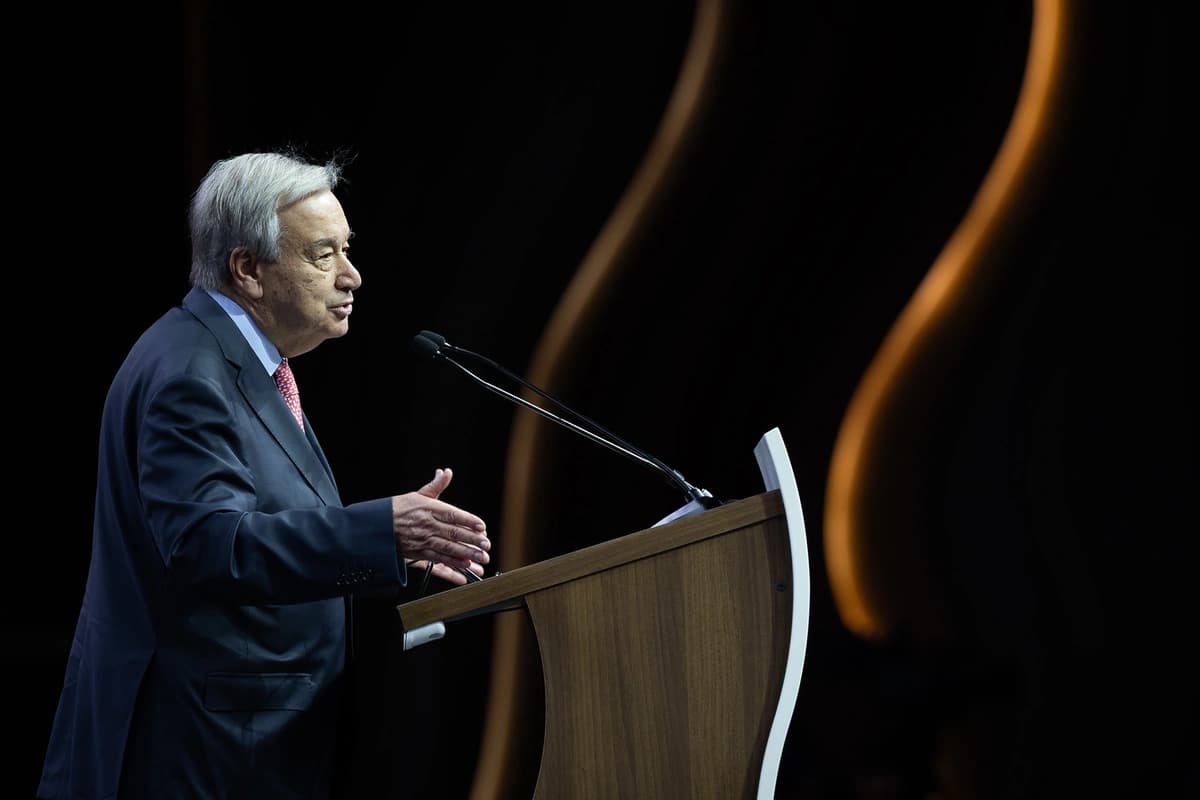
UN Secretary-General António Guterres said that international efforts to combat climate change are lagging behind the pace of global warming. Speaking at the COP31 climate summit, which is being held in Antalya, Turkey, he called on world leaders to accelerate the transition to clean energy sources and proposed concluding a new global agreement on climate justice.
'Fossil fuels must go the way of the dinosaurs'
Guterres described the situation as a path to 'inevitable catastrophe': according to him, climate disasters are destroying lives, depriving people of their livelihoods, and hitting the global economy. At the same time, he stressed that crossing the 1.5 degrees Celsius threshold does not mean capitulation: 'Science is not calling on us to give up. It is calling on us to fight even harder.'
Criticism of the industry and the energy dependence argument
The UN Secretary-General accused representatives of the fossil fuel industry of distorting scientific data and delaying political decisions. 'Fossil fuels must go the way of the dinosaurs. The dinosaurs did not have lobbyists. Fossil fuels do,' he said. Guterres also cited the argument of energy dependence: three quarters of the world's population live in countries that import fossil fuels and become hostage to price shocks they did not create and cannot influence.
Proposal for a 'Pact for Climate Justice'
Guterres called for concluding a pact for climate justice that would help developing countries move away from fossil fuels and protect those already suffering from climate change. 'We cannot demand that countries transform their economies while simultaneously depriving them of financing,' he said. According to him, the pact should rest on four priorities: accelerating the phase-out of fossil fuels, with national plans to protect workers and communities while expanding renewable energy; protecting vulnerable populations through early warning systems, adaptation, and faster assistance after climate disasters; affordable climate finance, in which wealthy countries meet their commitments and developing countries attract more investment; and strengthening international cooperation to overcome trade barriers, technological gaps, and geopolitical competition.
Comparing oil company profits with climate finance
Guterres juxtaposed the scale of the industry's profits with the volume of aid to vulnerable countries: the nine largest oil companies in the world earned $95 billion in a single quarter, whereas about $600 million was contributed to the international fund to help countries affected by climate change. According to the Secretary-General's calculations, these companies earn that amount in just 14 hours. He called on governments to tax windfall profits: 'Polluters must pay.' According to him, those who benefit most from fossil fuels should contribute to covering the costs of the damage caused.