The key facts
- Comfort Ero believes that the dysfunction of the UN Security Council and geopolitical rivalry undermine international law
- She pointed to conflicts involving Russia, Ukraine, Iran, Venezuela, Sudan and the Gaza Strip as examples of intersecting crises
- Ero is skeptical about the prospects of the 'P5' giving up the veto right and proposes strengthening the role of the General Assembly
What the head of Crisis Group said
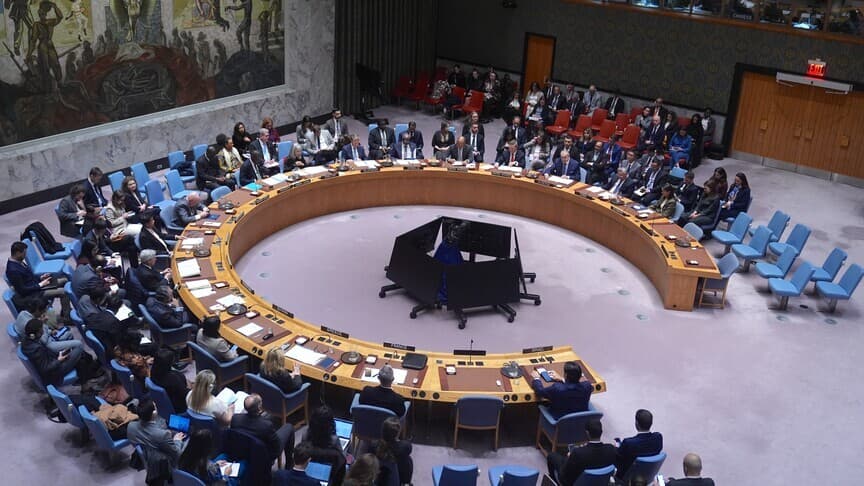
The dysfunction of the UN Security Council and geopolitical rivalry among great powers undermine international law and hinder conflict resolution, said International Crisis Group President Comfort Ero in an interview with the Anadolu agency. According to her, mutual distrust and the inability to hold powerful states accountable limit the UN's ability to maintain international peace at a time when conflicts are increasingly becoming intertwined. 'The United Nations is only as good as member states allow it to be,' she emphasized.
Intersecting crises and the weakening of arms control
Ero warned that growing military competition and the overlapping of regional conflicts create additional security threats. In her observation, countries are increasingly revising their security guarantees, building up their defense capabilities and reassessing their dependence on traditional allies. She also expressed concern about the risk of nuclear proliferation: 'Arms control today looks very fragile.' As examples of the internationalization of crises, she cited the conflict involving Iran and tensions around the Strait of Hormuz, the war in Sudan and instability in the Horn of Africa.
The question of permanent members of the Security Council
In Ero's view, the split in the Security Council has created an environment in which some governments believe they can act without serious consequences. She directly mentioned Russia's invasion of Ukraine, as well as US military actions against Iran and Venezuela, raising the question of how the international system can constrain countries that hold veto power in the body responsible for peace and security. 'This is a test — and it is a question of the Council's credibility and legitimacy,' she said. Ero cautioned: if the Security Council fails to fulfill its mandate, states will begin to look for alternative mechanisms and form new coalitions.
Security Council reform and the role of the General Assembly
Speaking about the long-standing demands to reform the Security Council, Ero expressed skepticism that the five permanent members — the US, Russia, China, the UK and France — would voluntarily give up the veto right: in defending this privilege, she said, the 'P5' is united. At the same time, she distinguishes between the manner in which the veto is used, noting the restraint of the UK and France in contrast with the US, China and Russia. The non-permanent members of the Security Council, Ero believes, can coordinate in order to 'push' the permanent members — including on Sudan and Gaza. She also noted that even the US-backed Gaza Board of Peace ultimately required recognition at the Security Council level, which confirms the enduring significance of the UN system. As a counterweight to deadlock in the Security Council, Ero proposed making greater use of the General Assembly: its resolutions are not binding like Security Council decisions, but they provide a platform for political pressure and oversight of powers that violate the UN Charter. She recalled that after Russia's invasion in 2022, Moscow used its veto to block a Security Council resolution condemning the attack, after which the General Assembly adopted a resolution demanding the withdrawal of Russian troops — which, however, did not stop the invasion.