The key facts
- China's exports in October grew 35.2% year over year to $412.3 billion, while imports rose 41.6% to $307 billion
- The yuan strengthened from 6.98 to 6.64 per dollar by November 2, reaching a four-year high
- The analyst links the resilience of exports to PBoC interventions and growing shipments of AI equipment
October Trade Statistics
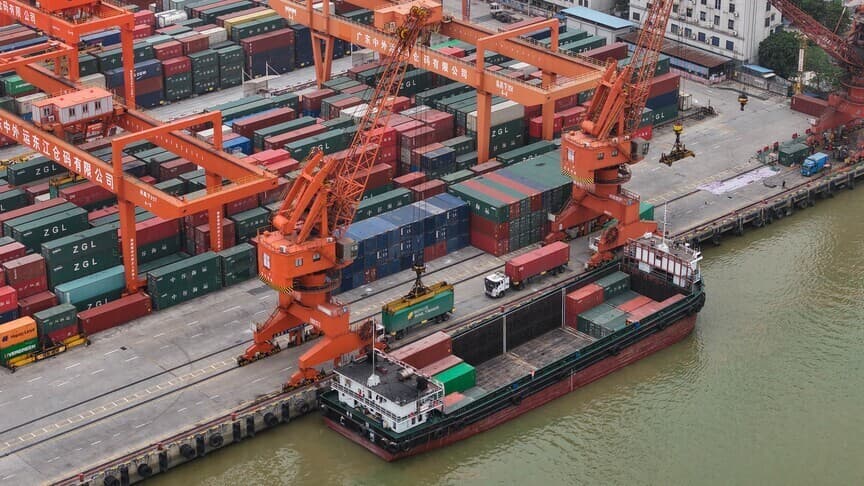
Chinese exports in October grew by 35.2% year over year, reaching $412.3 billion. Imports increased even faster — by 41.6%, to $307 billion, which, according to the publication, is linked to rising oil prices amid the conflict in the Middle East. These results gave regulators room for moderate economic stimulus aimed at achieving annual growth of 4.5–5%.
Yuan Strengthening and the Regulator's Response
The growth in imports reduced the monthly trade surplus from $133.5 billion in September to $105.3 billion in October, yet the surplus over ten months exceeded $1.04 trillion. This happened despite the yuan strengthening against the dollar from 6.98 at the beginning of the year to 6.64 by November 2 — roughly 5%, to a four-year high.
Why Competitiveness Has Not Yet Suffered
Asian markets analyst Sadi Kayumaz noted that the yuan's strengthening has not yet caused significant damage to competitiveness due to interventions by the People's Bank of China. The regulator raised the reserve requirement ratio on foreign currency deposits, which generated expectations that it may halt the strengthening of the national currency.
Export Structure Softens the Effect
According to Kayumaz, China's exports are currently driven by artificial intelligence equipment: the value of chip exports has doubled, and the sensitivity of shipments to exchange rate fluctuations has remained limited. The yuan's strengthening made energy, raw materials, and intermediate goods cheaper, which offset the effect of a stronger currency, while slower price growth in China compared with its trading partners also softened the impact. At the same time, low-margin industries — textiles, toys, furniture — are sensitive to the exchange rate and experienced a slight slowdown. According to the analyst, the PBoC's efforts to restrain the strengthening have allowed exporters to gradually adapt to the change in the exchange rate.