The key facts
- Uzbekistan’s pavilion “Gulistondan bir yaproq” is running at the Design Doha biennale in Doha from 5 November to 31 January
- The central idea is a single floral motif from Bukharan embroidery in three interpretations: abru paper, silk and glass
- At a panel on cultural diplomacy, the foundation reported that, as part of the Bukhara Biennale, about 300 Uzbek craftsmen worked with 70 artists and designers
A garden built after the “Gulistan”
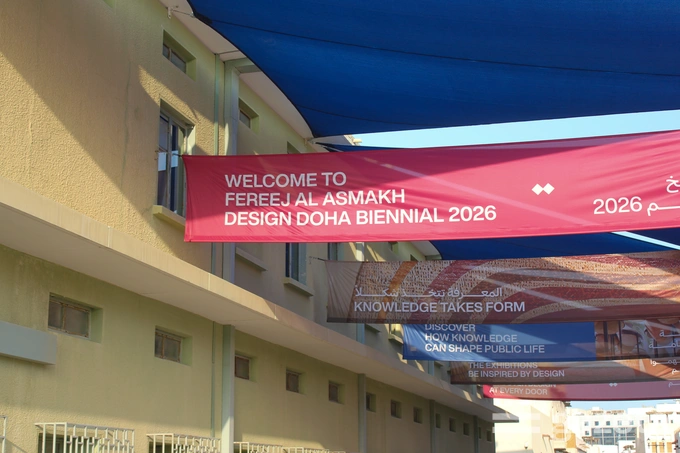
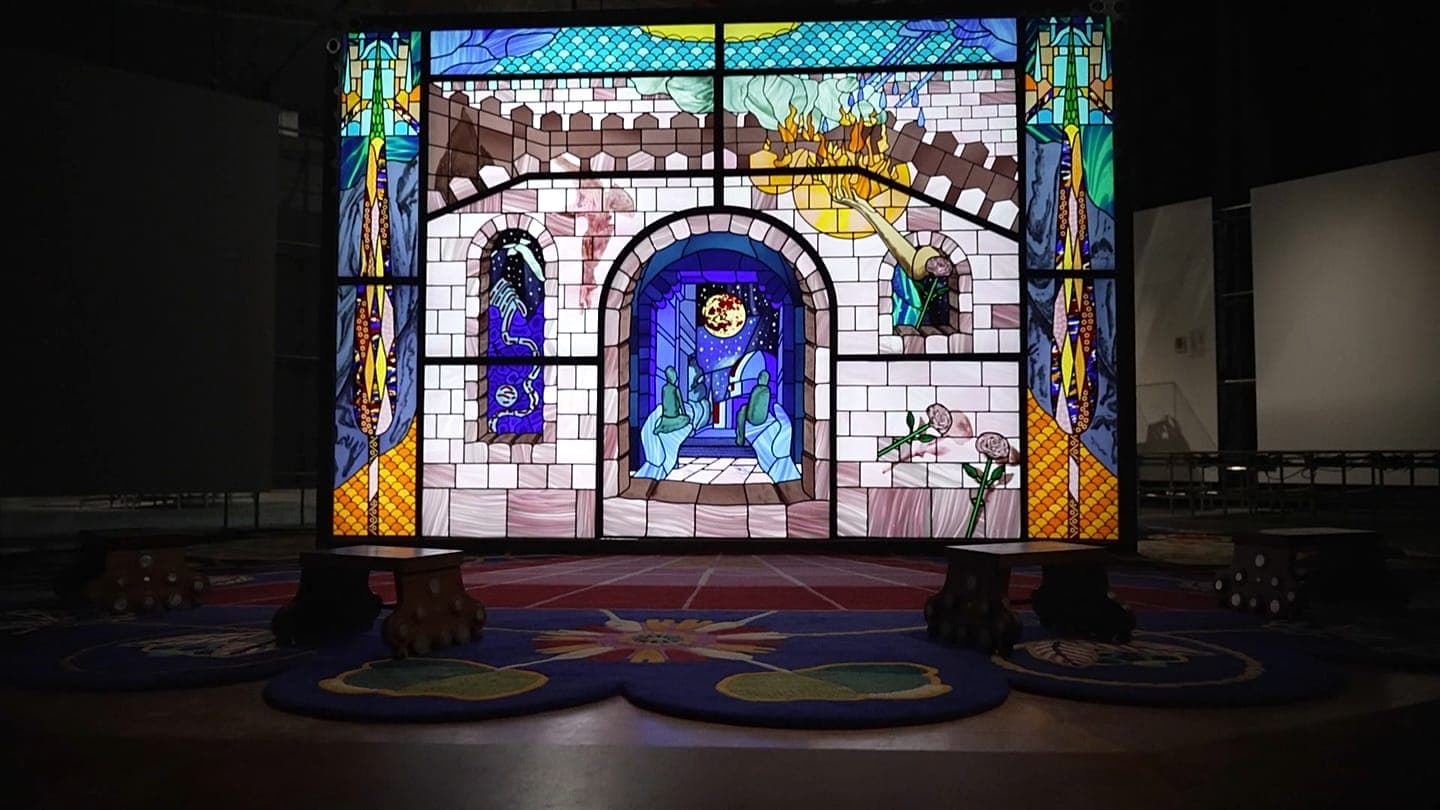
In Doha, the Design Doha design biennale opened on 5 November and will run until 31 January. The Uzbekistan Art and Culture Development Foundation is taking part with the exhibition “Gulistondan bir yaproq” — “A Leaf from Gulistan”. The title is taken from the preface to Saadi’s poem “Gulistan” (1258): the poet contrasts the short life of a picked flower with the eternity of a garden preserved by the word. A Gazeta correspondent who visited the pavilion describes the exhibition as a walk through a garden: the visitor enters through walls covered in abru paper the color of the desert, and as one moves inward the patterns on the walls gradually change, “flowing” into silk embroideries and the glass flowers of the central installation.
Paper, silk and glass: one pattern in three readings
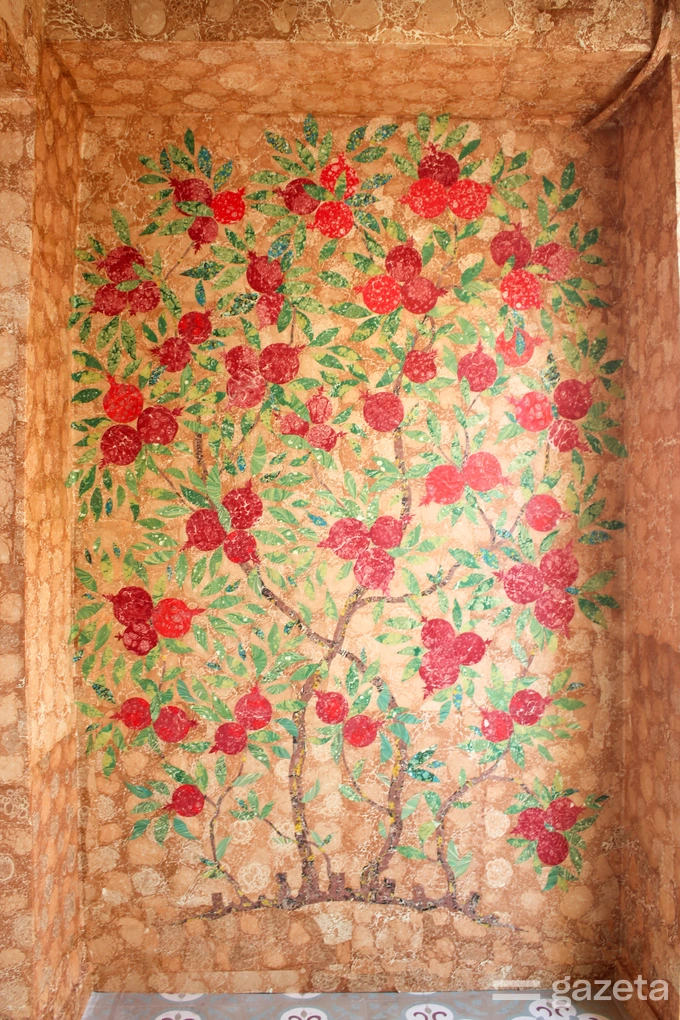
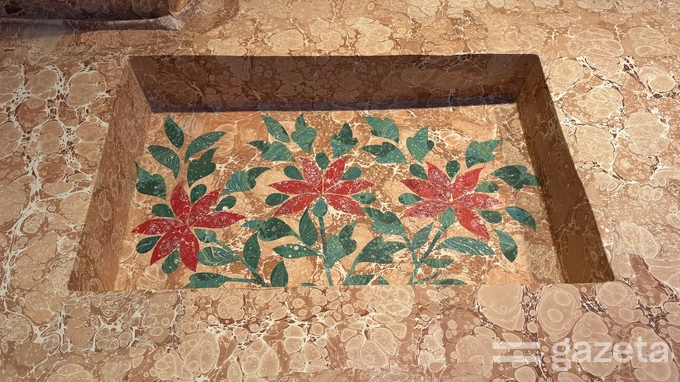
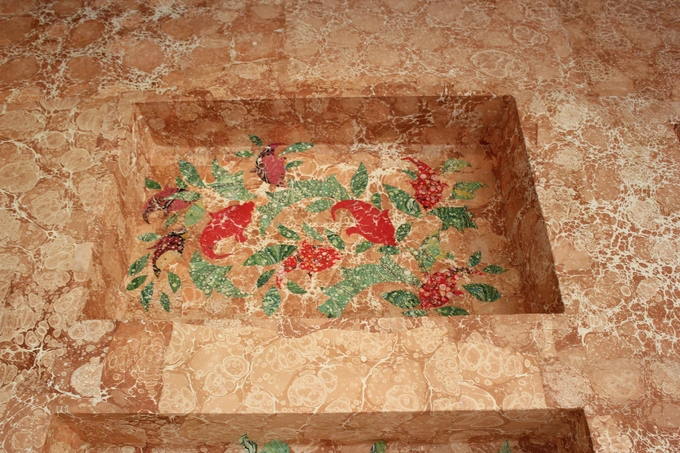
The walls at the entrance were painted by the Bukharan master-nakkash and miniaturist Davlat Toshev in the “abru bahor” technique — “spring clouds”: the patterns resemble clouds and never repeat. According to Toshev, this technique emerged in Bukhara in the 13th century and was originally used for decorating books; for the exhibition the authors created a contemporary version of it, in which each color has its own meaning and the overall palette refers to the idea of a garden created in the desert. At the entrance there is a pomegranate — the fruit of paradise, from which, as the master explained, the garden begins. Each paper “page” is first painted on water and then transferred onto paper; Toshev and three apprentices completed this work in a week.
The story of a Vobkent master
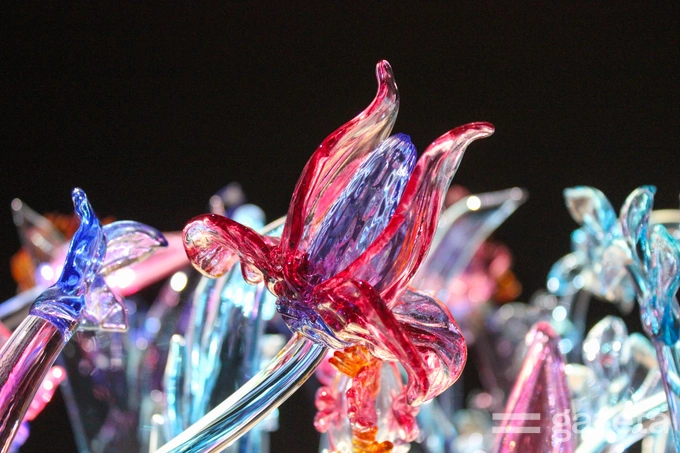
The exhibition then leads to the central installation — the “Thin Garden” by florist and artist Ruben Saakyan: on a long table covered with black cloth, glass flowers “bloom” above sand. Their ornaments are taken from Bukharan embroidery, and the flowers themselves were made by hand in the Laguna~B workshop on the island of Murano near Venice. The installation was first shown in 2024 at the Venice Glass Week, and it was reimagined for Doha. In the first hall there are panels “When Heritage Bloomed” by embroiderer Madina Kosimbayeva: five panels on adras fabric with silk thread, each with its own flower, without a single repetition of the composition. More than a thousand women have been trained at Kosimbayeva’s workshop, opened in 2006; she learned the craft herself and mostly passes it on to her students free of charge. “Madina expresses it in silk threads, Ruben in glass. And I transferred the flowers they use onto paper, so that their works are tied together,” Toshev explained.
Craft as “soft power”
Toshev, who restores old books and studied abru on his own from book examples, told the correspondent a legend about a Bukharan master thanks to whom, in his words, the art of abru bahor spread around the world. According to the legend, on the way to hajj a caravan stopped for several months in Üsküdar in Turkey, where the master, depicting verses of the Quran and sayings on water, became famous. The sultan personally visited his lodge and asked him to stay and teach this art to the local people, and then granted him land as a waqf. According to Toshev, the Uzbeks’ lodge in Üsküdar still exists, and the descendants and students of the master, who wrote: “I was born under the minaret of Vobkent, but at the end of my life I painted a chaman (garden) in Üsküdar,” work there to this day. Today in Bukhara Toshev runs the “Ustoz-shogird” children’s creativity center, where more than 60 students aged 7 to 25 study free of charge.
Craft as “soft power”
On 6 November, as part of the biennale, a panel discussion on cultural diplomacy took place, where Salahiddinkhuja Suratkhujaev, head of the foundation’s project development and implementation department, spoke about the Uzbek experience. In his view, craft is valued through the hand of the master, and traditions are not immutable: today’s craft differs from that of a thousand years ago, and it is society itself in each era that determines what counts as tradition. He cited the Bukhara Biennale as an example, where about 300 Uzbek craftsmen worked with 70 foreign and local artists and designers; all 70 works were created in Uzbekistan, and craftsmen of the seventh and eighth generations began working in new directions and passing this on to their students. Suratkhujaev called craftsmanship a “soft power”: in an era of globalization, art and heritage naturally become part of diplomacy. He also noted that over the past seven years young people’s interest in crafts has grown noticeably, and the fact that 60% of Uzbekistan’s population is under 30 provides great potential for this. According to the foundation, its previous projects in 17 countries — from the Louvre and the Institut du monde arabe in Paris to the Uffizi Gallery, the British Museum and the Palace Museum in Beijing — attracted more than 5 million visitors.