The key facts
- Novaya Gazeta announced it was ceasing operations on 30 October after its media registration was revoked
- The editorial staff left the office in Potapovsky Lane on 9 November 2026
- More than 400,000 of the newspaper's articles have been archived and are being republished worldwide
The end of operations in Moscow
Novaya Gazeta, which Euronews describes as the last remaining newspaper in Russia that openly criticized the Kremlin and the war in Ukraine, has ceased to exist after the authorities stripped it of its media registration and cut off every possibility of operating. In a statement issued on 30 October, the editorial board said that the security services and censors had 'forced the editorial team to cease its activities.' According to the outlet, before this the editorial office was ordered to vacate its premises, its reader donation system was shut down, its online resources were blocked, printing agreements were terminated, and censors at printing plants refused to produce the newspaper.
A farewell at the editorial office
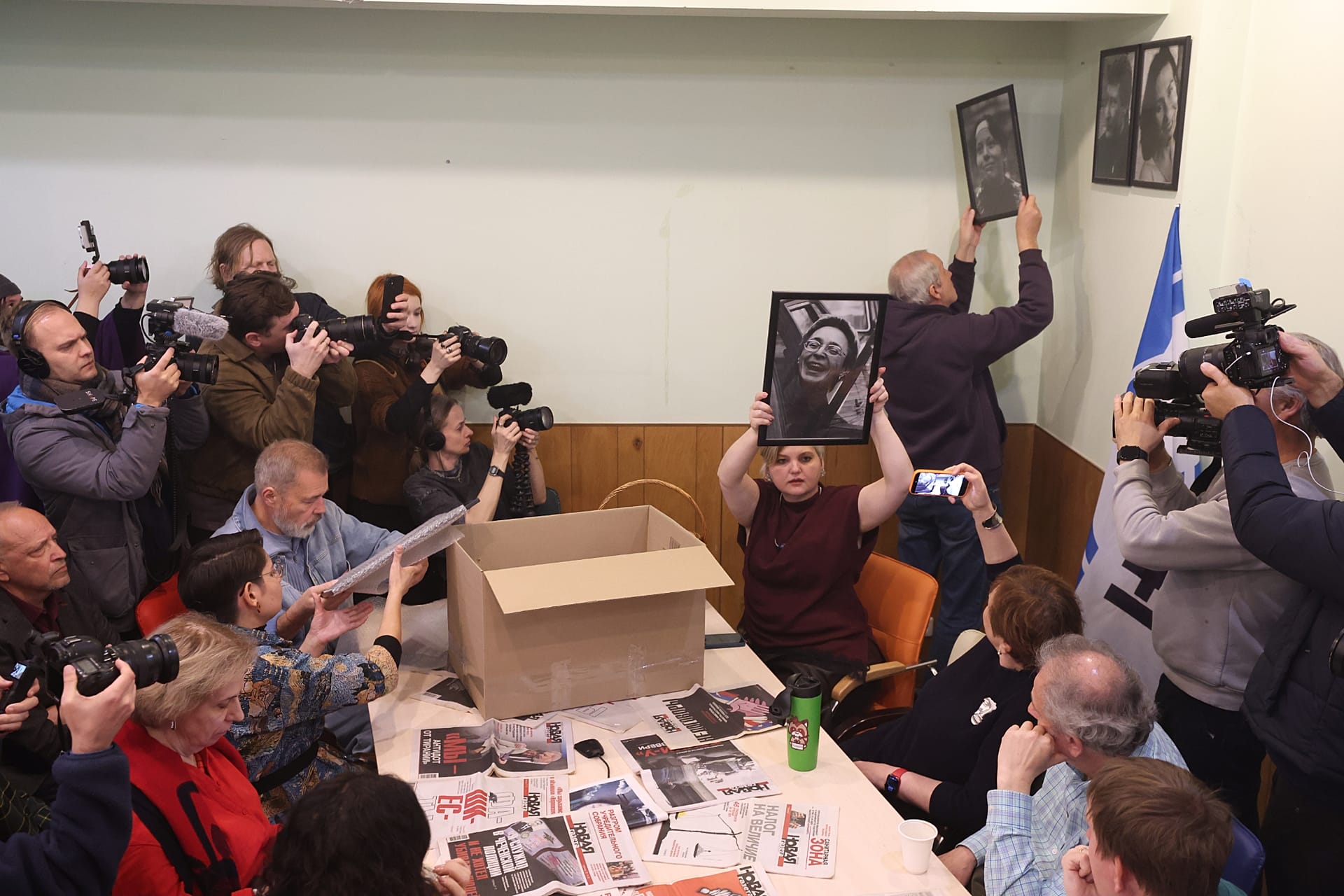
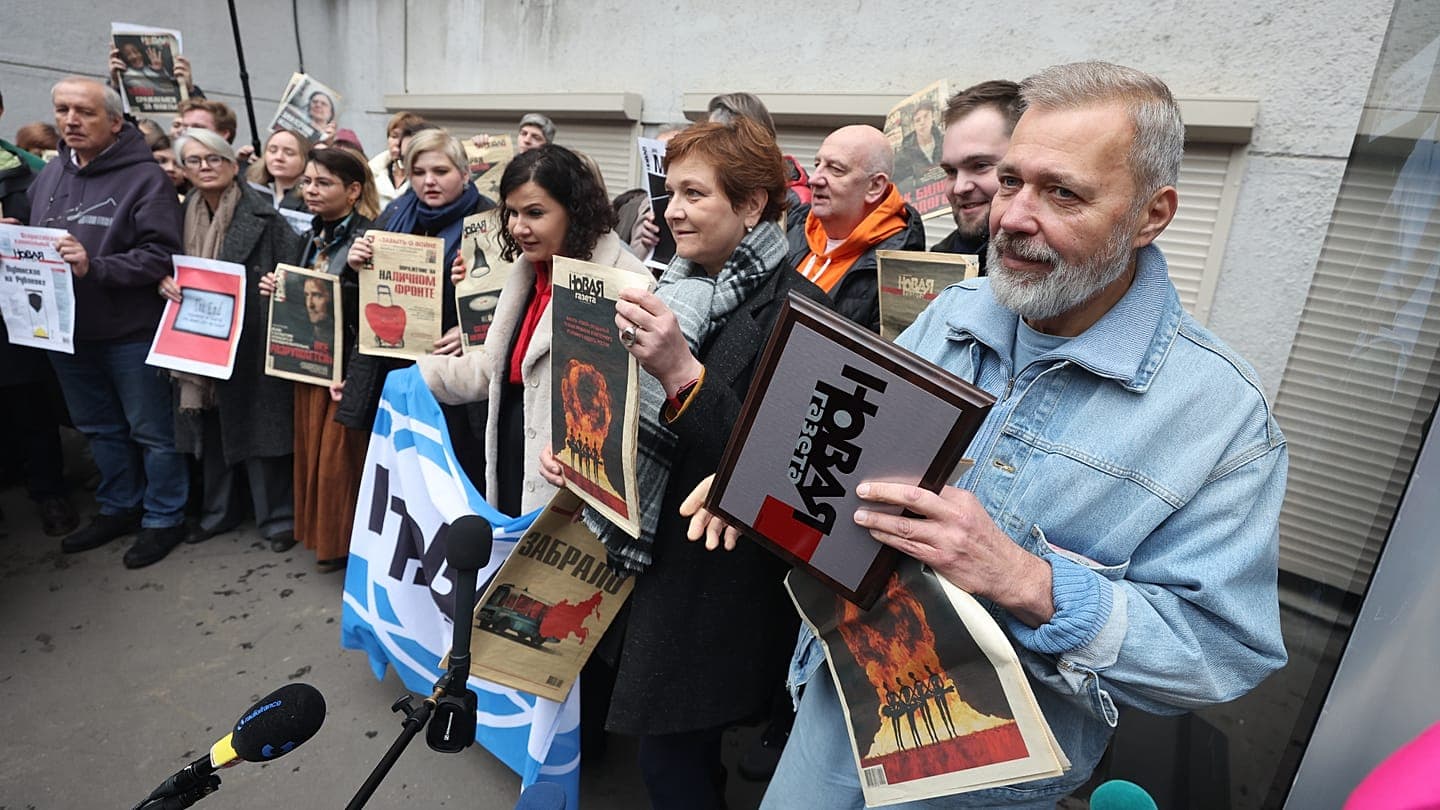
Editor-in-chief Sergei Sokolov held a final editorial meeting attended by staff, the newspaper's founder and Nobel laureate Dmitry Muratov, as well as journalists from other outlets. The staff packed up their belongings and took down from the walls the portraits of murdered colleagues — among them Anna Politkovskaya, Yuri Shchekochikhin and Natalia Estemirova. After the journalists left, a new inscription appeared on the wall next to the plaque: 'Novaya Gazeta lived here.'
Words from Muratov and Sokolov
Muratov called the repressions in Russia 'total' and said that already by 2021, before the full-scale invasion of Ukraine, hundreds of people had been convicted under the relevant articles. 'This is because the country is governed not by parliament, not by local administrations and not by governors, but by the FSB of the Russian Federation,' he said. In his farewell address to the staff, he asked them to support Russians who speak out against the war, to work for the release of political prisoners, to seek a humanitarian corridor for villages in the former Oleshky zone, and to work toward ending Russian strikes on Ukrainian cities. Sokolov, according to Euronews, addressed those gathered outside the building with a promise: as soon as the first signs of change appear in the country, Novaya Gazeta will return to its readers and colleagues. Muratov also said that more than 400,000 of the newspaper's articles have been archived and are being republished around the world.
Reaction and the newspaper's history
The closure of the newspaper was condemned by Reporters Without Borders, Amnesty International and the UN Office of the High Commissioner for Human Rights. The Kremlin dismissed the significance of the event: press secretary Dmitry Peskov called the disappearance of some media outlets and the emergence of others 'a normal process.' The newspaper was founded in 1993, became known for its coverage of the Chechen wars and its investigations of human rights abuses and corruption; six of its journalists were killed, and the authorities had earlier designated the outlet a 'foreign agent,' but the newspaper continued publishing until its final closure.