The key facts
- Five eVTOLs of different modifications and weight classes flew in formation for 47 minutes in autonomous mode
- The lead V5000 Matrix aircraft covered more than 133 kilometers
- This is an expansion of the May 2026 experiment, which involved three aircraft
First group flight of five eVTOLs
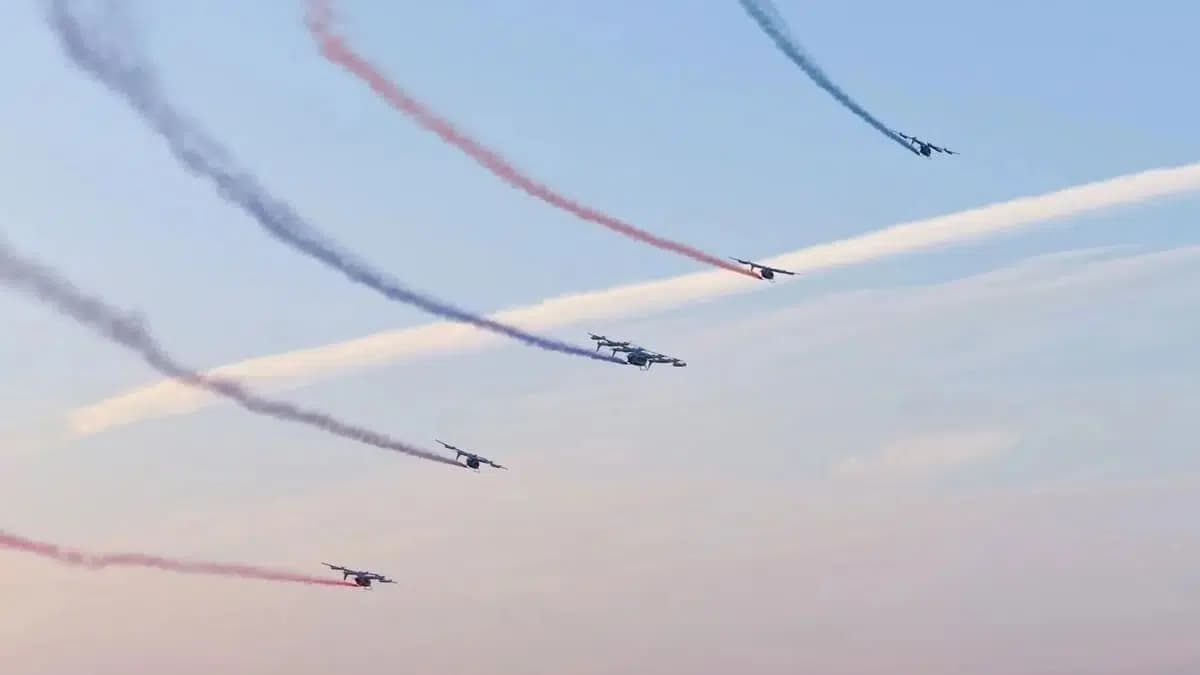
The Chinese company AutoFlight has conducted tests of a group of five electric vertical takeoff and landing (eVTOL) aircraft that flew without any intervention from a pilot or operators. According to Kun.uz , citing data from the manufacturer, this was the world's first simultaneous group flight of five electric aircraft of this type. The company's press release, distributed via PR Newswire, also announced the completion of the world's first group flight of five eVTOLs.
How the flight went
The tests took place at AutoFlight's flight test base near Bailian Lake in the city of Kunshan. The five aircraft flew in a coordinated formation for 47 minutes; during that time, the lead V5000 Matrix covered more than 133 kilometers. According to the company, the flight was carried out entirely in autonomous mode and required no pilot or operators, and despite strong winds, the group maintained a stable formation and safe horizontal and vertical separation between the aircraft.
Composition of the group and the technical complexity of the task
The group consisted of one five-ton V5000 Matrix and four two-ton aircraft from the V2000 family, including the cargo V2000CG CarryAll and its modification, the V2000CGF, specialized for firefighting. In total, three different modifications of aircraft took part in the demonstration flight. Organizing a joint flight of several aircraft along a single route is considerably more difficult than a solo flight: each aircraft must hold its assigned position relative to the others, taking into account changes in speed and altitude, wind conditions, and the maneuvering characteristics of neighboring machines. The task becomes even more complicated when the group includes aircraft of different designs and weight classes — the control systems have to coordinate navigation, data exchange, and safe distances so that the maneuvers of one aircraft do not create a risk for the others.
A development of the May experiment
The November flight was a continuation of an experiment conducted in May 2026: back then, AutoFlight organized a flight of three aircraft — one V5000 Matrix and two aircraft from the V2000 family. The main focus at that time was on verifying the compatibility of the control systems of aircraft in different weight classes, including communication channels, route planning, and flight coordination. The new tests made it possible to check how route planning, flight control, communications, and safety systems perform when several different models operate together.