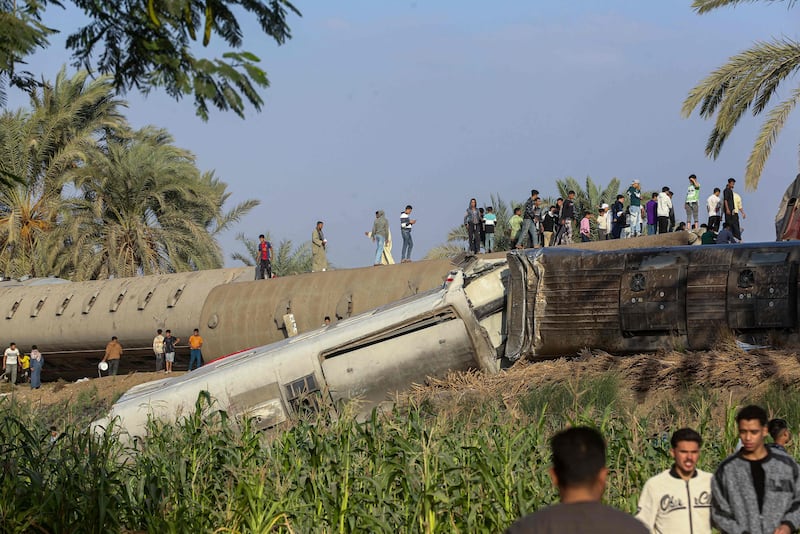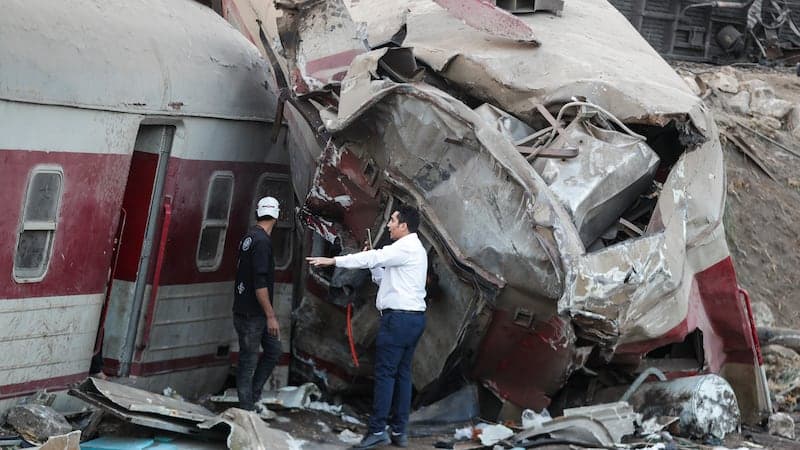
The key facts
- Seven people were killed and 125 injured in the collision near El-Ayat, according to Egypt's health ministry
- Prosecutor's office: the driver switched off the ATC system before the collision; the duty officer and station master were detained
- The minister admitted errors but rejected calls to resign; the committee issued more than 25 recommendations
Minister's admission at a six-hour session
Egypt's Transport Minister, Lieutenant General Kamel el-Wazir, appeared before the parliament's transport committee on Tuesday at a session that lasted about six hours, following Sunday's train collision near El-Ayat station. According to the health ministry, seven people were killed and 125 were injured. “We admit that there are mistakes, and our goal is to prevent accidents or reduce them. Mistakes still exist and will still happen,” the minister said, adding that passenger safety is his responsibility. He also acknowledged: “I admit that we are not good at management, and the private sector has the tools for success,” but did not announce any new privatization plans.
Prosecutor's account: the ATC system switched off
A day before the hearings, the prosecutor's office laid out its account of what happened. According to it, technical checks showed that the driver of one of the trains switched off the automatic train control (ATC) system before the train rammed into the rear of a Cairo–Aswan train standing on the same track. The system is designed to intervene when a driver makes an error: it slows or stops trains that pass a stop signal or exceed the speed limit. Injured passengers told investigators that the train had been traveling at high speed from the moment it departed El-Ayat station. The driver was killed. The prosecutor's office detained the duty officer and the station master of El-Rakka, who admitted they had not been monitoring the signal tower control panel, and the duty officer, investigators allege, falsified the signal log to conceal his actions. The driver's assistant was also detained for questioning.
Dispute over the 2021 decision
The findings about the ATC provoked a sharp reaction, since this is not the first crash in which this system has been at the center. After the collision in Sohag, which claimed the lives of at least 19 people in 2021, el-Wazir acknowledged that the drivers of both trains had switched off the system, and that he had earlier permitted a partial suspension of ATC on sections of the network due to passenger complaints about delays. On Tuesday he gave a different comment: “They say I ordered the ATC to be switched off. Yes, that happened, but people take my words out of context.” According to him, the 2021 decision was a one-off and was connected with heavy rains, when trains were allowed to travel no faster than 15 km/h. He said that switching off the system is now a violation punishable by dismissal, and that he does not know why the system was turned off on Sunday: “The prosecutor's office will say.”
Investigation, debts and the committee's recommendations
The Attorney General ordered the creation of a commission of engineering professors from Cairo University, which is to examine the railway authority's safety, signaling and maintenance systems, assess whether modernizations have reduced the number of accidents, and analyze past crashes for recurring causes. El-Wazir said that before the train departed on its route, a safety check was signed by 21 officials. He defended the authority's loans: according to him, of external credits totaling $5.1 billion, about $3.05 billion has been drawn, of which $870 million has already been repaid from railway revenues, and a significant portion of the debt he inherited in 2019 has been paid off. These figures relate only to the railways, not to the ministry's entire transport program, for whose borrowing he is regularly criticized by deputies. Some parliamentarians demanded the minister's resignation, arguing that political responsibility is separate from criminal responsibility; others defended him — deputy Mustafa Bakri, a government supporter, called the attacks by critics a “political assassination” and said that investigators should determine guilt. The committee issued more than 25 recommendations on safety and operations and called for a broad review of why accidents keep happening specifically in El-Ayat — the site of Egypt's deadliest rail disaster in 2002 and a whole series of subsequent crashes. For now, only station staff are in custody.