The key facts
- Uzbekistan produces about 26 million tons of fruits and vegetables a year and exports products to 92 countries
- The government's goal is 10 billion dollars in food exports by 2030; 2026–2030 has been declared a priority period for food security
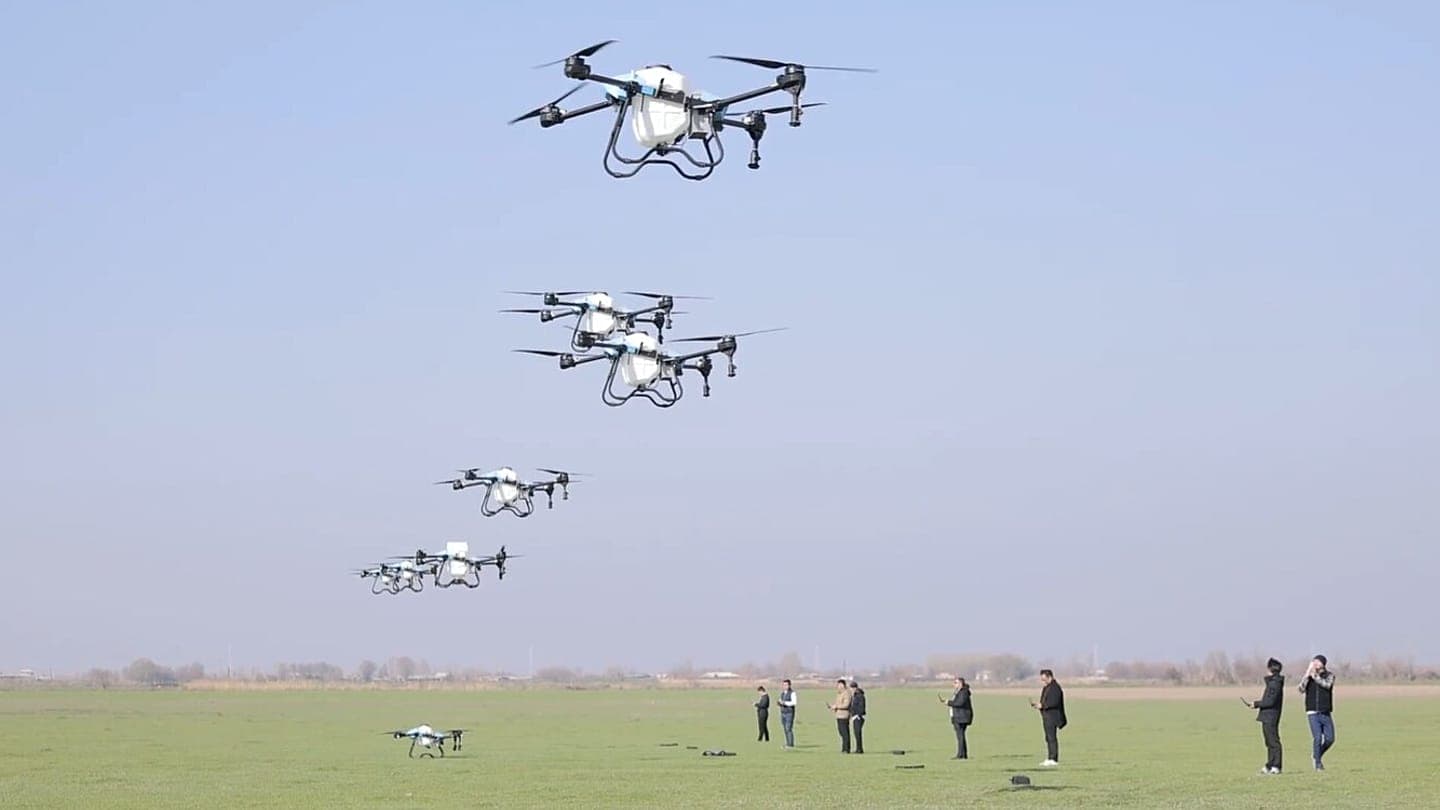
- The World Bank approved a 200-million-dollar project to modernize irrigation in five regions; in 2026, 100 agricultural drones were received
A course toward yields instead of expanding acreage
Agriculture remains an important part of Uzbekistan's economy, but the sector operates under conditions of limited land and water resources, so the government is betting on raising yields rather than expanding sown areas. This is reported in a Euronews piece devoted to the country's agricultural transformation.
Sector figures and plans through 2030
According to Minister of Agriculture Ibrokhim Abdurakhmonov, Uzbekistan produces about 26 million tons of fruits and vegetables annually, and its products are supplied to markets in 92 countries. The government intends to raise food exports to 10 billion dollars by 2030, and the period of 2026–2030 has been declared a priority one for food security — with an emphasis on domestic production and reducing dependence on imports of certain goods, including vegetable oil and sugar.
Cotton, grain and modern orchards
Growth is being achieved without increasing acreage: in 2025 cotton was grown on approximately 875,600 hectares, compared with more than a million hectares in previous years, yet the harvest reached almost four million tons, said Shamshod Ergashev, head of the minister's secretariat. According to him, in 2026, 10 million tons of grain were harvested — thanks in part to improved seed treatment and sowing. In horticulture, the switch to dwarf and semi-dwarf rootstocks raised yields from the traditional 7–10 tons per hectare to 30–35 tons, and in some cases to 50–60 tons, said Abror Zhurayev, head of the Republican Directorate for Horticulture Development. On a 138-hectare farm, the average apple yield is 35 tons per hectare: company representative Kahramon Ilkhombekov explained that 50 tons are technically possible but place excessive strain on the trees. In total, the country has about 572,600 hectares of orchards and vineyards, and for 2026–2028 the creation of 172,000 hectares of modern high-yield orchards is planned. Farmers have access to preferential loans of up to 120 million soums per hectare for a term of seven years with a three-year grace period, as well as subsidies for maintenance — five million soums per hectare annually for three years.
Water, drones and digital platforms
Water scarcity remains the sector's main problem: according to the World Bank, agriculture accounts for about 90% of the country's water consumption. In May 2025, the bank approved a 200-million-dollar project to modernize irrigation infrastructure in five regions — annual water losses are expected to fall by roughly 540 million cubic meters, and irrigation will improve on 232,000 hectares. At the farm level, drip irrigation is being used, and in 2026 Uzbekistan received 100 Chinese agricultural drones: half are intended for remote monitoring of farmland, the rest for applying fertilizers and pest control. Satellite crop monitoring, geographic information systems and artificial intelligence-based applications are being developed, while the Agroportal and Agrosubsidy platforms are designed to simplify access to subsidies and government services.
Climate resilience and financing
The Global Green Growth Institute (GGGI) participates in climate-resilient agriculture projects, including in Karakalpakstan, and supported Uzbek banks in issuing green bonds on the London Stock Exchange, said institute senior specialist Bakhtiyor Rajabov. He also noted an investment platform in the agri-food sector involving the EBRD and the Ministry of Agriculture, whose goal is to attract about 1.5 billion dollars into the sector. According to him, developing local expertise remains key, since water shortages, soil salinization and land degradation continue to affect the sector. The long-term results of the transformation will depend on whether investments help farmers raise productivity and enter new markets while adapting to water scarcity and climate challenges.