The key facts
- The heart's contractions create a mechanical load under which it is harder for cancer cells to multiply
- The mechanism is linked to the Nesprin-2 protein and changes in chromatin structure
- The effect was observed in lung cancer, colon cancer, and melanoma cells; there is no talk of treating patients yet
Mechanical load as a defense against tumors
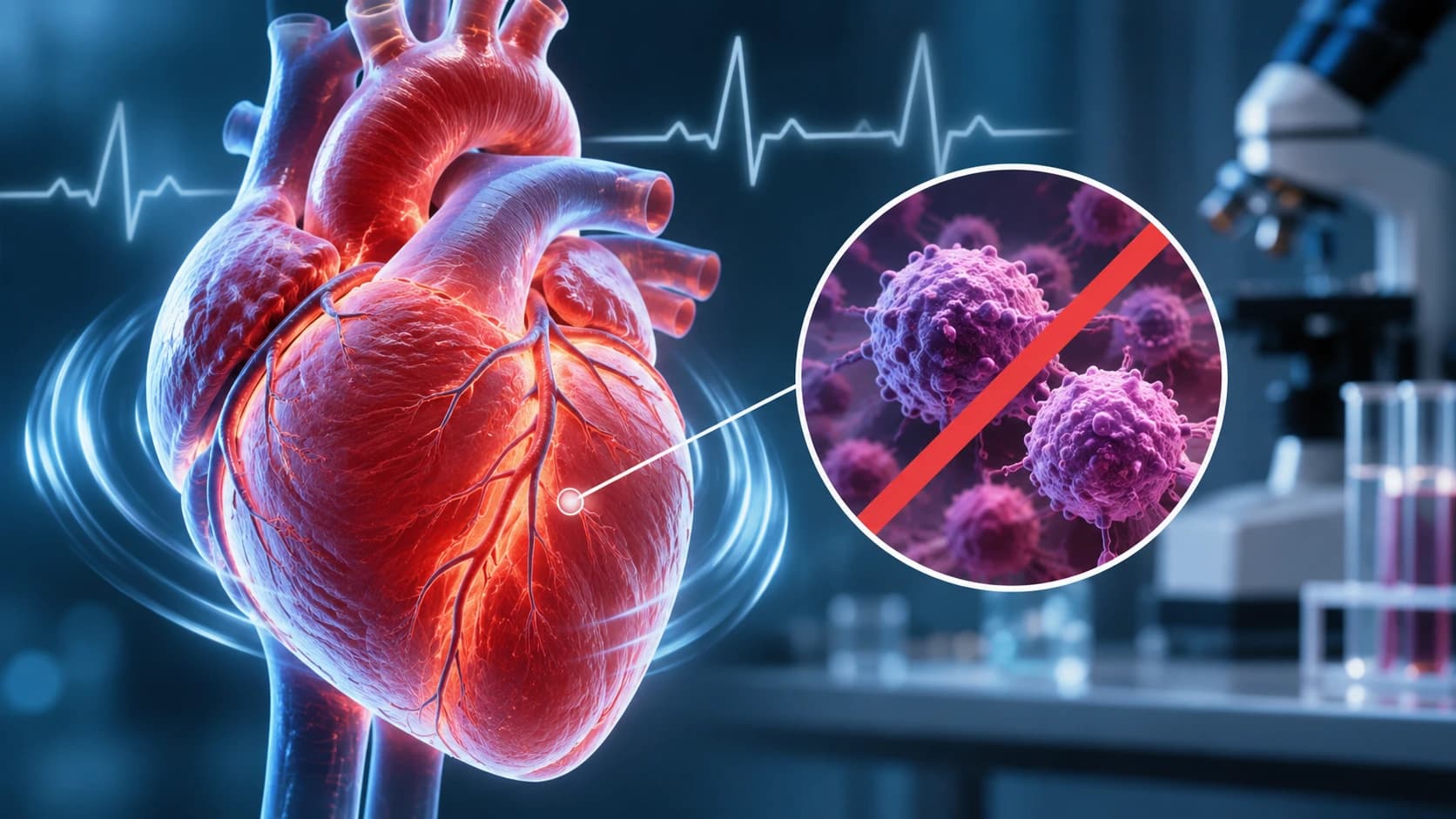
The constant contractions of the heart muscle can suppress the multiplication of cancer cells — this is the conclusion reached by an international group of researchers in a study, published in the journal Science. As Life.ru reports, this helps explain why malignant tumors extremely rarely arise in the heart despite its intensive blood supply: the organ performs about 100,000 contractions per day.
What the experiments showed
For a long time, the rarity of heart tumors was explained by a feature of cardiomyocytes — heart muscle cells that almost stop dividing after birth. The new study points to an additional factor: constant mechanical load. In experiments on mice and artificially grown heart tissue, when the load was reduced, tumor cells began to divide more actively, and when stimulation comparable to the heart's natural work was restored, tumor growth slowed down. This effect was observed in lung cancer, colon cancer, and melanoma cells.
The role of the Nesprin-2 protein
A key role in the mechanism is played by the Nesprin-2 protein, which helps cells perceive mechanical stimulation. Under its influence, the structure of chromatin — the complex of DNA and proteins in the cell nucleus — changes, which affects the activity of genes responsible for cell multiplication. The protein's importance was confirmed by a separate experiment: when scientists suppressed its function, cancer cells began actively multiplying again even under normal load, and large tumors formed in the experimental animals.
Limitations and prospects
As the Daily Mail notes, the discovery is also of interest to oncology: researchers are considering the possibility of using controlled mechanical stimulation to suppress tumors in other parts of the body. However, this is still an experimental result, not a ready-made treatment — the effectiveness and safety of such an approach for patients remain to be established. Moreover, the heart does not have absolute protection: primary malignant tumors in it are rare but do occur, as do metastases from other organs.