The key facts
- The Uber Parking service has launched in 15 US cities, including New York, Chicago, San Francisco and Los Angeles
- The SpotHero acquisition deal was announced in February and gave Uber access to a network of 13,000 garages and parking lots in more than 400 cities
- Parking lots are expected to be used as waiting points for robotaxis to reduce deadheading by autonomous vehicles
A new service in the Uber app
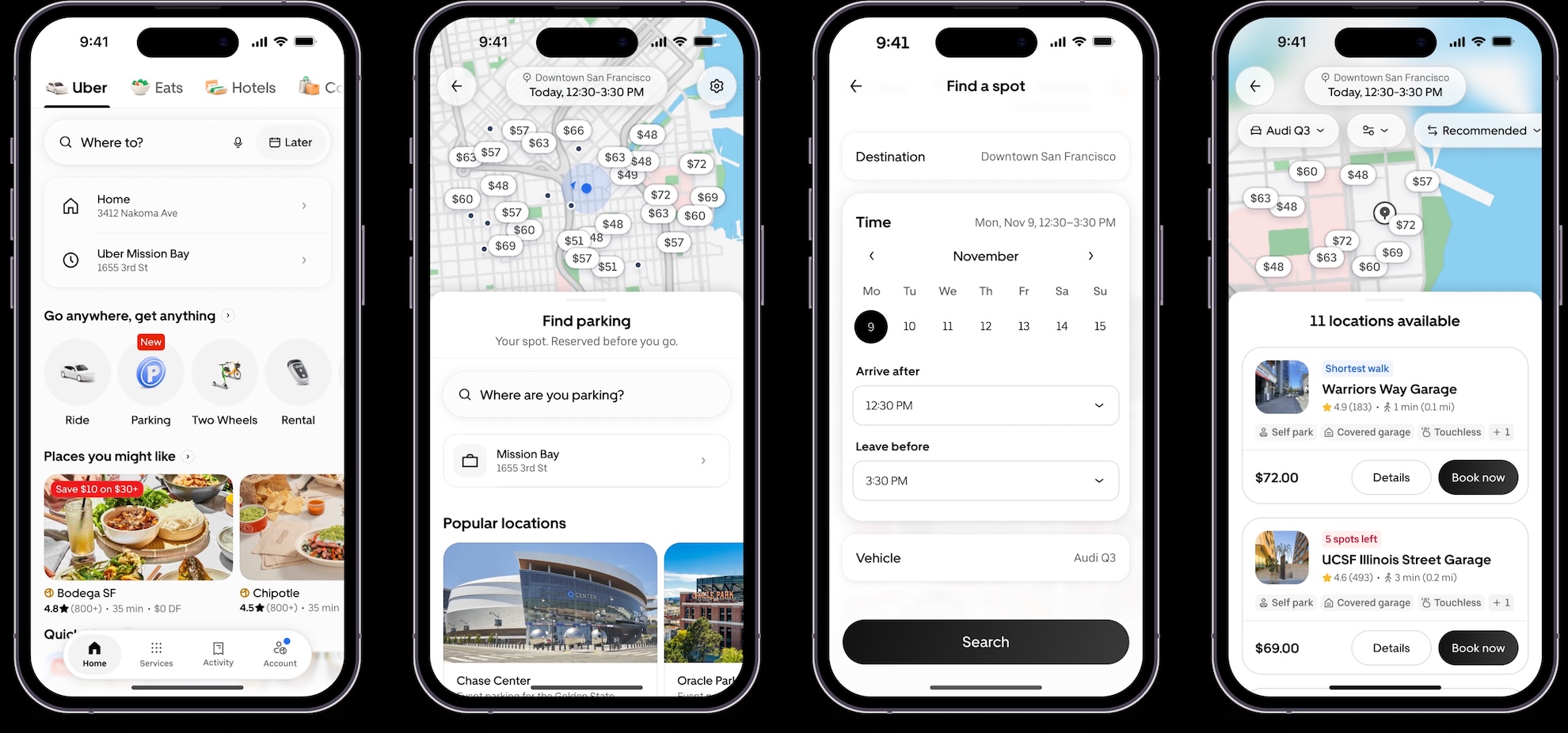
On Monday, November 9, Uber announced the launch of a service that lets users reserve and pay for parking in major US cities. This came about nine months after the acquisition of the SpotHero app: the deal was announced in February, TechCrunch reports. It gave Uber access to a network of 13,000 garages, parking lots and valet services in more than 400 cities.
How it works
At launch, the service covers 15 US cities: Atlanta, Austin, Boston, Chicago, Dallas, Denver, Los Angeles, Miami, Nashville, New York, Philadelphia, San Diego, San Francisco, Seattle and Washington. Uber Parking is available right from the app's home screen: the user enters a destination, picks a date and time, and then sees options on an interactive map. Results can be filtered by type — self-parking, valet, garages or open lots; the price is shown upfront. The booking is paid through the Uber wallet, and on site the entrance opens via a unique QR code or license plate recognition. A booking can be canceled for free before the paid period begins.
A bet on commuters and robotaxis
For now, the company is focusing on people who drive their own cars. Uber CEO Dara Khosrowshahi earlier this month on the third-quarter earnings call called commuting one of the company's largest categories and noted that for this audience the app can now offer not only a ride, but also a subscription against surge pricing, and parking if a person decides to drive their own car. Members of the Uber One program, which surpassed 55 million people as of September 30, can get 10% cashback in credits for eligible parking bookings; these credits can then be spent on rides and Uber Eats orders.
Why autonomous vehicles need parking
Although the first phase of the service is aimed at human drivers, Uber plans to use the acquired parking network for partner companies developing autonomous vehicles as well: parking spots can serve as staging and waiting points for self-driving cars. The company's idea is that this should help reduce road congestion and so-called deadheading — miles driven by a vehicle without a passenger or cargo on board. The parking service launch continues Uber's strategy of turning the app into an ecosystem: the company has already moved into car rentals, hotel bookings and integration with public transit and robotaxis.