The key facts
- A stone found in 2005 near the Katu-Yaryk pass served as a chock for a car wheel for 20 years
- The examination confirmed: it is an ordinary H5 chondrite containing olivine, pyroxene, an iron-nickel alloy, and the rare phosphate merrillite
- On September 22, 2026, the find was registered as «Chulyshman» — the first meteorite of the Altai Republic and the 160th in Russia
A wheel chock turned out to be a meteorite
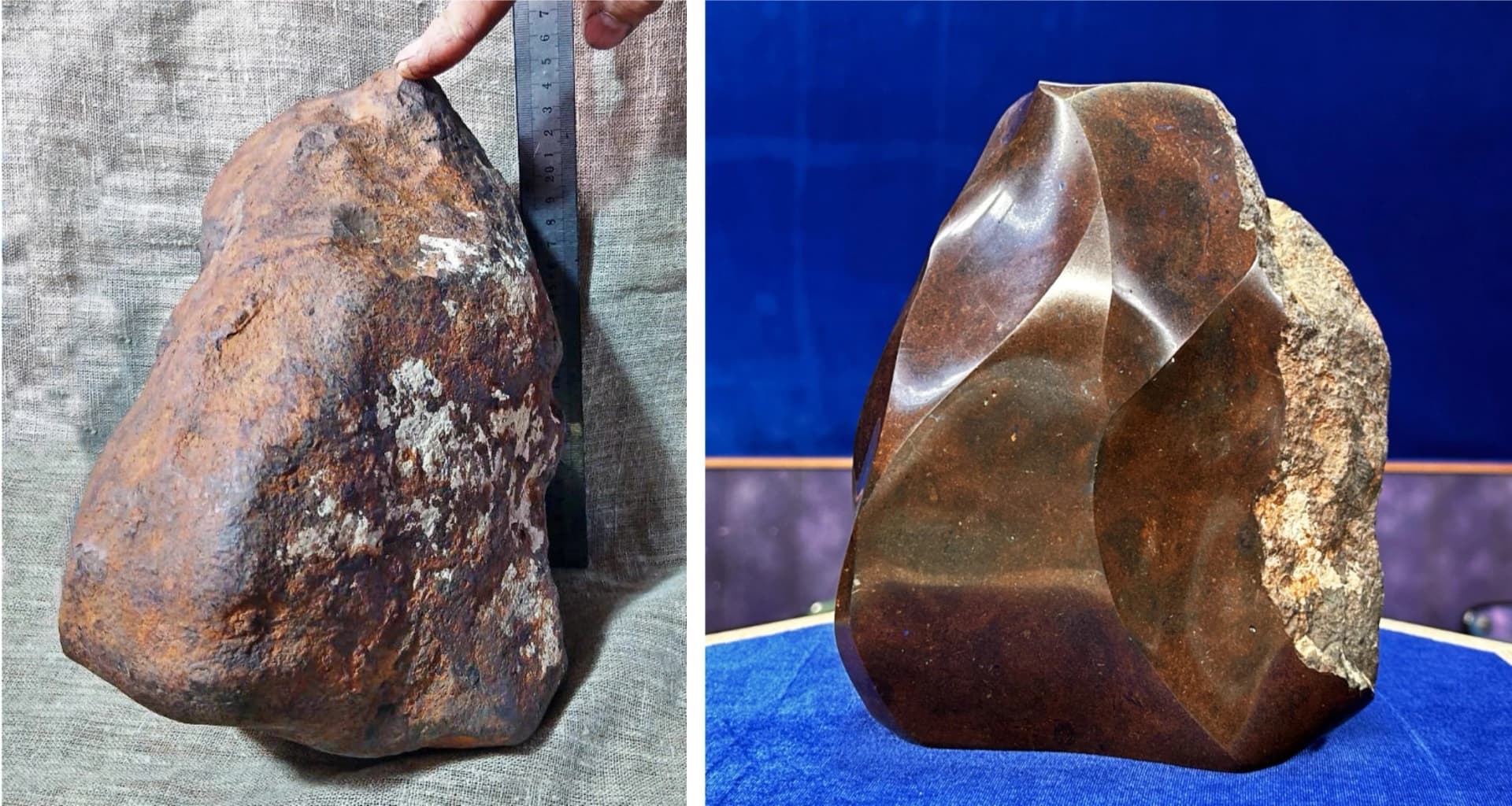
A resident of the Altai Republic kept a stone for more than 20 years, first using it as a chock under a car wheel, without suspecting its origin. As reported by the V. S. Sobolev Institute of Geology and Mineralogy of the Siberian Branch of the Russian Academy of Sciences, the man found the stone in 2005 near the Katu-Yaryk pass, close to the Chulyshman River. Later he became interested in the stone's origin, but, according to the institute's staff, «he wanted to have it authenticated or sell it, but after running into scammers, he kept it for as long as 20 years».
What the examination showed
In 2025 the owner gave the stone to Viktor Likhachyov, head of the creative association «Samotsvety» from the village of Ust-Koksa region's Verkh-Uymon. He suspected it was a meteorite and sent samples for study. Scientists Andrey Vishnevsky and Viktor Sharygin examined the structure and chemical composition of the find and classified it as an ordinary H5 chondrite — a meteorite containing small rounded mineral formations. The sample also showed an elevated content of metals and sulfur compounds; among its components were olivine, pyroxene, an iron-nickel alloy, native copper, and the rare phosphate merrillite. According to the specialists, the celestial body fell to Earth at least several hundred years ago: oxidation traces and changes in the minerals' structure indicate this.
Official registration and where to see the find
The International Meteorite Committee registered the find on September 22, 2026 under the name «Chulyshman». It became the first confirmed meteorite in the territory of the Altai Republic and the 160th in Russia. The main part of the stone is displayed in the «Samotsvety» museum in Verkh-Uymon, and a separate fragment is planned to be shown at the Central Siberian Geological Museum in Novosibirsk's Akademgorodok.
Context: a meteor over Libya
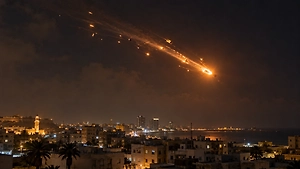
The Life.ru editorial team also recalled a recent event in North Africa: residents of Libya spotted a bright meteor over Tripoli and other areas of the western part of the country. The glowing object crossed the night sky, leaving a long fiery trail, and witnesses heard a loud sound resembling a clap of thunder; in footage published on social media, the body breaks into several pieces. Reports also came from Misrata and Zuwarah. Specialists of the Libyan Center for Remote Sensing and Space Science suggested it was a small celestial body entering the atmosphere, but did not rule out that the phenomenon could have been caused by falling space debris.