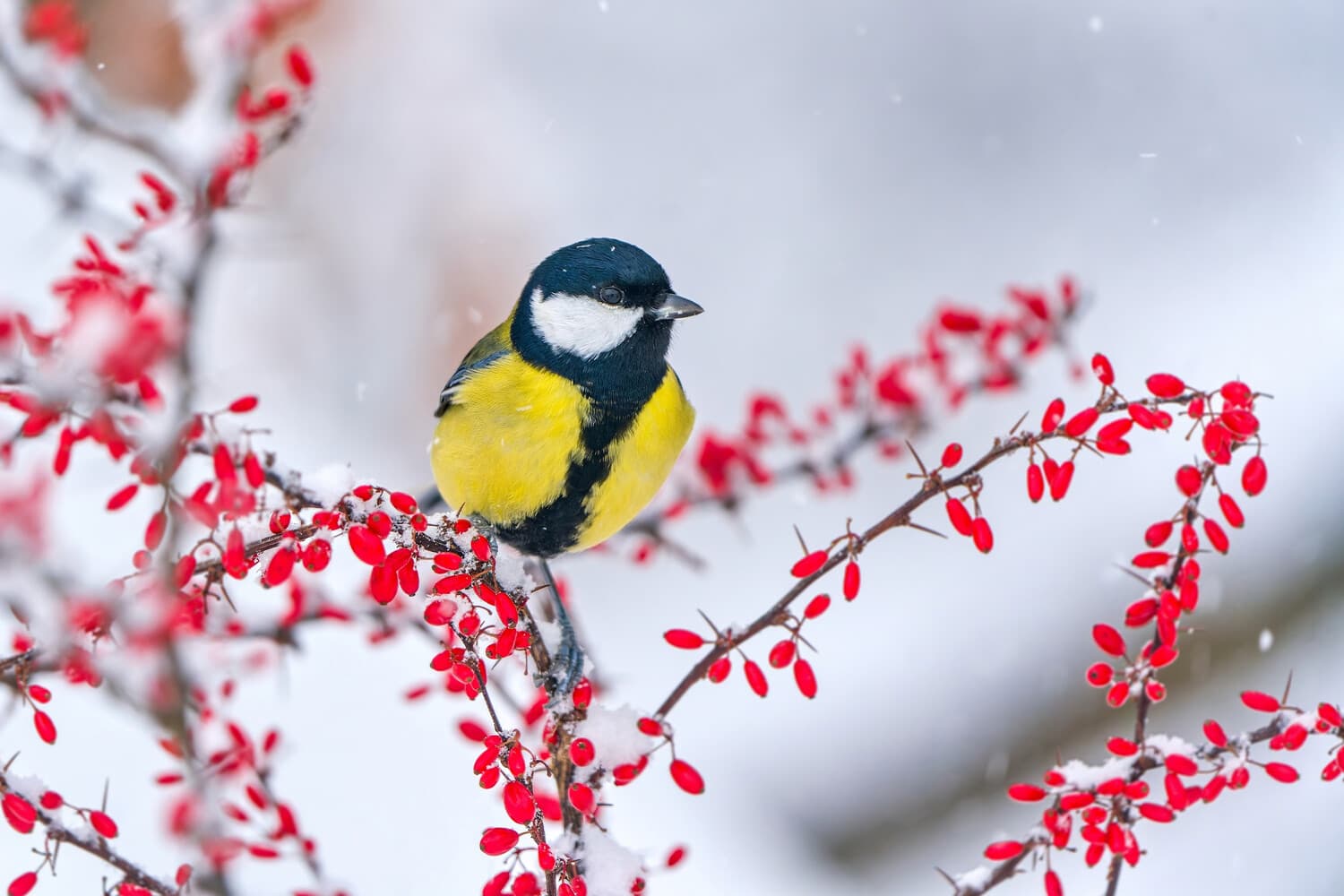
The key facts
- Redpolls dig tunnels in the snow at a depth of 6–11 cm, where it is warmer than in the open air
- On cold nights, tits lower their body temperature from about 41°C to 31°C
- In England, gatherings of up to 60 wrens huddling closely together were observed
How birds survive frosty nights
Norwegian biologist Olav Hogstad of the University Museum of the Norwegian University of Science and Technology (NTNU) told the publication Forskning.nohow small birds endure the winter cold. According to him, they use three main strategies: shelters, communal roosting, and physiological lowering of body temperature. For small birds, cold is especially dangerous — because of their small body mass they lose heat quickly and have limited energy reserves, so combining these methods can be the decisive condition for survival.
Snow as insulation and roosting together
Snow serves as natural insulation for birds: the temperature under the snow cover can be significantly higher than in the open air. Redpolls dig tunnels in the snow at a depth of 6–11 cm and roost there; black grouse and bullfinches use similar shelters. Woodpeckers wait out frosts in specially carved tree hollows, while treecreepers hide in bark crevices and under tree branches.
Communal roosting and controlled cooling
Other species prefer to roost in groups: wrens gather under the snow in small numbers, and in England gatherings of up to 60 birds huddling closely together were observed. Such behavior reduces the body surface area exposed to cold air. Some birds also use physiological mechanisms: on especially cold nights, tits can lower their body temperature from about 41°C to 31°C, which slows metabolism and reduces energy expenditure. Excessive cooling is dangerous, so in willow tits, when body temperature approaches 32°C, a protective reaction kicks in — shivering: muscle contractions generate heat and prevent the body from cooling further.