The key facts
- Surveys: only a minority of Germans feels a strong sense of community between the country's east and west
- Three artists told DW about their personal experiences of division and reunification
- The interviewees differ in their assessments of the future: East Germans are more optimistic than the western artist
Division in memory and in surveys
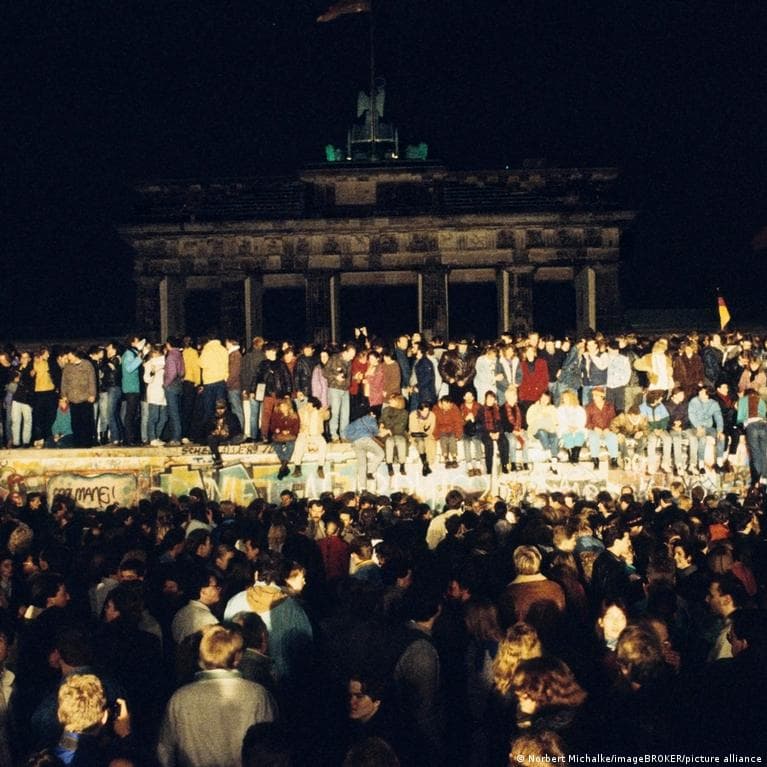
On November 9, 1989, the Berlin Wall fell, ending East Germany's isolation from the West. The event was celebrated on both sides of the border at the time; however, as Deutsche Wellenotes, 37 years later many residents of the former East and West Germany still regard each other with distrust. Surveys show that only a minority of respondents feel a strong sense of community between people from the east and the west, and many continue to see significant differences between them.
Three perspectives on reunification
DW asked three artists with different experiences of the divided country to share their views. Writer Lea Streisand, born in 1979 in East Berlin, recalled how, at the age of 10, she received a 'welcome gift' together with her mother — 100 Deutschmarks from the West German state, with which they bought winter boots, which upset her. The real disappointment, she said, came later, over the following year: 'the entire system was swept away and replaced with a new one too quickly for the people.' Artist Anke Feuchtenberger, born in 1963 in East Berlin, recounted that the members of the civil rights movement, which brought about the fall of the Wall, for many sought not the immediate dissolution of the state but its reform; she was alarmed by how quickly 'the revolutionary aspects of the movement were crushed by consumerism,' while nationalist tendencies came to the fore. Photo artist Simon Menner, born in 1978 in western Baden-Württemberg, perceived the fall of the Wall in childhood as 'rather abstract,' and today he draws attention to the one-sided portrayal of the GDR in cinema: West Germany of the 1980s, he says, was grim as well.
Stasi archives and a one-sided view of the past
Menner works with the theme of surveillance. In the archives of the GDR's Ministry of State Security (the Stasi), today open as part of the National Archives, he discovered a huge collection of photographs and published the book 'Top Secret' (2012) with images of the secret police's work — ranging from eerie to absurd. At the same time, he spent a year unsuccessfully trying to gain access to the photo archive of the West German intelligence service. He now considers his own project problematic because of its one-sided focus solely on East Germany's past, and believes it is 'high time' to critically examine the history of the West German intelligence services of the 1960s as well: an honest reckoning with the past as a whole, in his view, is a condition for genuine reconciliation.
Western interest in eastern stories
Interest in such stories persists: Feuchtenberger's graphic novel 'Comrade Cuckoo' (2023, nearly 500 pages) became the first graphic novel nominated for the Leipzig Book Prize in the fiction category. The artist was surprised that her stories about childhood in a fictional East German village attracted such interest in the west so many years after the fall of the Wall. A frequent topic at her readings is that the heroine rarely sees her parents, who worked full days: in the GDR, the right to work was simultaneously a civic duty. Feuchtenberger suggests that Western readers find this compelling because full employment for both parents was long less common in the west. Streisand, for her part, sees literature as a path to mutual understanding: it 'opens a window into someone else's experience.'
What comes next: differing forecasts
The interviewees' views on the future diverge. Both East German participants are more optimistic than Menner. He noted that in Berlin he no longer always notices which part of the city he is in, but, citing the recent electoral successes of the far-right 'Alternative for Germany', warned: if politicians do not become more attentive to listening to both the older and the younger generations, 'the near future will become difficult.' Feuchtenberger believes it is important to step out of one's own bubble and not fixate on the internal German division. Streisand is convinced that the East-West topic will be of no interest at all to children: 'Young people don't care where their parents come from. Can I get a job that lets me support a family? Will I be sent to war? Completely different things matter now.'