The key facts
- More than 95% of the giant panda's diet is bamboo, with nutrient absorption of only about 17%, so in the wild it eats 10–14 hours a day.
- More than 95% of the giant panda's diet is bamboo, with nutrient absorption at around 17%, so in the wild it eats for 10–14 hours a day.
- China does not sell pandas but leases them to zoos — usually about $1 million a year for a pair; 26 organizations from 20 countries participate in international programs.
- Wild pandas now number nearly 1,900, up from about 1,100 in the 1980s; in 2016 the IUCN moved the species from 'endangered' to 'vulnerable'.
- The number of wild pandas has grown to nearly 1,900 from about 1,100 in the 1980s; in 2016 the IUCN moved the species from the 'endangered' category to 'vulnerable'.
The bear that almost became a vegetarian
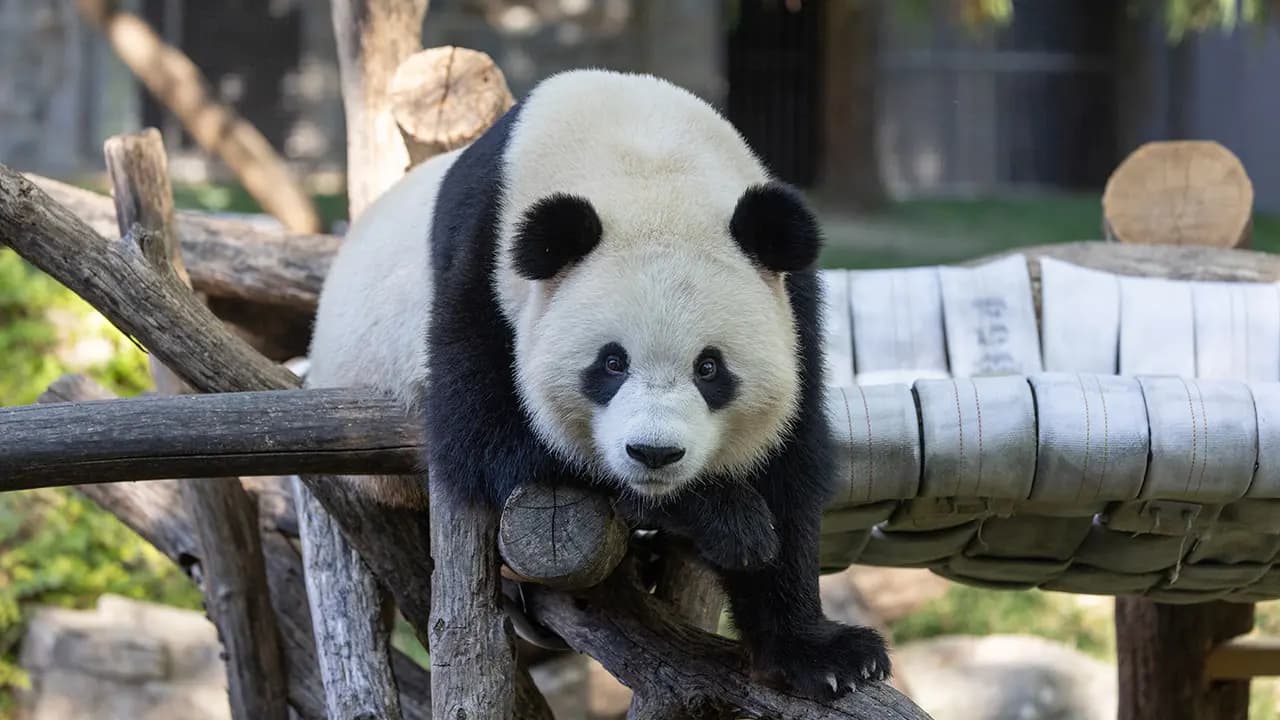
The giant panda belongs to the bear family and the order of carnivores, but more than 95% of its diet is bamboo — young shoots, leaves and stems depending on the season. The problem is that the animal's digestive system has remained that of a carnivore: a short intestine without a complex apparatus for processing plant food. According to China's National Forestry and Grassland Administration, the absorption of nutrients from bamboo is only about 17%, so the panda compensates with volume: in the wild it spends 10 to 14 hours a day eating, and in captivity an adult animal is given about 10–15 kg of bamboo a day. Pandas do not hibernate — they alternate between feeding and sleeping all year round.
The 'sixth finger' and a solitary lifestyle
One of the best-known features of the species is the so-called sixth finger: it is not a true finger but an enlarged wrist bone that works like a thumb and allows the panda to grip bamboo stems. Pandas climb trees well, and sometimes stand on their front legs against a tree to leave a scent mark higher up: scent helps them mark their territory and find relatives. Otherwise, giant pandas lead a solitary lifestyle.
Why the birth of a cub is a rarity
Reproduction is the main difficulty in preserving the species. The mating season falls in March–May, but the period when the female is capable of fertilization lasts only about one to three days. A newborn weighs on average about 100 grams — roughly one thousandth of the mother's weight; it is pink, almost hairless and has closed eyes. The dark patches of coloring appear after about a week, and the characteristic black-and-white pattern forms by the 20th day. In the wild usually one cub is born; twins are not uncommon in captivity; the cub stays with its mother for one to two years, and shows interest in bamboo from about the age of one.
'Panda diplomacy': rent instead of gifts
The giant panda has long been an instrument of China's international relations. In the past the animals could be given as gifts to foreign states, but from the 1980s they began to be transferred for a limited term, and from the 1990s joint scientific programs became the basis of cooperation. Today China does not sell pandas but leases them to zoos: a pair usually costs about $1 million a year — this is the amount the Smithsonian's National Zoo in the USA pays to China; the money goes toward studying the species and protecting its habitat. The pandas and their offspring remain the property of China, and cubs born abroad are generally returned before the age of four. According to China's National Forestry and Grassland Administration, 26 organizations from 20 countries participate in the programs, 69 pandas have been sent abroad, and 73 cubs have been born in other countries. A recent example is the arrival on September 27 of the male Ping Ping and the female Fu Shuan, born in 2020, at the Atlanta zoo under a ten-year agreement.
The population has grown, but protection continues
The pandas' habitat shrank for a long time due to human activity, isolating individual groups. To solve the problem, China is creating ecological corridors: according to data presented at the Global Panda Partners 2026 conference, they have connected 13 previously isolated local populations, where more than 150 cases of activity by pandas and other wild animals have been recorded. In 2021 the Giant Panda National Park was created, covering about 22,000 square kilometers; 1,227 wild pandas live in the Sichuan part alone. Over the past five years, more than 22,600 hectares of habitat have been restored in Sichuan, 200 mining licenses have been revoked, and 270 of the 281 small hydropower plants slated for closure have been shut down. A side effect of the protection has been 14 new plant species and two new species of amphibians and reptiles discovered in Sichuan over the same five years.
What is known about the population size
According to Chinese authorities, the number of giant pandas in the wild has grown from roughly 1,100 individuals in the 1980s to nearly 1,900, another 830 animals are kept in captivity, and genetic diversity is improving thanks to scientific programs. In 2016, the International Union for Conservation of Nature changed the species' status from 'endangered' to 'vulnerable' — the result of years of effort, but, as the publication emphasizes, this does not mean that pandas no longer need protection.
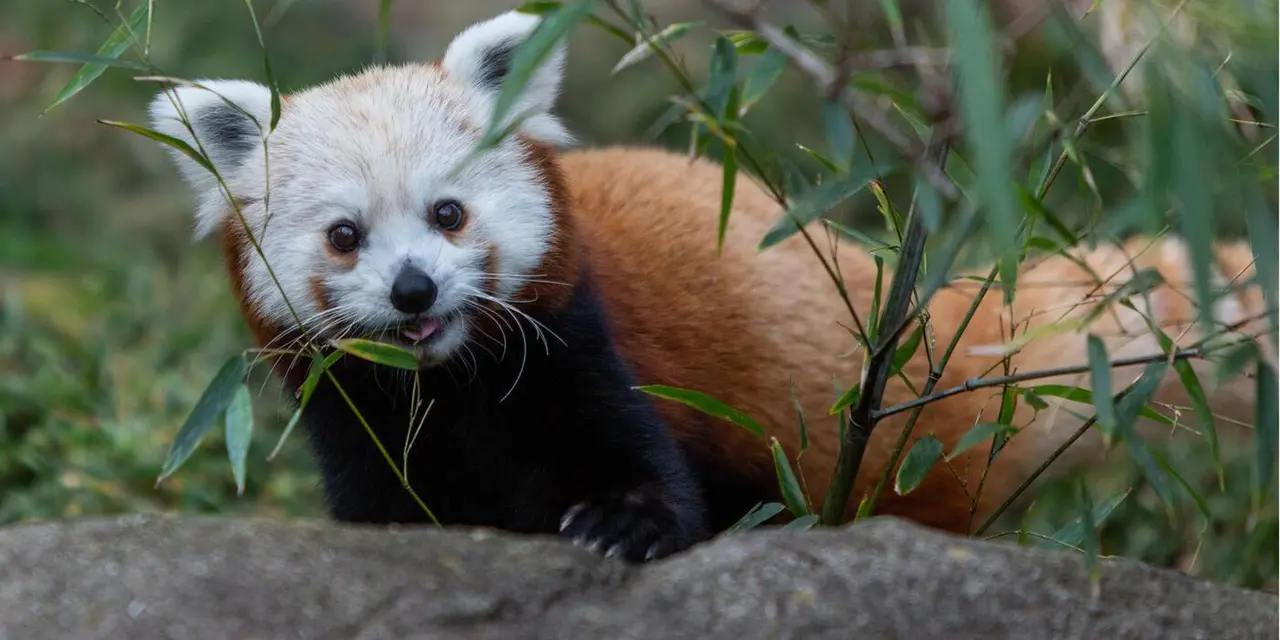
Photo: Smithsonian's National Zoo
Red panda

Photo: Xinhua News Agency
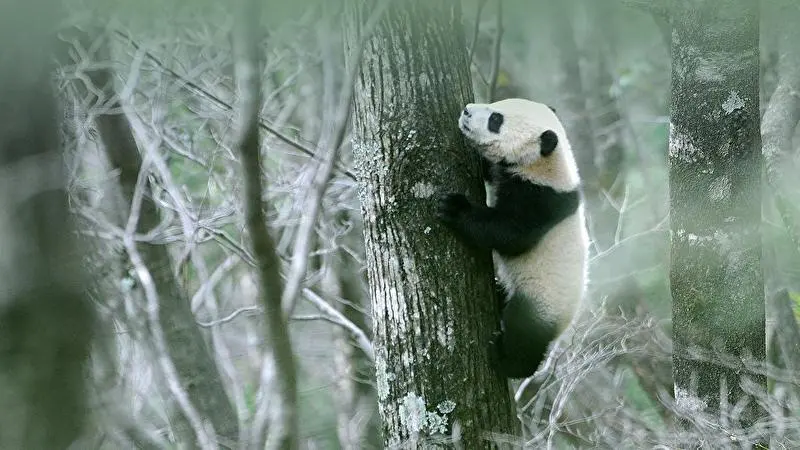
Photo: National Forestry and Grassland Administration of the PRC
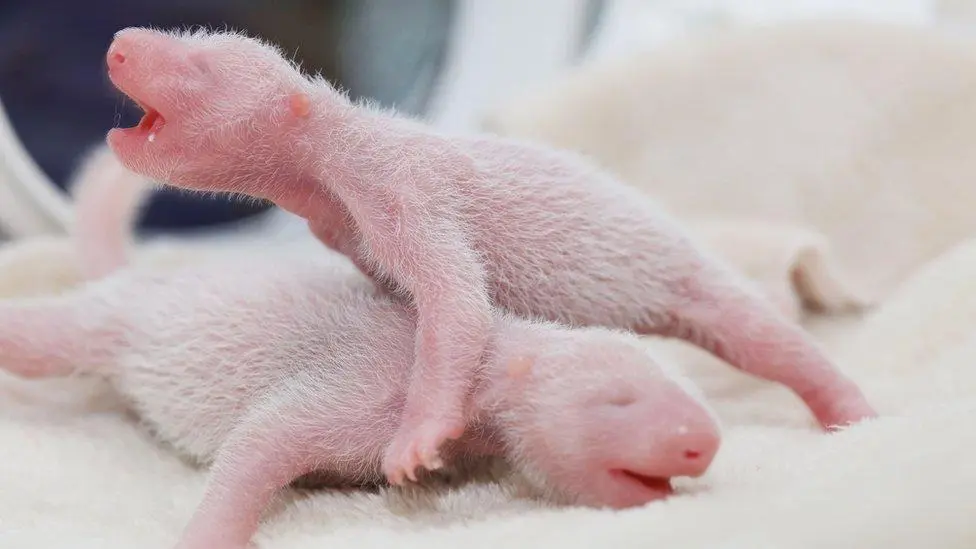
Photo: Xinhua News Agency
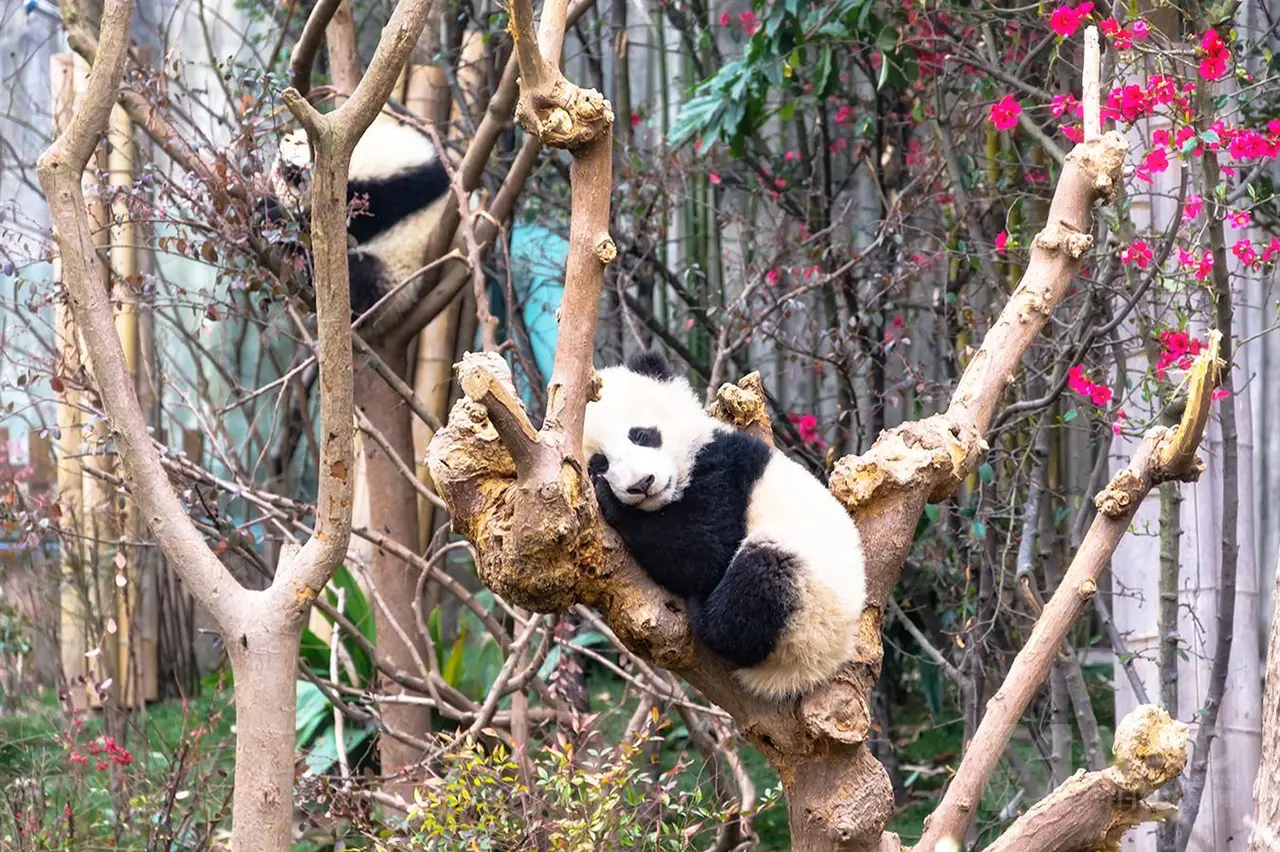
Photo: Xinhua News Agency
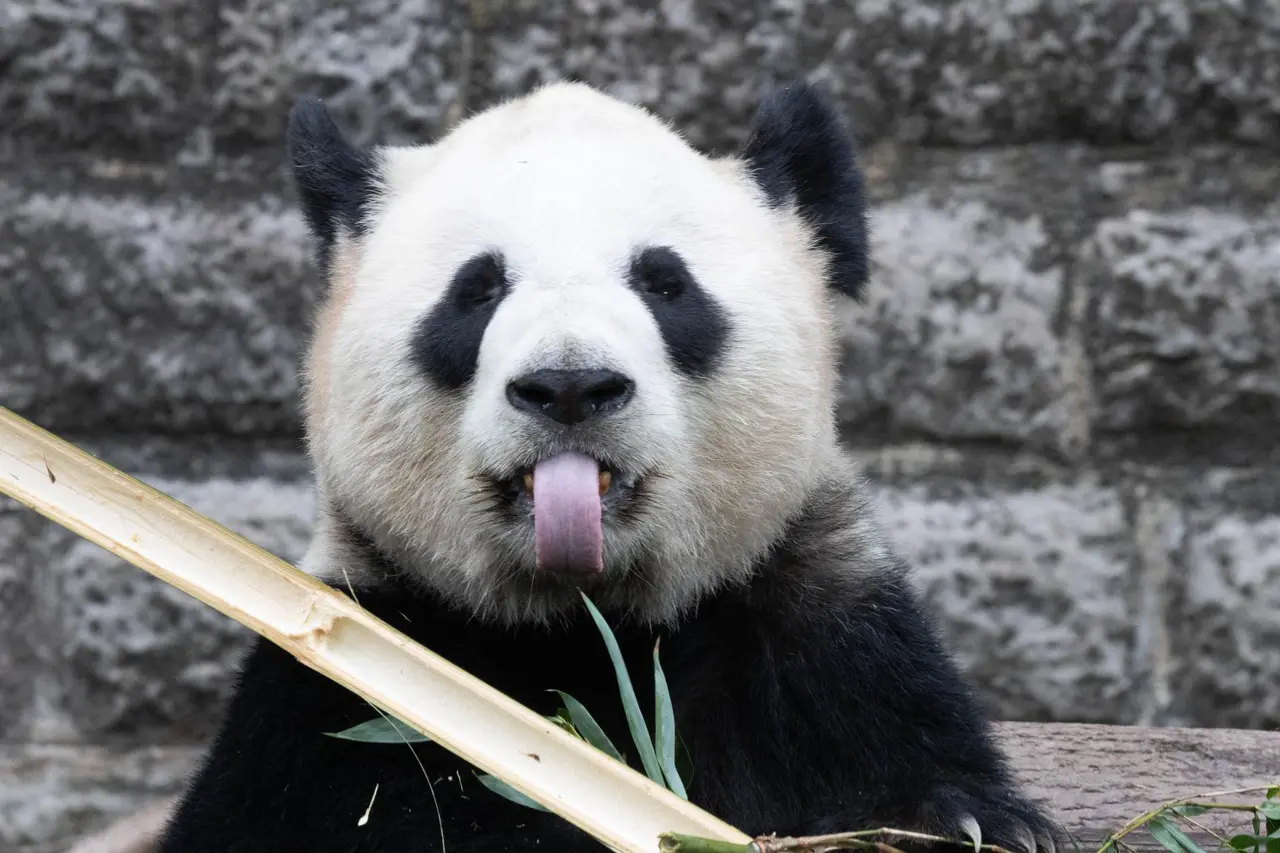
Photo: China Conservation and Research Center for the Giant Panda