The key facts
- On November 18 at 10:16 GMT, Voyager 1 will be 16.094 billion miles (25.902 billion km) from Earth
- The minimum two-way communication delay will be 48 hours
- The craft has been operating for more than 49 years and continues to transmit scientific data
Record distance: one light-day
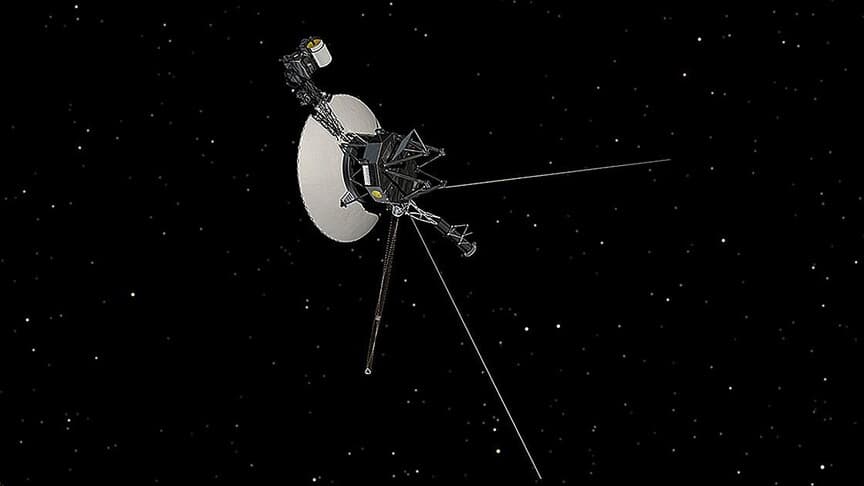
On November 18, 2026, the Voyager 1 spacecraft will reach a distance of one light-day from Earth — 16.094 billion miles (25.902 billion km), according to NASA, at 10:16 GMT. It is the first human-made object to travel that far from Earth, nearly five decades after launch. At this distance, a radio signal takes 24 hours to travel from Earth to the craft and the same back, so the minimum two-way communication delay will be 48 hours: any request sent to the Voyager 1 team and the reply to it are separated by at least two days.
The craft's journey and current status
Voyager 1 was launched on September 5, 1977 and was originally intended to study Jupiter and Saturn, after which it continued moving toward interstellar space. In February 1998 it overtook the Pioneer 10 craft and became the most distant human-made object, and in August 2012 it was the first craft to cross the boundary of interstellar space. Voyager 1 and its twin Voyager 2 remain the only craft to have operated beyond the heliosphere — the protective bubble of particles and magnetic fields created by the Sun. Despite more than 49 years of operation, Voyager 1 continues to collect scientific data, and NASA engineers are conserving its dwindling power supply.
How NASA suggests marking the event
To mark the milestone, NASA invited people around the world to take part in the Shine Bright for Voyager's Light-Day event on Tuesday, November 17: after sunset, participants are invited to point flashes of light into the sky. It is noted that the event is symbolic — the distance itself changes continuously, and on November 18 the craft will merely cross for the first time the mark at which a signal takes a light-day to travel one way.