The key facts
- The Kehlsteinhaus ('Eagle's Nest') was severely damaged by the fire on 23 October; a 33-year-old man has been detained on suspicion of arson
- The Kehlsteinhaus (the Eagle's Nest) was severely damaged by the October 23 fire; a 33-year-old man was detained on suspicion of arson
- Bavarian ministers support restoration, while some historians oppose full reconstruction
- The dispute unfolds amid a nationwide German debate about the culture of remembrance and the rise of the far right
- The debate unfolds against the backdrop of a nationwide German discussion on memory culture and the rise of the ultraright
The fire and its aftermath
On the evening of 23 October, fire destroyed much of the Kehlsteinhaus — a mountain house built by the Nazis in 1938 at an altitude of 1,834 m above Berchtesgaden and frequently visited by Hitler with his guests. Police classified the incident as suspected arson; a 33-year-old man with a history of mental illness has been placed in a closed psychiatric hospital on suspicion of arson, while authorities have not commented on the motive. This was reported by BBC News.
What was lost
Before the fire, the Eagle's Nest belonged to the state of Bavaria and for decades operated as a restaurant, attracting tens of thousands of tourists per season and remaining an important source of income for the region. Unlike Hitler's Berghof residence, which was bombed during the war and demolished in 1952, the Kehlsteinhaus survived the war; about 15 years ago a photo exhibition about its history opened there. The nearby Obersalzberg documentation centre, opened in the 1990s, was not affected by the fire.
The dispute over the site's future
Bavarian authorities are in favour of restoration: the state's interior minister Joachim Herrmann said it would be 'hard to leave ruins standing there', while culture minister Markus Blume stressed that the works 'should not and cannot cost the taxpayer anything'. Herrmann added that a solution would be sought together with historians. Sven Keller, head of the documentation centre, believes leaving the ruins standing is dangerous: neo-Nazis could ascend there unhindered, and the experience of demolishing the Berghof showed that this does not erase such places from people's 'mental maps'. At the same time, he does not believe an exact reconstruction is possible.
Historians' positions
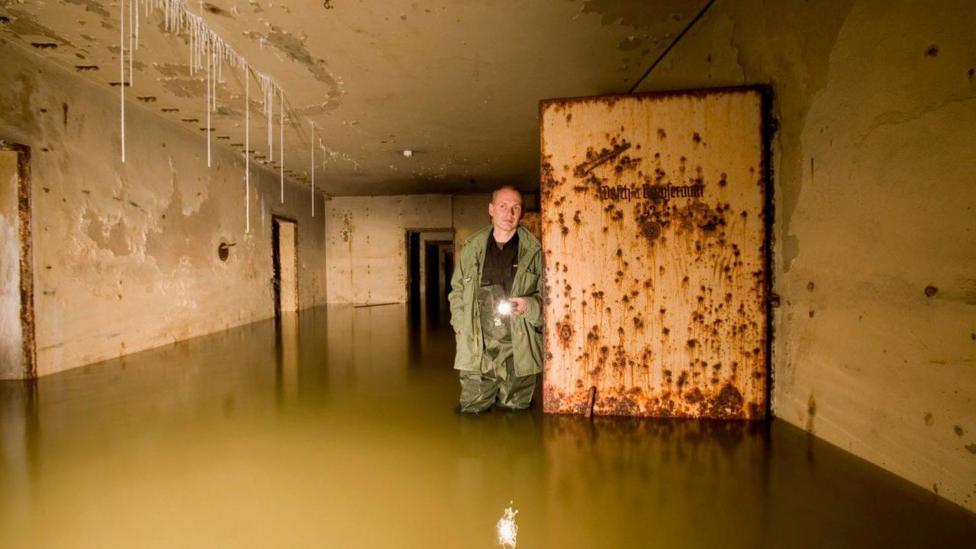
Some historians see the fire as a reason to abandon the site altogether. Cambridge professor Richard Evans called the Kehlsteinhaus 'a vanity project of the Nazis', romanticised by the name 'Eagle's Nest', and proposed clearing the ruins and returning the mountain to its natural appearance — as was done with Hitler's bunker in Berlin, which was filled with concrete, with a children's playground built on top. Isabel Heinemann of Ludwig Maximilian University of Munich (LMU) considers full reconstruction 'out of the question', since it would restore 'a highly ideologised architecture', but proposes documenting the post-fire condition and restoring parts of the building in a contemporary design that shows different historical layers. She recalled that Germany has an 'eternal responsibility' to come to terms with its Nazi past.
The broader context
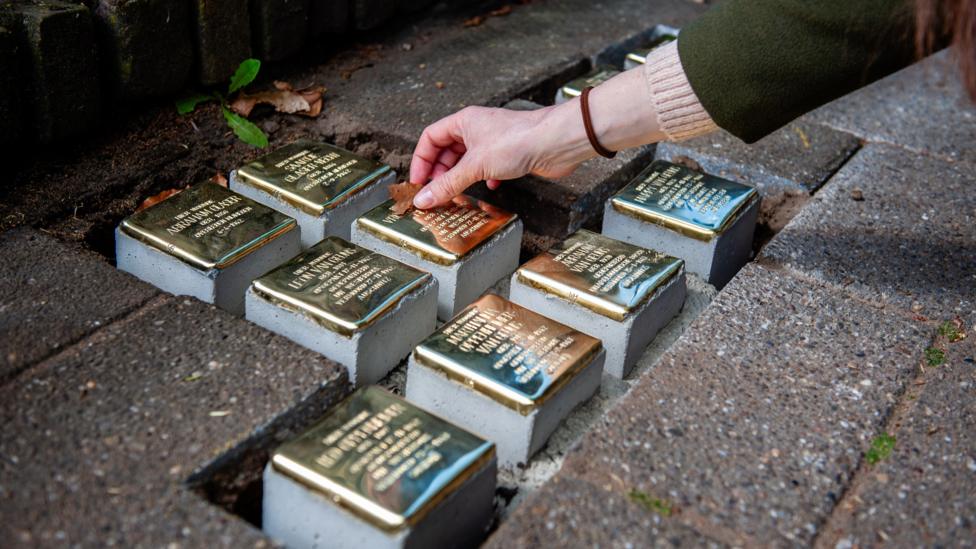
The dispute unfolds against the backdrop of other recent decisions about the Nazi legacy, which BBC reports on. In a German town in Saxony, the AfD and CDU councils banned 'stumbling stones' — brass plaques set into cobblestones in memory of the victims of the Nazis. And in the Austrian town of Braunau am Inn, this summer, after years of dispute, a police station was openedin the house where Hitler was born: the government explained this as protection against neo-Nazi pilgrims, although some residents wanted to see a centre of responsibility there that would actively engage with the past. With the rise of the far-right AfD in Germany and the Freedom Party of Austria, the debate about the culture of remembrance has taken on a new urgency.
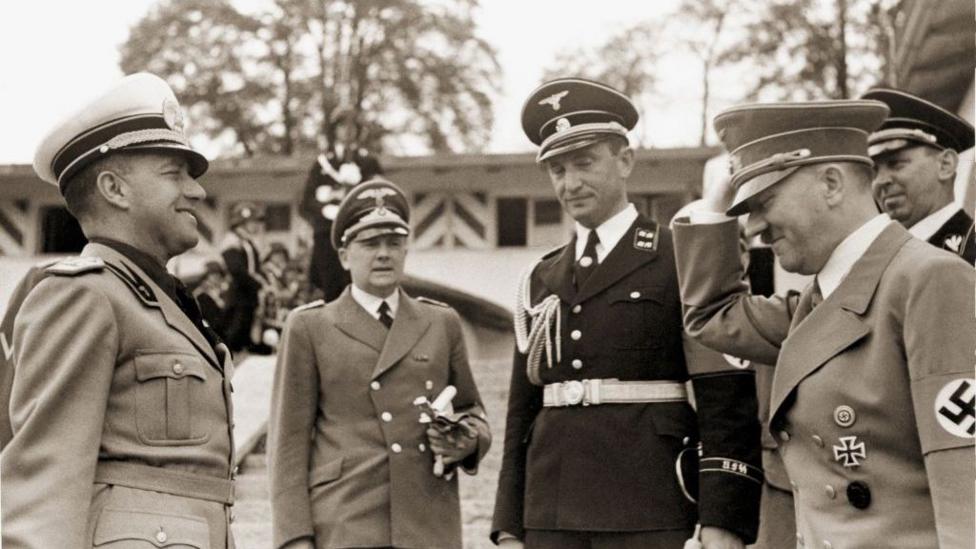 Image source, Galerie Bilderwelt/Getty Images
Adolf Hitler used the mountain retreat to welcome guests
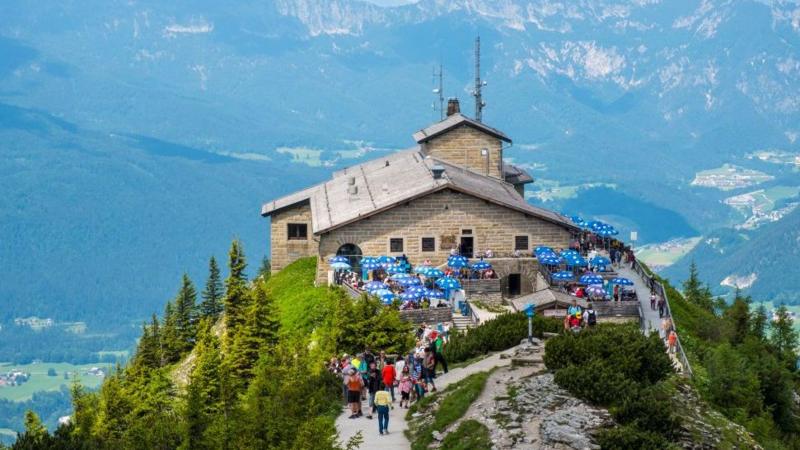 Image source, Universal Images Group via Getty Images
Before it was burned down, the Kehlsteinhaus or Eagle's Nest had long been a tourist destination in Bavaria
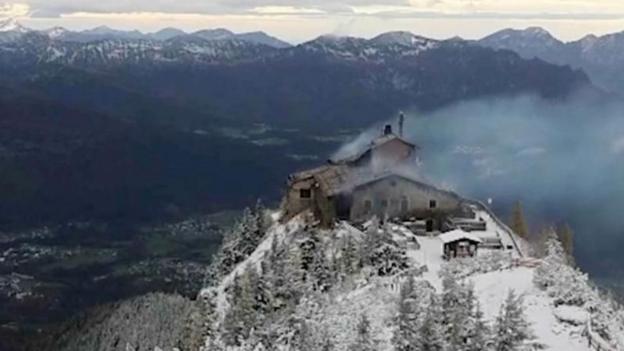 Image source, Reuters
Police say the old Nazi retreat was largely destroyed by last month's fire
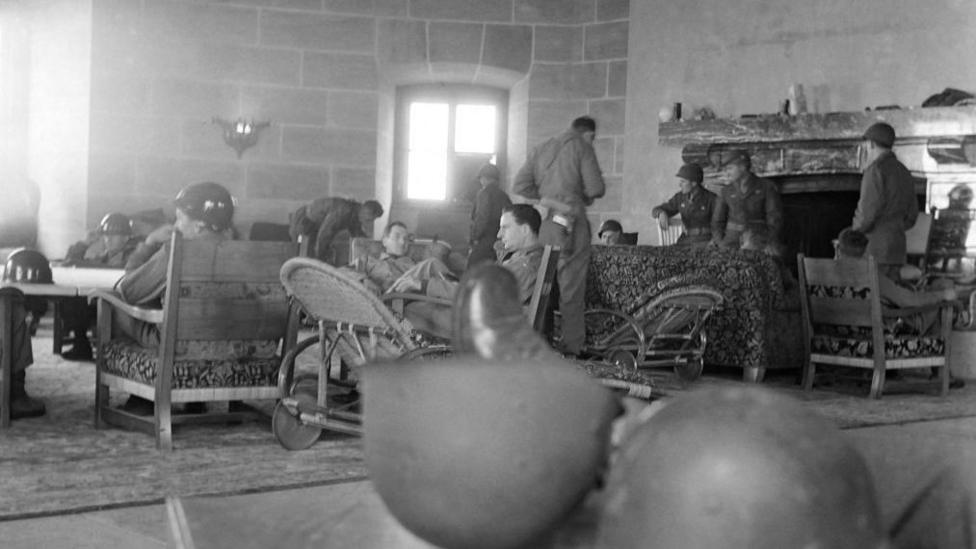 Image source, ERIC SCHWAB/AFP
After Hitler's downfall, US soldiers captured the mountain-top retreat and are seen relaxing here on 4 May 1945