The key facts
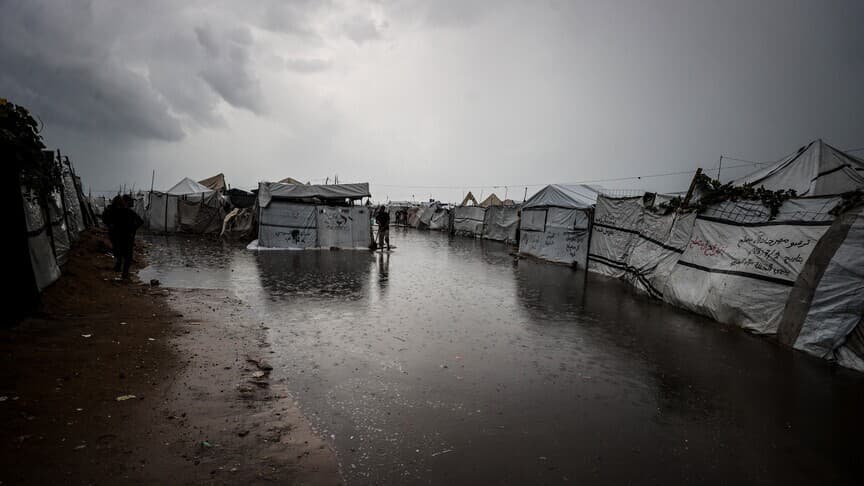
- The storm flooded about 70,000 tents in camps for displaced people in the Gaza Strip; no deaths reported, there are injuries
- 60 mm of rain fell on Gaza City in 12 hours — about 15% of the annual norm
- The city's drainage system is operating at only 20% of its former capacity due to wartime damage
Storm floods tens of thousands of tents
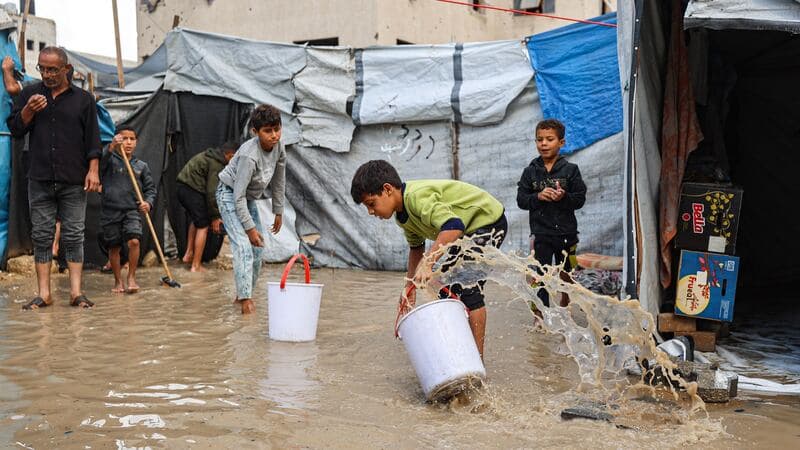
A storm with heavy rain and wind, which began on Friday evening, flooded about 70,000 tents in camps for displaced residents of the Gaza Strip. According to medical sources cited by Anadolu, five people were injured when two walls of buildings previously damaged by Israeli strikes collapsed, and a sheet of corrugated metal fell. No deaths were reported. According to the Gaza Government Media Office, the initial damage is estimated at about 3 million dollars; the storm also brought down dozens of walls.
Infrastructure cannot cope
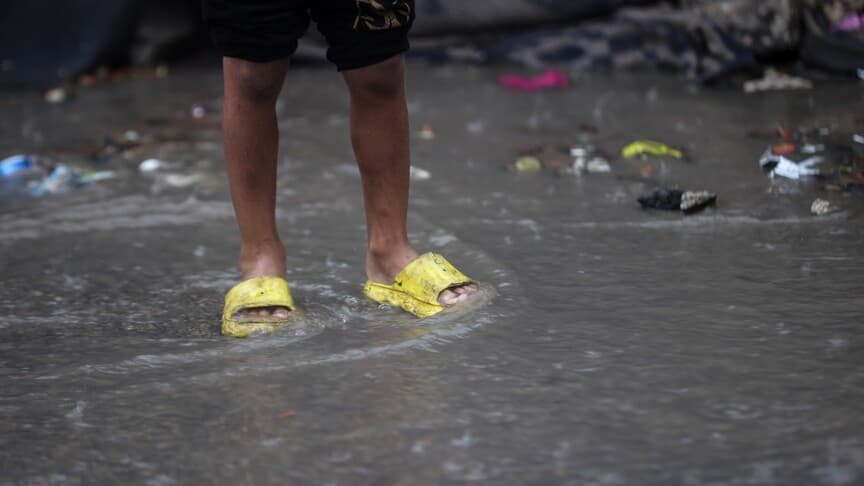
Gaza Municipality spokesman Hosni Muhanna told Anadolu that 60 millimeters of rain fell on the city in 12 hours — about 15% of the annual norm. The wind blew away and tore tents, and rainwater flooded shelters. Municipal services received 250 calls about flooded streets, washouts and blocked sewage, and responded to most of them with limited means.
Why families have nowhere to go
The key problem is not the storm itself, but the lack of alternatives. Muhanna explained that wartime damage has reduced the capacity of the city's drainage system to 20%, making low-lying areas especially vulnerable; 270 camps and shelter sites in Gaza City are at risk of flooding. About 1 million residents and displaced people are crowded into roughly 30% of the city's territory. Abdallah al-Majdalawi, director of public relations for Gaza Civil Defense, said rescuers receive hundreds of calls but can only address immediate threats to life, not provide shelter to those affected: «We come to people and see an entire flooded camp — with tents, people, furniture and bedding. We stand helpless before this tragic reality». He linked the lack of safer options to the blockade and restrictions on the import of mobile homes and reconstruction materials. Muhanna demanded that crossings be fully opened to deliver winter supplies, aid and heavy equipment.
The scale of vulnerability was confirmed in advance
Warnings of flooding risk were voiced even before the storm. According to UNRWA, citing June surveys, 1.98 million people — about 94% of Gaza's population — need shelter and other basic supplies, with 58% having critical or catastrophic shelter needs. In October, the UN Office for the Coordination of Humanitarian Affairs warned that 950,000 Palestinians live in displacement sites with moderate or high flooding risk, of whom more than 400,000 are in high-risk zones. Deutsche Welle adds that more than 1.6 million of Gaza's 2.1 million residents live in tents or makeshift shelters, and according to the UN about 80% of the Strip's buildings have been damaged, two-thirds destroyed. The Committee of the Higher Presidential Committee of Church Affairs in Palestine appealed for humanitarian aid, calling the rains a factor exacerbating an «already catastrophic humanitarian situation». The ceasefire agreement has been in effect since October 2025, however, as Anadolu notes, shelter and reconstruction needs still far exceed the volumes of available aid amid continued Israeli restrictions on materials for temporary housing and repairs.