The key facts
- Fraudsters on dating sites ask victims to 'help' get a discount or place an order and enter an SMS code — this is a way to take over the account
- After the hack, other participants of the scheme join the conversation and demand money under various pretexts
- The Ministry of Internal Affairs calls a sharp shift from ordinary correspondence to discussing finances, codes, and access to personal data a red flag
The scheme via a 'small favor'
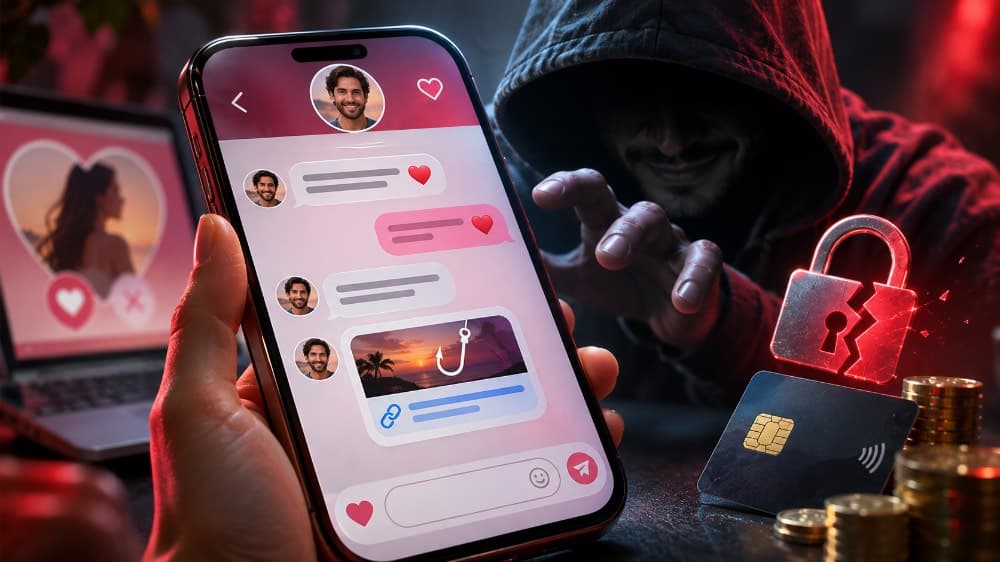
Fraudsters on dating sites build their scheme in several stages, warned the Russian Ministry of Internal Affairs. First, the criminals engage in ordinary friendly correspondence and create in the interlocutor a sense of close acquaintance. Once contact is established, the 'new acquaintance' makes a small request — for example, to help get a discount via a chatbot or place an order. For this, the victim is asked to follow a link and enter a code from an SMS, supposedly to confirm the transaction. It is at this moment, the ministry noted, that criminals can gain access to the user's account.
What happens after the hack
After taking over the account, other participants of the criminal scheme join the conversation: they begin to psychologically pressure the person and demand money under various pretexts. The Ministry of Internal Affairs explained that requests for help are not the only tool. Sometimes the conversation is gradually steered toward investments and quick earnings, offering to invest in a supposedly profitable project. In other cases, the interlocutor is persuaded to temporarily grant access to their account, after which it is blocked and money is demanded for its restoration.
The main sign of deception
Police emphasize: the main red flag is a sharp shift from ordinary correspondence to discussing finances, confirmation codes, access to personal data, or easy earnings. If a virtual acquaintance begins persistently asking about such matters, the Ministry of Internal Affairs recommends ending communication immediately.
A similar scheme with fake websites
The ministry's statement came against the backdrop of other warnings about online fraud. Earlier, Life.ru reported on a scheme in which fraudsters lure motorists to tire shops with suspiciously low prices: according to an auto expert, they create fake websites for workshops, sometimes changing just one letter in the address. To avoid losing money, the specialist advised checking the website's registration date, studying reviews on independent platforms, and comparing the rates of several services, paying special attention to demands for prepayment or the transfer of banking details, and paying for tire services only after the work is completed.