The key facts
- Scammers offer to 'test' an app or a program for exchanging photos and videos — malware is installed via the link
- The malicious program gives access to the gadget and allows money to be stolen
- The Interior Ministry advises not to install apps via links from chats and not to enter passwords on suspicious sites
A new trick via dating sites
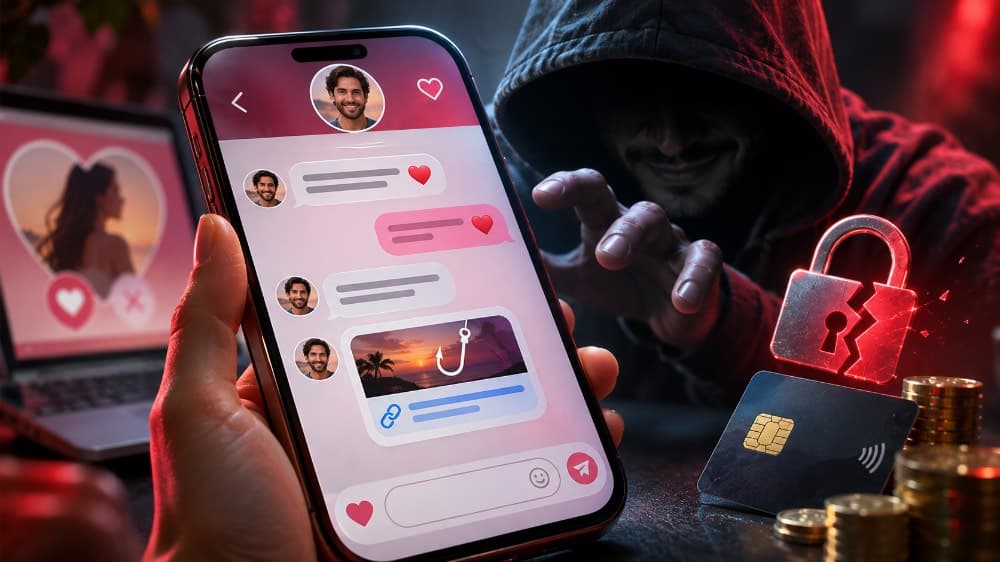
Scammers have started using a new scheme on dating sites aimed at infecting a victim's device with malicious software. This is stated in materials from the Russian Ministry of Internal Affairs cited by TASS, as reported by Gazeta.Ru. According to the agency's description, the fraudster first establishes contact with a person and engages in active communication, then asks them to help test an app they claim to have developed, or offers a special program for exchanging photos and videos. In both cases, the victim is sent a link, and clicking it installs malware on the device. It gives scammers access to the gadget and allows them to steal money.
Ministry of Internal Affairs recommendations and other schemes
The Ministry of Internal Affairs advises not to install apps via links from chats and not to enter logins and passwords on suspicious sites, even if they are described as a secure service. The agency also listed other schemes used on dating sites: requests for money citing a difficult situation, extracting SMS codes under the pretext of buying tickets or ordering delivery, using fake photos and profiles to gain access to personal data, and drawing people into investment and gaming schemes.
Context: fraud disguised as AI services
Earlier, as Gazeta.Ru reported, State Duma deputy from the LDPR Dmitry Svishchev said that in another scheme, attackers disguise malicious programs as harmless apps for choosing hairstyles, makeup, or cooking recipes, linked to popular AI services. The Ministry of Internal Affairs' new description shows that the 'useful app' trick is used in various scenarios — from dating sites to artificial intelligence services — and in both cases, installing a program via a link from a chat becomes the fraudsters' point of entry.