The key facts
- The election gave neither of the two major parties a clear mandate; a record number of voters turned away from them
- The election gave neither of the two major parties a clear mandate; a record number of voters have turned away from them
- About 180 people a day are leaving New Zealand — a record emigration
- Around 180 people leave New Zealand every day — record emigration
- The centrist Opportunity Party entered parliament for the first time and could win seven seats and the balance of power
Elections amid apathy
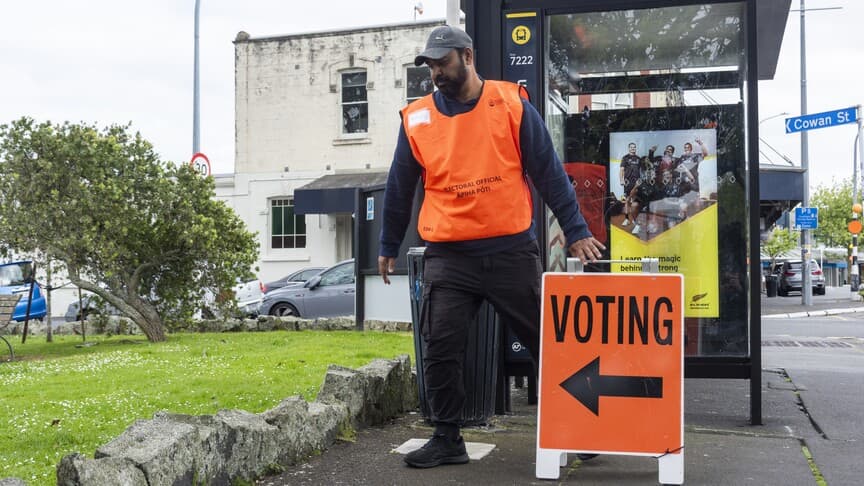
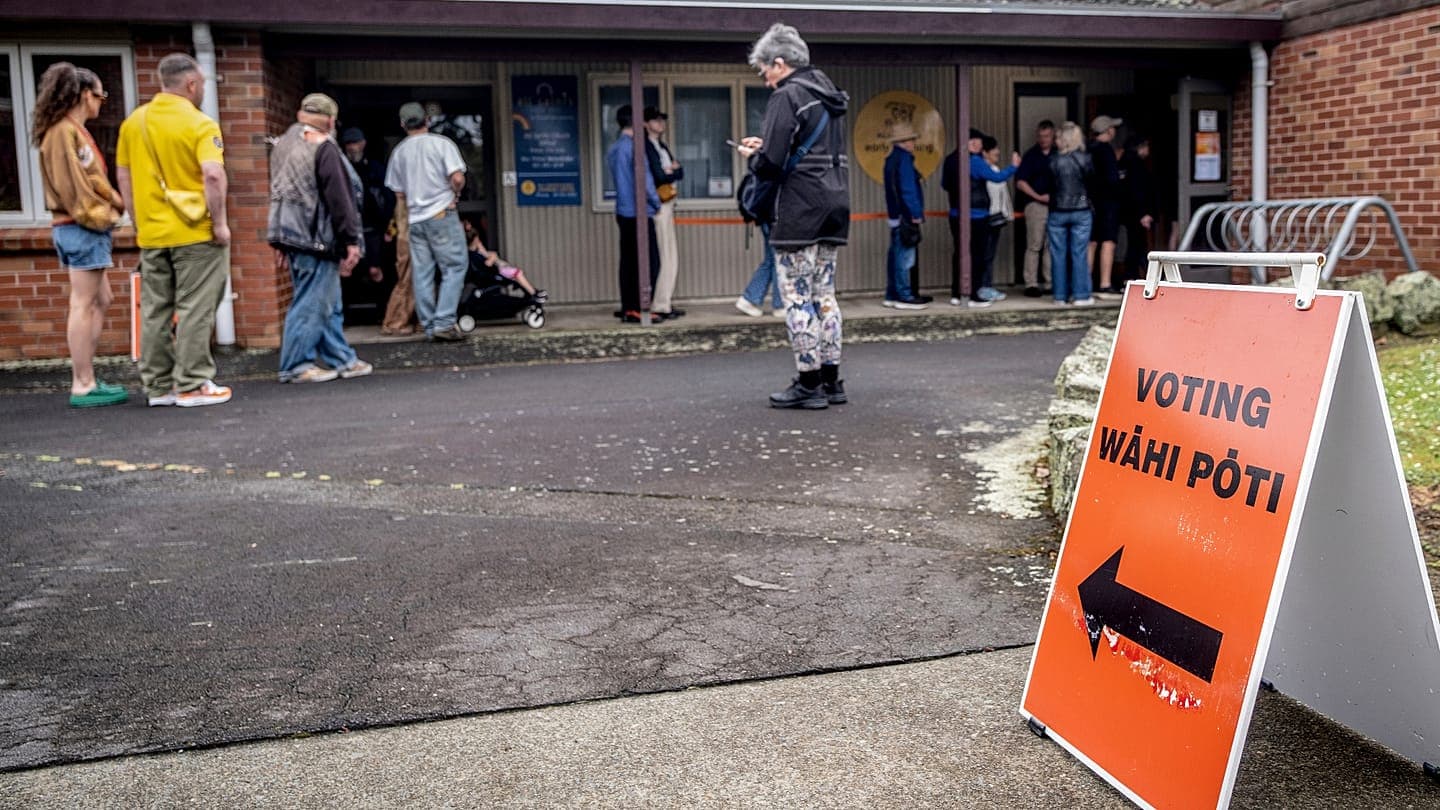
New Zealand's election took place on Saturday under fog that had blanketed the capital, Wellington, and, as the BBC correspondent described it, voters' mood matched the weather: 'apathy and mild anxiety', 'we are all tired'. One voter admitted that he did not vote at all because he could not choose any of the options. Polls show this is not a purely Wellington phenomenon: the national mood is low, and trust in politics is even lower. According to a recent study, more than half of the country's residents no longer consider it a 'land of opportunity', and roughly the same share fear the future will be even worse.
A fractured parliament
In the election, both major parties — the governing National Party and Labour — lost a record number of voters, and neither won a clear mandate. At the same time, parties across the spectrum achieved record results: the Greens, the right-libertarian Act, and the centrist Opportunity Party, which entered parliament for the first time in history and, according to the BBC, could win seven seats and hold the balance of power. Party leader Quilé Wong said on election night: 'You voted to change New Zealand politics forever.' The exact composition of the governing coalition and the terms of the agreements will likely only become known in a few weeks.
A 'perfect storm': the economy and emigration
Voters attribute their disillusionment to a set of problems that the BBC describes as a 'perfect storm'. Unemployment is at an 11-year high, and for young people under 24 the situation is the worst in three decades: every third person cannot find enough work or has none at all. Electricity bills have risen sharply, housing remains among the least affordable in the world, and a quarter of adults skip meals because of high food prices set by the supermarket duopoly. The healthcare system is in crisis: long queues, chronic staff shortages, worn-out infrastructure.
A record exodus from the country
The result of this, according to the BBC, has been a record exodus: about 180 people leave the country every day, which splits families, shrinks communities and drains the talent pool. Brother and sister Sam and Emily told the outlet that their friends are leaving en masse, and their parents are seriously considering moving to Australia. 'It's not just that you're rewarded for moving to Australia,' Sam says. 'It's as if you're actively punished for staying here.' At the same time, sentiment is not uniform: at the largest livestock market in Feilding, agricultural worker Stu Morton called the past year the best of his 30 years and believes that after the change of government, livestock farming, which accounts for about 3% of GDP, has turned towards growth, and the rest of the economy will follow.
How the country got here
Many of these problems are global trends, and living standards in New Zealand are still higher than in many countries, the BBC notes. But their combined weight is hitting national identity: according to an annual survey by the foundation of former prime minister Helen Clark, residents — especially young people — feel far more isolated than a generation ago, attitudes toward multiculturalism are deteriorating, and only two in five trust the government. The transformation of healthcare and housing promised by Jacinda Ardern in 2017 never materialised, and her achievements were rolled back by her successors. The National Party came to power in 2023 promising to 'get the country back on track' and restore the economy, but, in the assessment of political commentator Grant Duncan, it 'achieved very limited success', and the biggest moment of its term was the mass protest march by Māori against a bill by its coalition partner to redefine the Treaty of Waitangi; over the past six months Christopher Luxon has also seen off two challenges to his leadership. Both parties blame external crises — the pandemic, the war involving Iran and the US trade confrontation — but, in Duncan's words, voters are no longer convinced: 'Neither party has been able to put forward a truly strong, inspiring leader. Both have a history of disappointing results behind them.'
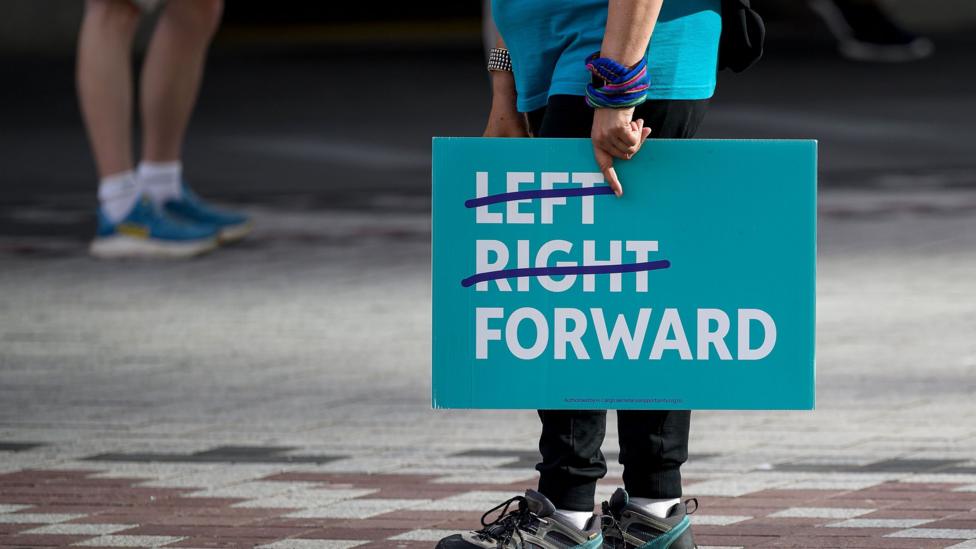 Image source, EPA/Shutterstock
The Opportunity Party says it is willing to work with either of the major parties

Many young people like Michael Dawson (left) feel like they can't get ahead

Sam says he's flirted with a move to Australia

Stu thinks New Zealand is on its way back up
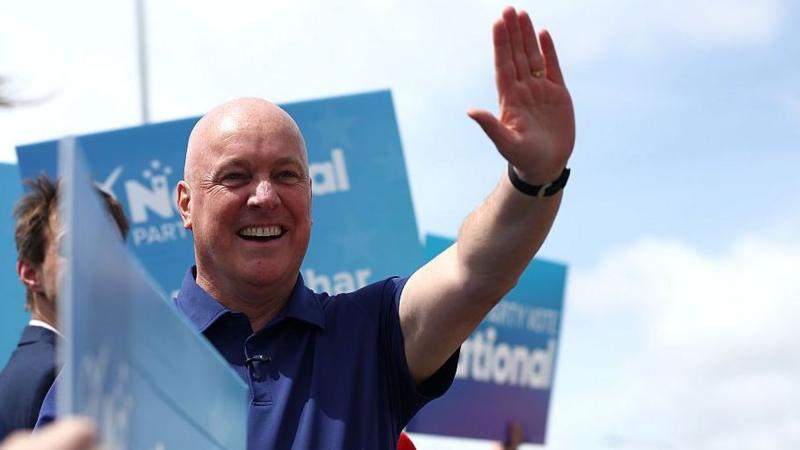 Image source, Getty Images
National Party leader Christopher Luxon is seeking a second term
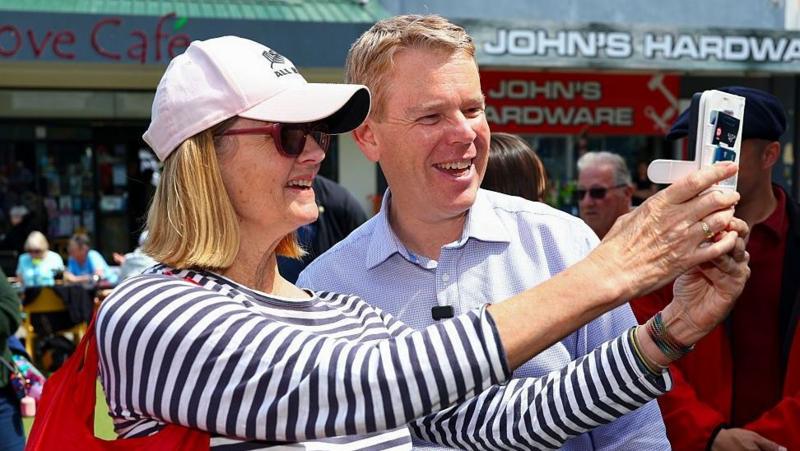 Image source, Getty Images
Former PM Chris Hipkins has been leader of New Zealand's centre-left Labour Party since January 2023