The key facts
- The ANC won 30.9% — its worst local election result since the country's transition to democracy (45.6% in 2021).
- The DA came second with 24.6%, and Zuma's MK party third with 9.6% in its first participation.
- In 128 of 200 municipalities there is no absolute majority — mayors will be elected by councils after coalition negotiations.
ANC's worst result ever in local elections
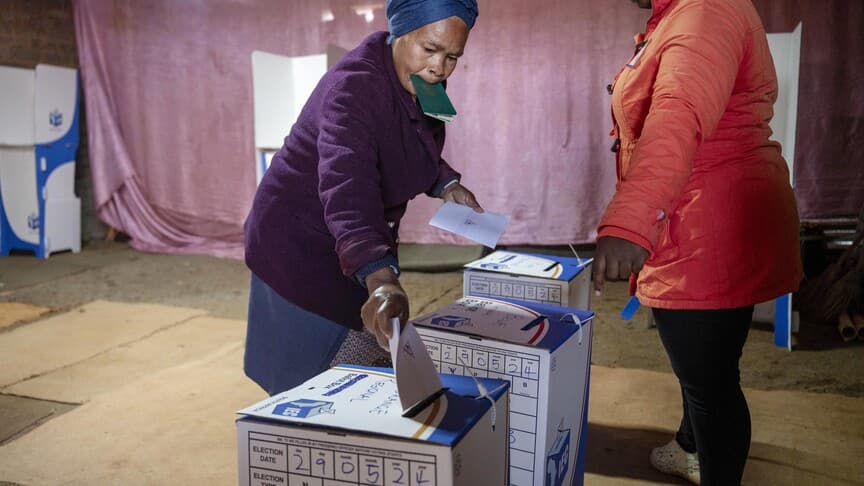
The African National Congress (ANC), the ruling party since 1994 that was once led by Nelson Mandela, South Africa's first Black president, has suffered a historic defeat in the local elections held on Wednesday. According to preliminary data from South Africa's Electoral Commission (IEC), vote counting has been completed in 99% of electoral districts, and the ANC leads nationwide with 30.9% of the vote. That is almost 15 percentage points below its 2021 result (45.6%) and the party's worst performance in local elections since the country's transition to democracy, Anadolu reports.
Opposition gains strength, rivals win in major cities
The Democratic Alliance (DA) held on to second place, increasing its share of the vote from 21.7% in 2021 to 24.6%. Former President Jacob Zuma's uMkhonto weSizwe (MK) party took third place with 9.6% in its first-ever participation in local elections. They are followed by the Economic Freedom Fighters (EFF) with 6.3%, ActionSA with 5.7%, and the Inkatha Freedom Party (IFP) with 4.7%. In most major metropolitan areas the ANC trailed its rivals: the DA won 56.4% in Cape Town, retaining its majority on the city council, 35% in Johannesburg, and 34.3% in the City of Tshwane municipality, which includes Pretoria. In the eThekwini municipality, which includes Durban, Zuma's MK leads with 39.7%. The DA came first in Nelson Mandela Bay, while the ANC held on to first place in Buffalo City and Mangaung.
Coalition talks in most municipalities
No party won an absolute majority in 128 of the 200 municipal councils where counting has been completed. This means that in many cities, including Johannesburg, Pretoria, and Durban, coalition negotiations to form municipal administrations will begin. The practical significance of the result is that the composition of local power will be decided not directly by the vote but in the councils: in South Africa, mayors are elected not by the population but by municipal councils after the elections, so the balance of power in the councils will determine who leads the country's largest cities.