The key facts
- On November 7, near the government building in Tirana, protesters threw Molotov cocktails and stones at the police; the police used water cannons, pepper spray and tear gas.
- The rally began near the Ministry of Education with a demand for the resignation of Prime Minister Edi Rama.
- Since October 13, the protests have entered an active phase; activists announced nationwide demonstrations on Wednesdays and Saturdays.
Another wave of clashes in central Tirana
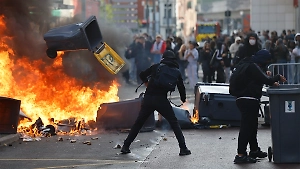
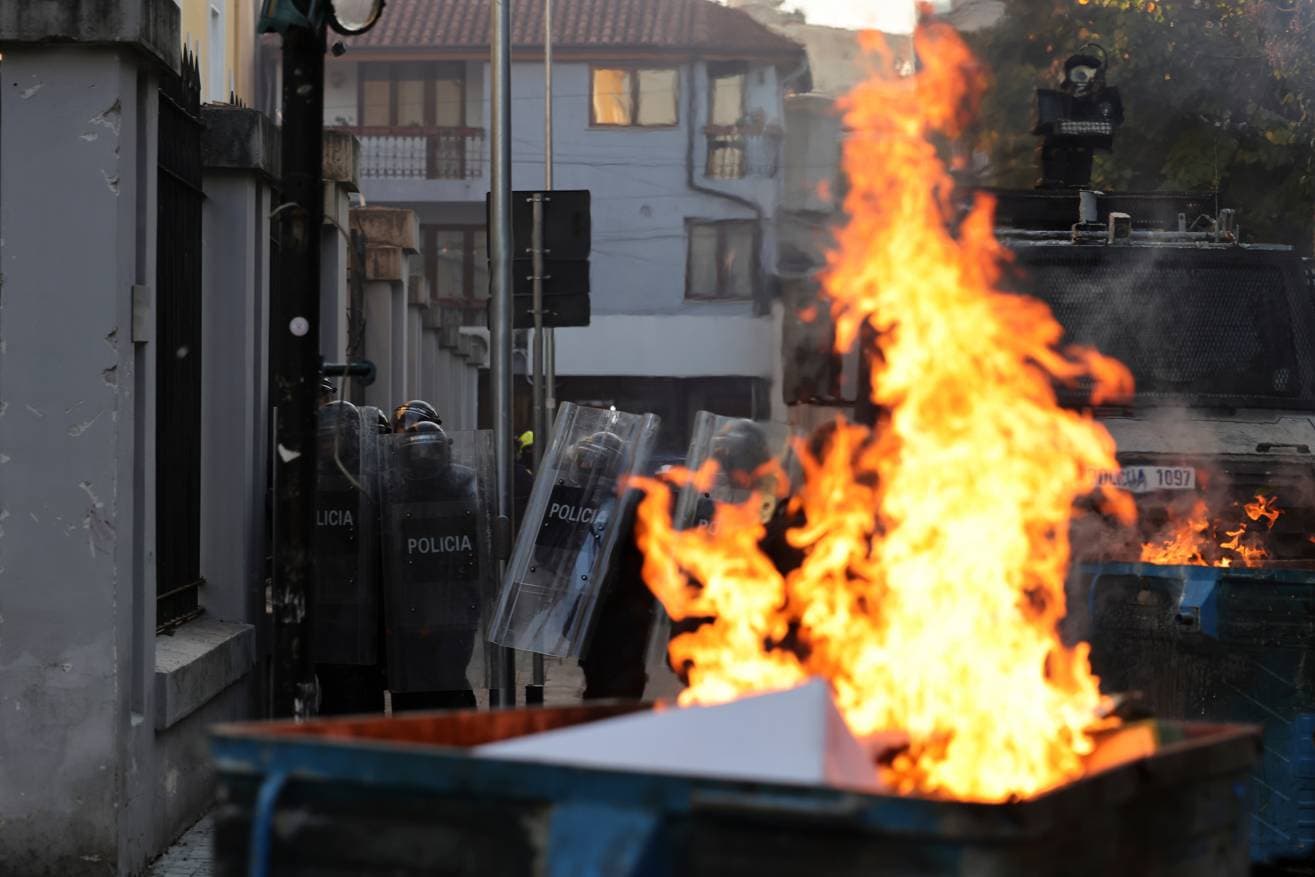
A mass anti-government rally in the capital of Albania on November 7 once again escalated into a direct confrontation with the police. According to the Albanian Telegraphic Agency ATA, near the government building demonstrators pelted law enforcement officers with Molotov cocktails and stones; the police responded with water cannons, pepper spray and tear gas.
How the events unfolded
The unrest began near the Ministry of Education, where students demanded the resignation of Prime Minister Edi Rama. After clashing with police, the column moved toward the government complex in the city center. Along the way, participants tried to block roads by dragging trash containers and concrete barriers, and some tore up cobblestones from sidewalks. Tension peaked at the square in front of the government building: bottles with flammable liquid set several spots on fire, and the police used water cannons partly to extinguish the flames.
Context: from a resort on Sazan to nationwide actions
The protest movement in Albania has been going on for several months. According to Life.ru, it originally arose over the construction of an elite resort, linked to Jared Kushner, the son-in-law of US President Donald Trump: the project affects Sazan Island and areas of the Adriatic coast, and environmentalists fear damage to protected zones that are home to rare animals and birds. For more than four months the protests proceeded mostly peacefully, with participants accusing the authorities of corruption and demanding Rama's resignation.
What is changing in the protesters' tactics
The new wave of student protests began on October 13 and has since been repeatedly accompanied by clashes with the police. A significant change compared with the previous situation: amid the prolonged standoff, activists abandoned daily actions and announced nationwide demonstrations twice a week, on Wednesdays and Saturdays, hoping to attract more supporters and increase pressure on the government. The previous episode also points to an escalation of violence: on October 24, as Life.ru previously reported, protesters set fire to the entrance of the Ministry of Agriculture, while administrative buildings, banks and shops came under attack.