The key facts
- Steven Ward is raising a second Brightmind Partners fund roughly the size of the debut one ($250 million), having remained the sole general partner after Gur Talpaz's departure in April.
- Steven Ward is raising a second Brightmind Partners fund roughly the size of his debut ($250 million), remaining the sole general partner after Gur Talpaz's departure in April.
- The debut fund made 14 investments with one exit — the sale of SGNL to CrowdStrike for $740 million.
- According to PitchBook, early-stage cybersecurity startups are attracting more money than late stages for the first time in more than a decade.
- According to PitchBook, early-stage cybersecurity startups are raising more money than later stages for the first time in more than a decade.
Second fund and team split
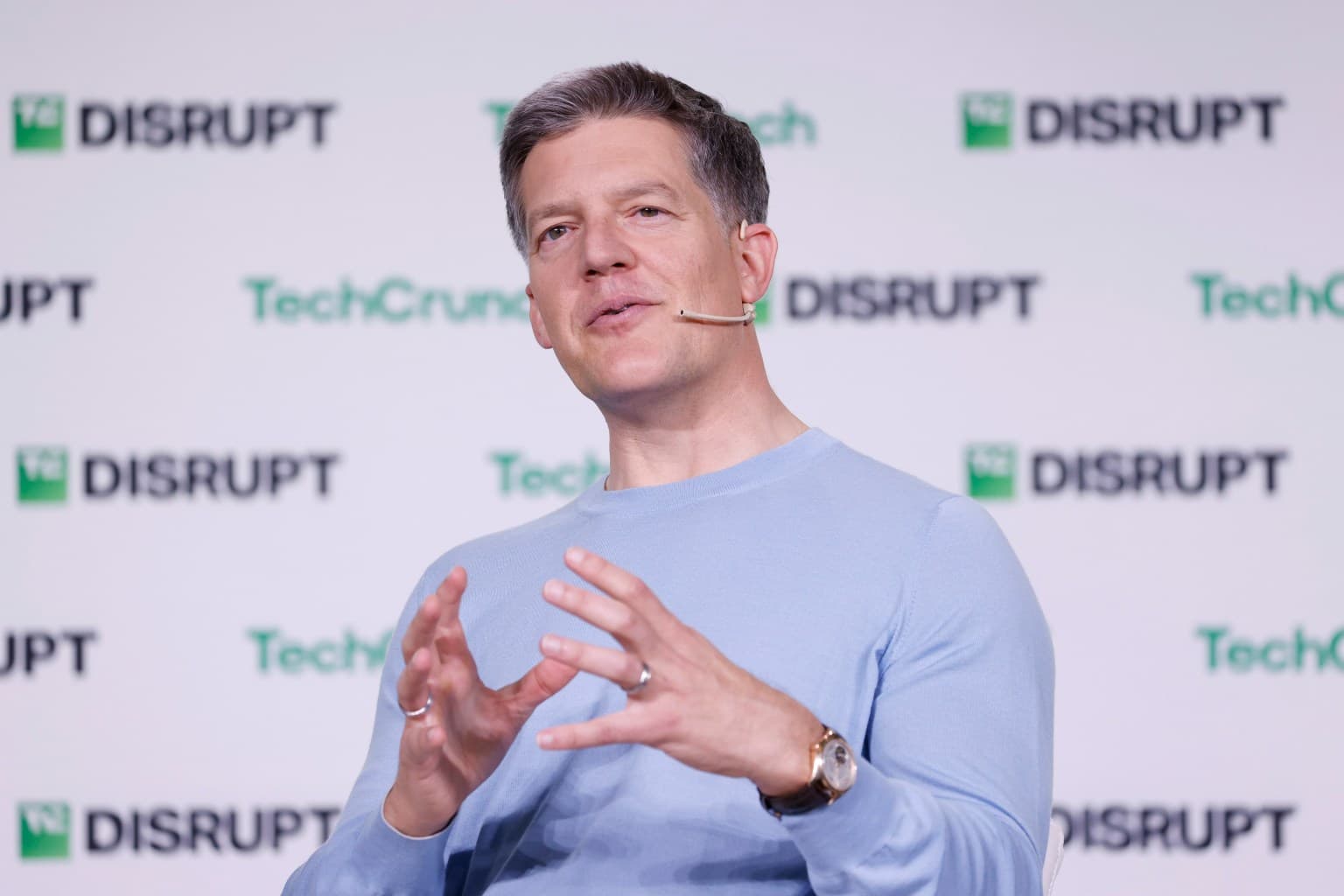
Steven Ward, co-founder of the New York-based cybersecurity-focused fund Brightmind Partners, is raising a second fund of roughly the same size as the first — $250 million, which closed at the end of last year with co-founder Gur Talpaz. This time he will raise the capital alone: Talpaz and another early employee of the firm left in April, and Ward remained the sole general partner. Asked about the reasons, he gave a cautious formulation about 'differences of opinion regarding operations and the future of Brightmind.' This is reported by TechCrunch.
The departed founders started their own fund
In August, Talpaz and Taylor Cipperley, together with CrowdStrike's global CTO Ilya Zaytsev, founded a new venture firm, Cognition, which, according to available information, is targeting a first fund of $170 million for investments in cybersecurity. Cipperley stated that he and Talpaz 'continue to support Brightmind's existing portfolio companies as well as its limited partners' and remain on the boards of directors of several portfolio companies. Cipperley's comments were added to the TechCrunch piece after publication.
Career: from arresting a hacker to venture capital
Ward's résumé is unusual for a venture investor: four years in the Coast Guard in search-and-rescue, nine years in the Secret Service, where after the September 11, 2001 attacks he switched to cyber investigations, followed by CISO roles at TIAA and Home Depot. While in New York, he arrested a hacker who carried out the largest credit card data theft of that era, but instead of pressing charges he recruited him as an informant and ran him for about three years. The hacker continued hacking, and after being arrested again told the agency that Ward was in collusion — according to Ward himself, as a diversionary tactic. Clearing his name took about 18 months; the hacker ultimately received 20 years in prison, and the story became the basis of the eight-episode podcast 'Operation Firewall', whose rights were acquired by Audible.
Exits and a bet on early stages
Brightmind's debut fund made 14 investments with one exit: in January, CrowdStrike agreed to acquire the identity security startup SGNL for $740 million — 11 months after Brightmind led its Series A round. Some investors asked why the fund did not hold the position longer, but Ward replies that 'you need to sell on the way up': in his observation, the best sales in cybersecurity happen between the third and seventh years of a startup's life, and his team tracks every deal on industry acquisitions, as well as what potential buyers are building themselves versus what they are ready to buy.
Market: early rounds are growing, but 'AI deals' are in question
The timing for raising the new fund looks favorable: according to PitchBook data cited by TechCrunch, early-stage cybersecurity startups are attracting more money than late-stage companies for the first time in more than a decade — $4.7 billion across deals from seed to Series B in nine months of the year, which already exceeds all of 2025, although the number of deals fell from 358 to 248. The average seed round grew to $8.4 million from $5.54 million a year earlier. Ward is nonetheless skeptical about labeling deals as 'AI security': of the 278 deals in the first half of 2026 classified by PitchBook in this category, his team's manual review found only 30 to be genuine. Brightmind's second fund will not be exclusively cybersecurity-focused — about 20% will go to AI infrastructure, and Ward expects a significant share of the teams to come from Israel: roughly 40% of the debut fund's startups are based in Tel Aviv.
Connections and team
Ward's path into venture capital went through Insight Partners, where Jeff Horing lured him after an interview for a role at Wiz — the company that Google acquired a year ago for $32 billion. At Insight, Ward says, he worked on Wiz, Abnormal Security, and Elisity, which IonQ agreed in October to acquire for a sum of up to $1.3 billionBrightmind currently has five people: COO Iva Messi (from Felicis and Andreessen Horowitz), principal Sven Walschleger, CTO Jamie Mneimneh, who built a testing environment on AWS and AI agents that generate most of the deal flow, and chief of staff Taylor Cleveland. Ward himself says his motivation has not changed: he grew up without money and 'will not celebrate' until the fund delivers a '3x net' return.