The key facts
- In 2027, Tashkent will renovate 100 mahallas: courtyards will be cleared of cars and arranged for recreation and playgrounds.
- The khokimiyat names options: parking zones near homes, multi-level and underground garages, park-and-ride lots near the metro.
- Tariffs, usage costs and unified rules for parking lots have not yet been determined; construction is planned mainly through PPP.
What is planned and where residents will park
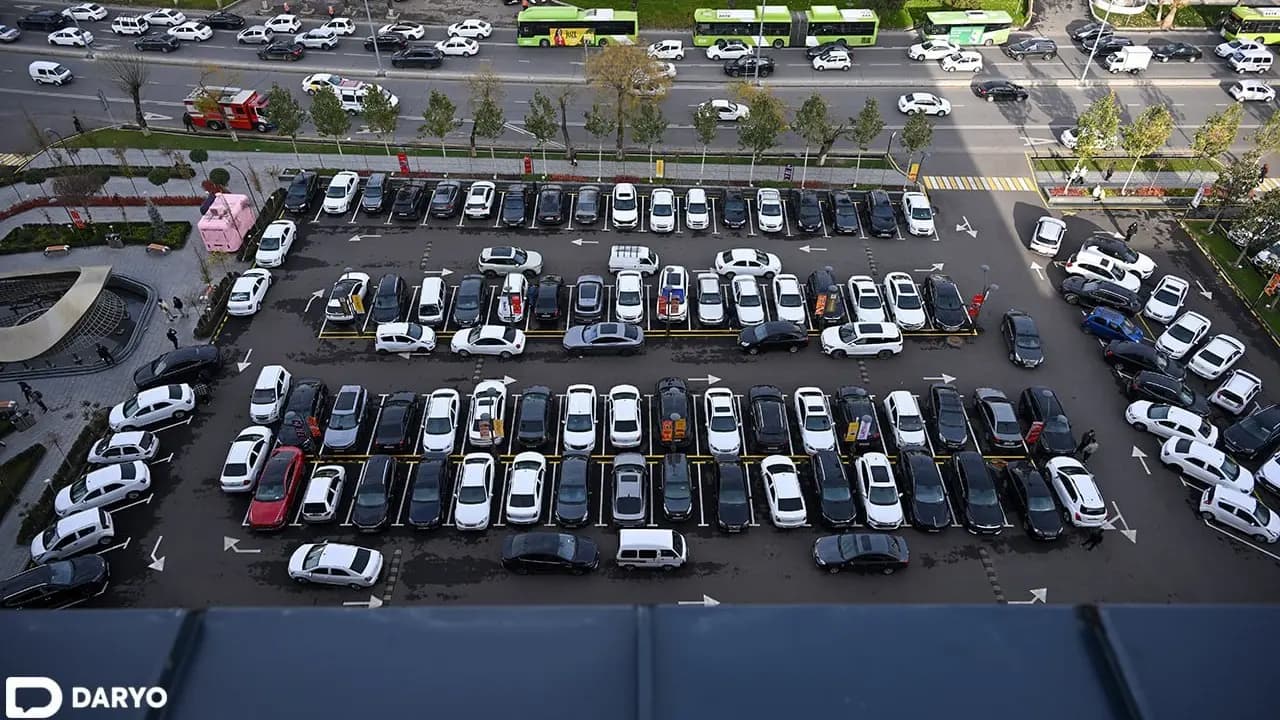
Next year, Tashkent plans to comprehensively renovate 100 mahallas: courtyards will be cleared of cars and turned into green recreation areas and modern playgrounds, while social infrastructure will be developed in stages. The question that arises — where residents will leave their cars — was explained by the city khokimiyat in a comment to Daryo as follows: the project provides for the creation of alternative parking spaces, for which separate parking zones will be organized near residential buildings. At the same time, specialists emphasize, the number of spaces must be no less than the existing one, and relocating cars must not create new problems on neighboring streets and sidewalks — the design will take into account the number of vehicles, residents' needs and the specifics of each area.
What parking options are being considered
Among the solutions to the shortage of spaces are multi-level parking garages, including those with underground levels: they allow more cars to be placed on a small footprint and make more rational use of urban space. Another option under consideration is park-and-ride lots near metro stations and major transport hubs: a driver leaves the car and continues the trip by metro or bus, which could reduce the load on central and busiest streets. The khokimiyat stressed that it does not pit drivers against pedestrians, and sees the main solution to transport problems in developing convenient public transport — expanding the route network, increasing speed and service regularity, improving transfer infrastructure and creating safe pedestrian spaces.
What has already been done and what remains undecided
Construction of parking infrastructure is planned mainly on the basis of public-private partnership with the involvement of investors, but the cost of using the parking lots, possible tariffs and conditions for residents have not yet been determined — the khokimiyat noted that it is premature to talk about unified rules for all parking lots at this stage. The first example has already been implemented: in the Kichkirik mahalla of the Almazar district, an automated multi-level tower-type parking garagehas been installed, where cars are placed on several levels on a small footprint; this experience is seen as one of the ways to solve the shortage of spaces in densely built-up areas. According to the outlet, organizing parking is part of the comprehensive improvement of mahallas under the “15-minute city” concept, which envisions the availability of essential services close to home.