The key facts
- Peak concentrations of volatile organic compounds in one of the salons reached 113 parts per million, with a median of peaks of 31.4
- The air was dominated by acetone, ethyl acetate, butyl acetate and methyl acetate; traces of benzene were also detected
- Under some scenarios, the estimated cancer risk exceeded US EPA benchmarks, but actual cancer incidence was not assessed
A year of measurements revealed peak emissions hidden within average figures
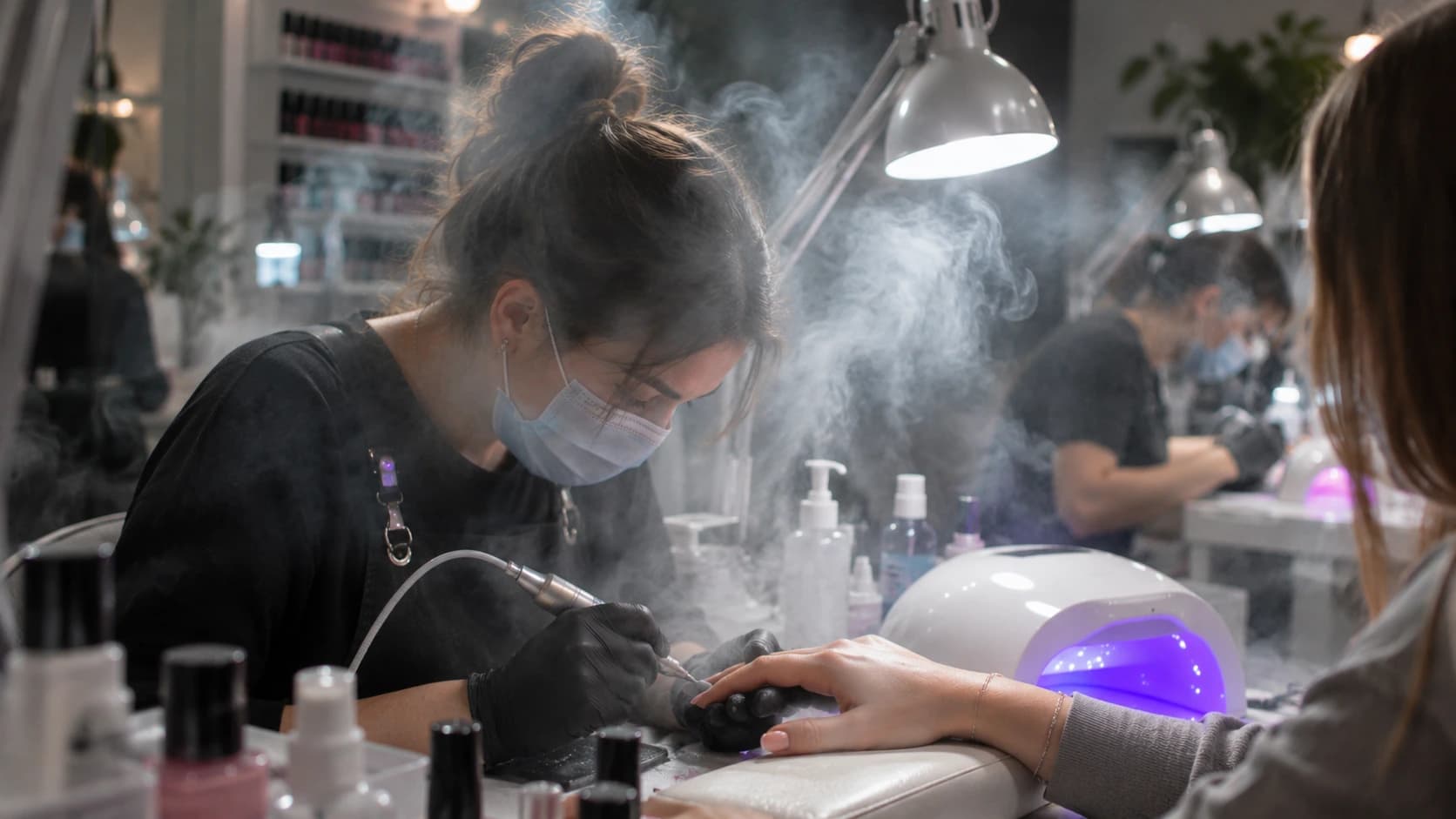
Nail technicians may inhale chemical vapors daily at concentrations comparable to those found at industrial facilities, while ordinary medical and cloth masks do not protect against such substances. This is the conclusion reached by researchers at the City University of New York who studied the air in five beauty salons; the results were published in the journal Risk Analysis, and Life.ru reported on the study.
What was found in the air, and in what amounts
The highest readings were recorded during short-term spikes of volatile organic compounds: in one salon their concentration reached 113 parts per million, the median of the peaks was 31.4, and the typical level was 15.1 parts per million. The air was dominated by solvents used in applying and removing coatings — acetone, ethyl acetate, butyl acetate and methyl acetate; small amounts of benzene were also detected, which with prolonged exposure can increase the likelihood of developing cancer.
How the study was conducted and what it did not show
To assess working conditions, the scientists installed devices that measured pollutant concentrations every minute throughout the work week; the observations ran from April 2023 to March 2024. This approach made it possible to detect sharp spikes in chemical levels that are nearly impossible to notice when analyzing only average shift figures. The study's lead author, Anthony Ierardi, noted, that such values occur at chemical plants, where handling hazardous substances is accompanied by strict requirements for ventilation, protective equipment and air monitoring, whereas employees of small salons often lack comparable protective measures.
Risk estimates and the authors' practical recommendations
The authors calculated the possible consequences of years of inhaling chemical mixtures: under some scenarios, the cancer risk estimates exceeded the benchmarks of the US Environmental Protection Agency. At the same time, the study did not assess actual cancer incidence among workers — confirming the long-term effects, the authors note, will require additional observations. The main focus was on salon employees who are exposed to the vapors for several hours every day. To reduce exposure, the City University of New York School of Public Health recommends installing effective ventilation, keeping solvent containers tightly closed, and placing chemical-soaked materials in closed containers.