The key facts
- Healthcare spending has grown 7-fold — to 49 trillion soums this year
- By the end of the year, the population is planned to be covered with guaranteed medical care through insurance mechanisms in all regions
- From the 2027–2028 academic year, medical specialists will be trained entirely through residency
Congratulation on the occasion of the professional holiday
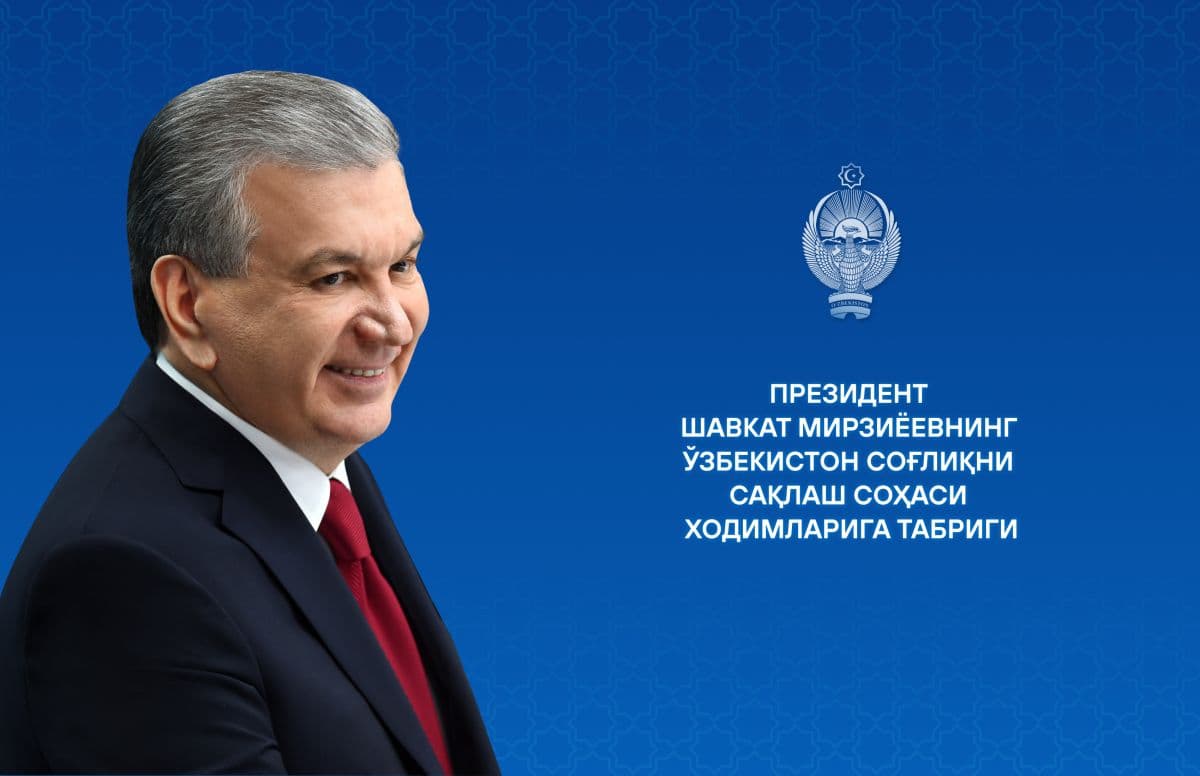
On 7 November, the Day of Medical and Pharmaceutical Workers, President Shavkat Mirziyoyev sent a congratulation to workers in the sector. The text of the address was published on the official website of the head of state. It lists the results of healthcare reforms and outlines priority tasks for the future.
Funding, digitalization and insurance
According to the president, healthcare spending has been increased 7-fold in recent years and has reached 49 trillion soums this year. Through the DMED electronic system, medical records have been created for more than 38 million residents; the 'Electronic Polyclinic', 'Electronic Hospital' and 'Electronic Prescription' systems are being introduced, and in the future artificial intelligence is planned to be used as an assistant to doctors and nurses. Under state medical insurance, the principle of 'Funds follow the patient' has been introduced, and the list of free medicines under the reimbursement program has been expanded. 'By the end of the year, we plan to fully establish insurance mechanisms in all regions and cover the population with guaranteed medical care,' the congratulation reads. The main goal is stated as ensuring timely, quality medical care for every person, regardless of place of residence and social status — this wording is given in the publication Kun.uz.
Personnel and education
Since 2017, the admission quota for medical universities has grown 4.5-fold. Zamon.uz notes that students from 41 countries study at the universities, and the number of foreign students has exceeded 15,000; Kun.uz adds details: previously students came from 4 countries, and 40 educational programs have received international accreditation. Starting next year, state registration of medical and pharmaceutical workers will be introduced according to international standards, and from the 2027–2028 academic year, the training of medical specialists will be carried out entirely through residency programs.
Private medicine and pharmaceuticals
Over ten years, the number of private clinics has grown from 3,500 to more than 9,000, and the number of types of specialized services they are permitted to provide has increased from 50 to 213. More than 6,800 types of medicines are produced at local enterprises, and pharmaceutical products are exported to more than 50 countries. The president also noted the increase in average life expectancy from 73.8 to 75.4 years and set the task of raising this figure to 78 years.