The key facts
- Qatar's Foreign Minister proposed an association of small states — 'Thriving States' — for a collective contribution to world peace
- According to him, small states most often become the first victims of other people's conflicts
- Doha continues mediation over the situation between the US and Iran, although, in the minister's assessment, diplomatic activity has declined
Proposal for a new association of small states
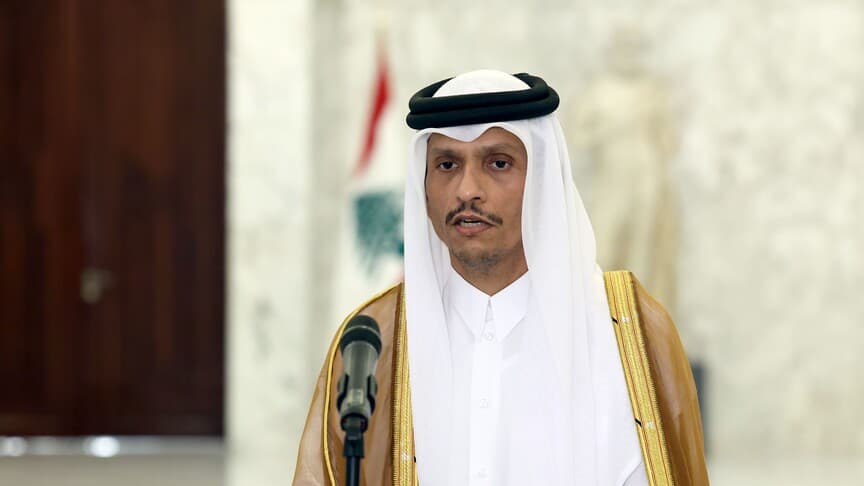
Qatar's Foreign Minister Sheikh Mohammed bin Abdulrahman bin Jassim Al Thani spoke at the Oxford Union on Friday, where he proposed a new designation for a group of countries that have 'turned their size into an advantage.' According to him, these are 'agile, stable, prosperous and trusted states,' which he called 'Thriving States.' The Anadolu agency reported this.
'The supply chain of peace'
The minister emphasized that such countries, already significant contributors to global prosperity, can play a comparable role in international peace — not individually, but 'collectively, in a structured and cumulative way.' He warned that small states are increasingly becoming 'the first victims of conflicts they have nothing to do with.' In his formulation, 'thriving states' cannot solve these problems alone and will not replace the great powers, but by pooling expertise, economic capabilities and diplomatic networks, they can help build and sustain a 'supply chain of peace and stability.' 'We cannot outsource our stability, but we must not surrender to inaction either,' he added.
Mediation between the US and Iran
Touching on mediation efforts to resolve the conflict between the United States and Iran, the head of Qatari diplomacy said that Doha had worked with representatives of the American administration who had 'very sincere intentions to find a way to contain the situation and de-escalate it.' According to him, the efforts continue so that the situation does not spiral out of control, and 'thanks also to some wise voices in Tehran' this has been avoided. He noted that the elections that have taken place may influence Iran's future policy, but not the intentions of the parties, and stressed: 'There will be no perfect peace agreement, but one must not wait for the perfect moment and reject a good agreement.' Assessing the pace of diplomacy, the minister acknowledged that it is 'not as active as it was a few days ago,' but assured that Doha's engagement 'has not stopped and will not stop.'