The key facts
- Condensation on the room side is more often related to humidity and cold glass, while moisture between the panes is a sign of a non-hermetic double-glazed unit
- Condensation on the room side is more often related to humidity and cold glass, while moisture between the panes is a sign of a leaky glazing unit
- Airtight new windows can 'cry' if the apartment has no fresh-air supply to replace the gaps of old frames
- Constant dampness and mold on the reveals should not be put off until spring — the source of moisture must be eliminated
- Constant dampness and mold on the reveals should not be put off until spring — the source of moisture must be addressed
Drops on the glass are not yet a verdict against the window
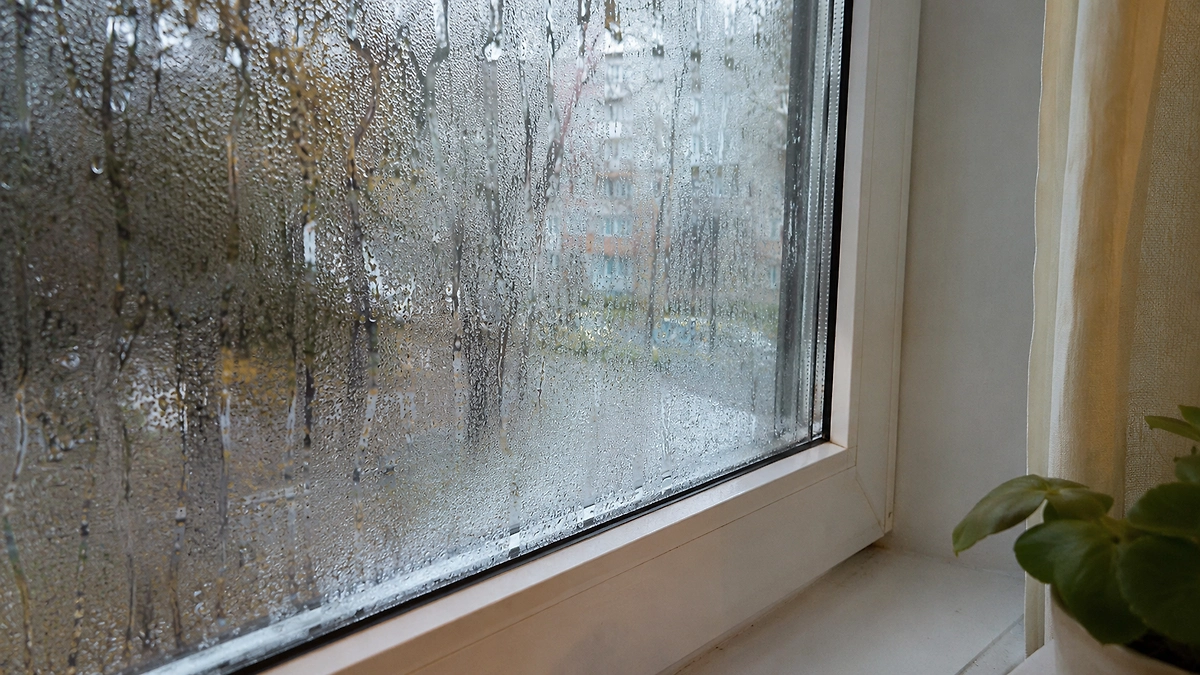
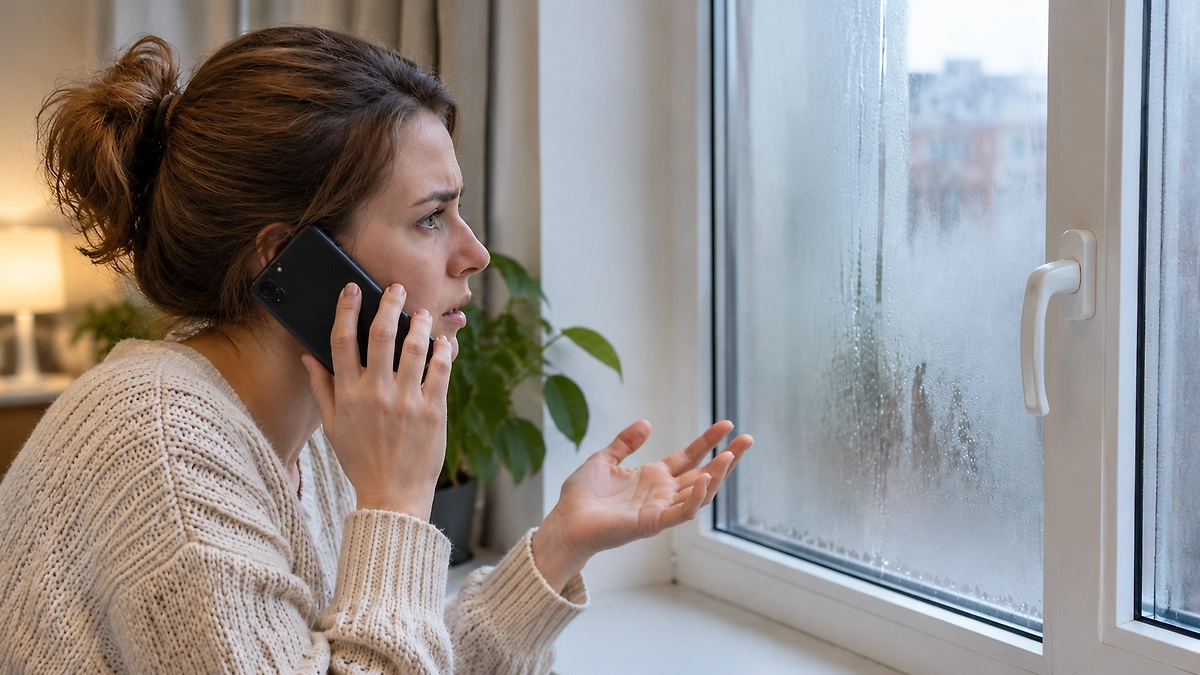
In the evening the glass is wiped dry, and in the morning there is a puddle on the windowsill again — a familiar situation even for owners of new plastic windows. The outlet Life.ru published a step-by-step breakdown of the causes of fogging and emphasized: from drops alone you cannot tell whether the installers are to blame. First you should determine where exactly the moisture appeared. If a napkin removes drops from the inner side of the glass, this is condensation: the glass has cooled to the dew point, and water vapor from the air has settled on the surface. Moisture on the outside is also not a sign of a malfunction — on a well-insulated double-glazed unit, the outer glass may become covered with dew. But water inside the sealed chamber between the panes is already a reason to contact the window company. A separate case: if the windowsill gets wet after rain without drops on the glass, you need to check for a leak and the exterior junctions.
The first suspects: humidity and ventilation
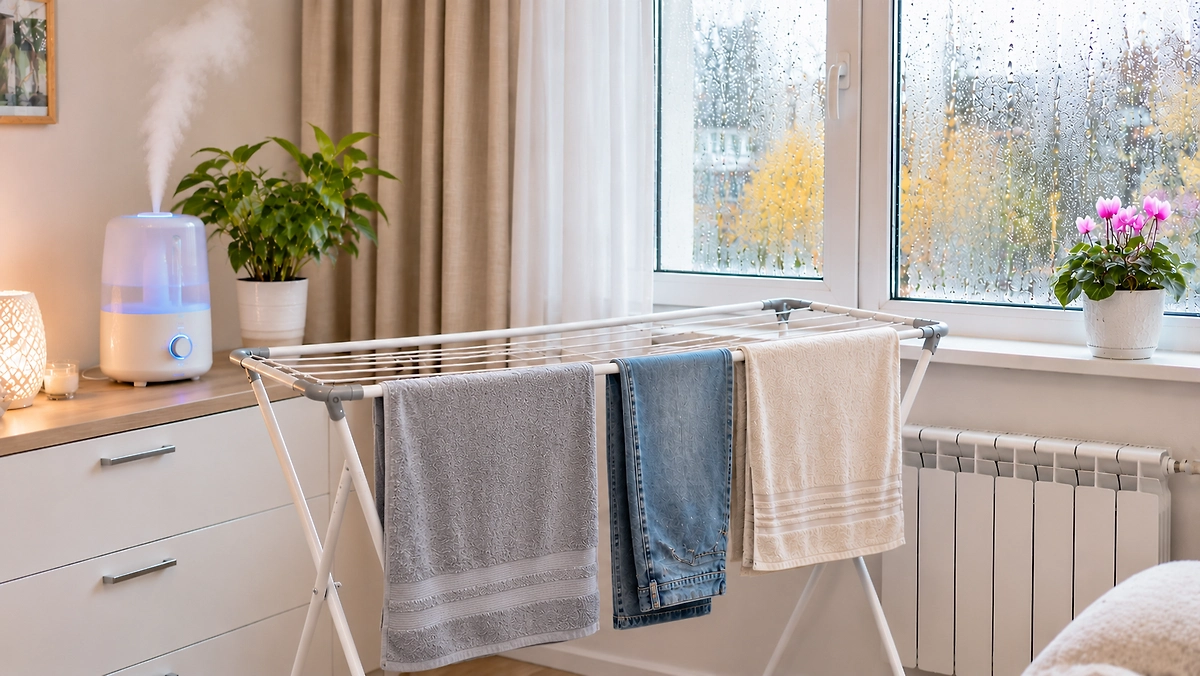
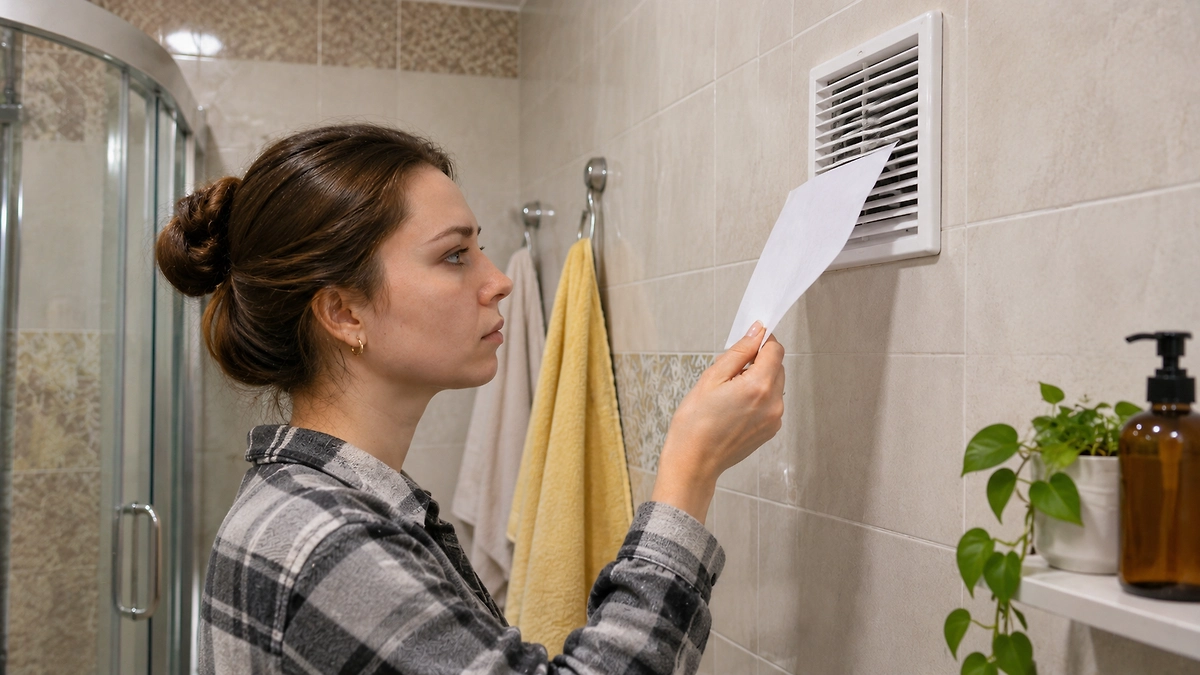
A drying rack by the radiator, a pot on the stove, a hot shower, and a humidifier running until morning each seem like trifles on their own, but each adds moisture to the air; at night in a closed bedroom the breathing of people is added, and after renovation — the drying screed and plaster. Before blaming a defective window, the outlet advises measuring humidity with a hygrometer in an ordinary living area, away from the radiator and humidifier, in the evening and in the morning. A benchmark from recommendations for preventing dampness — relative humidity of 30–50%, which is advised to be kept below 60%, although even falling within the range does not guarantee dry glass in severe cooling. The next step is ventilation: through the gaps of old frames, air entered constantly, while airtight sashes closed this path, and if no fresh-air supply is provided, the exhaust has nothing to remove. A simple draft check is described on the portal Obyasnyayem.rf: a slightly open window, open interior doors, and a thin sheet of paper at the vent grille — if it is drawn toward the grille, air movement exists; there is no need to use a match. If there is no draft even with the window open, it is worth filing a request with the management organization. It is important that the paper only shows the presence of a draft at the moment of the check, while the adequacy of air exchange is assessed with special measurements.
Heat does not reach the glass, and cold comes from the seam
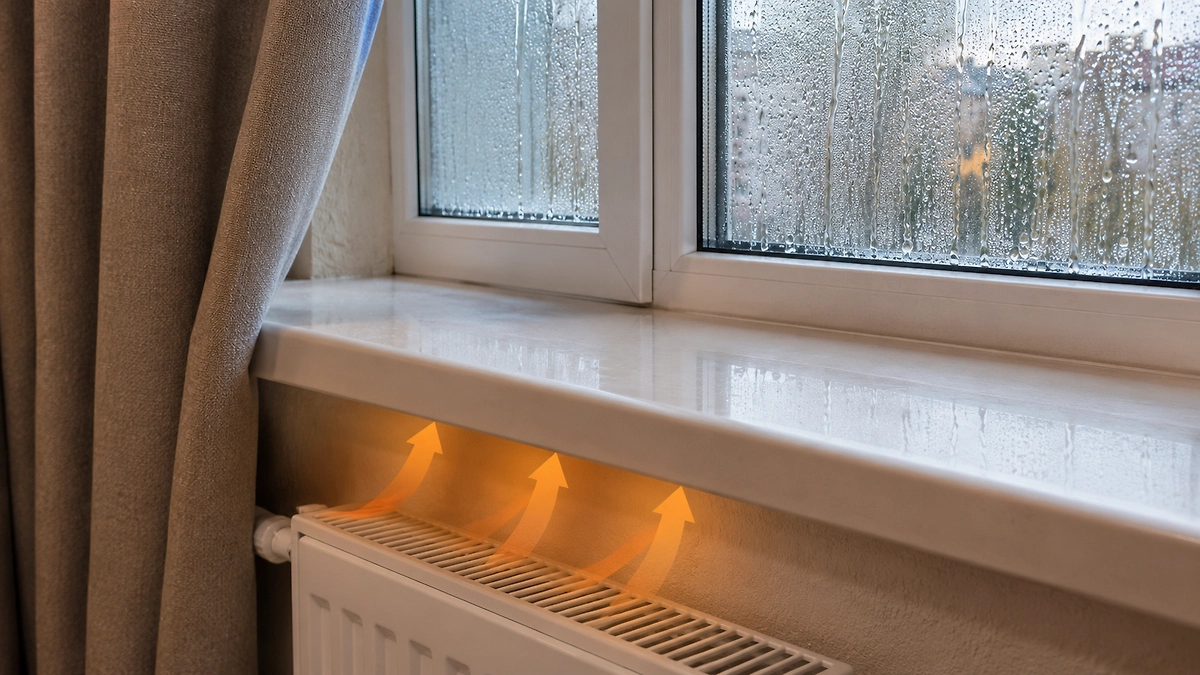
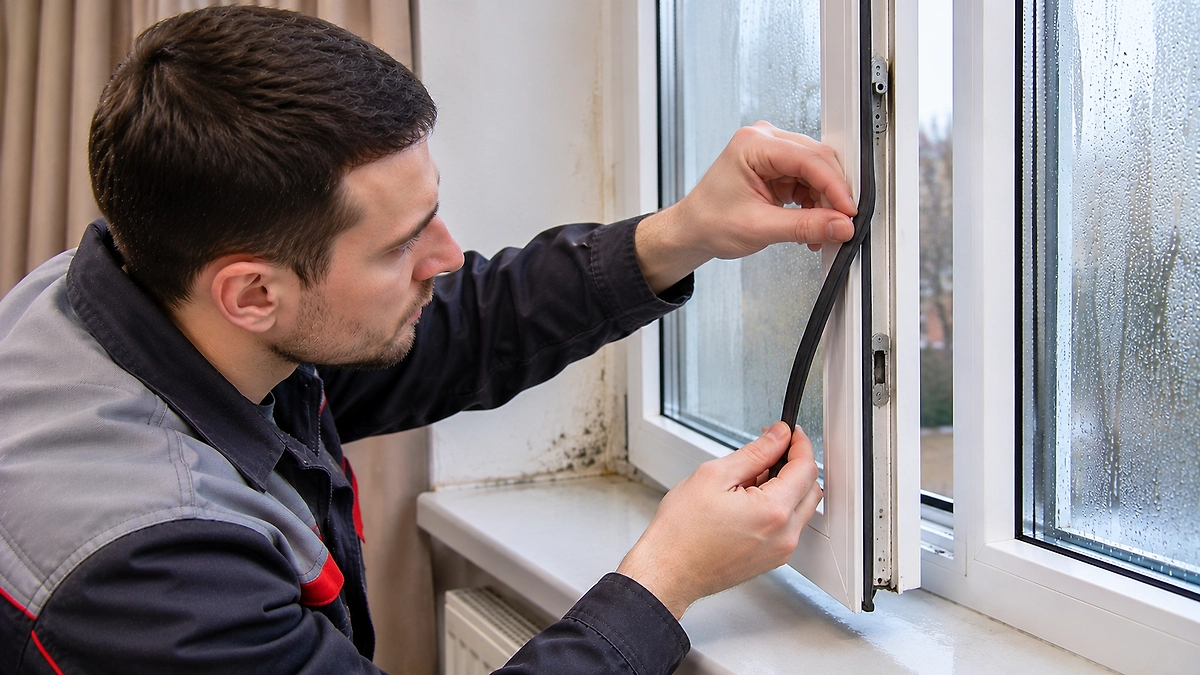
The radiator may heat the room properly while the glass stays cold: a wide windowsill, a solid decorative screen, or thick curtains cut off warm air from the window. The check is simple — open the curtains, remove objects above the radiator, and observe in similar weather; with a wide windowsill, the solution is selected on site, sometimes with ventilation grilles, and the outlet does not advise drilling holes at random. If mainly one window gets wet, look for a local defect: dampness in one corner, frost, and a draft point to the seal, the installation seam, or the insulation of the reveals. Replacing a single double-glazed unit will not fix such a defect, and starting by twisting all the adjustments to 'winter mode' is not worth it — first you need to establish where the cold is coming from. It is useful for the technician to photograph the drops and frost in advance, record the temperature and humidity, and, if the installation was recent, report the problem to the installing company — this is more useful than sealing the joint before an inspection.
When there is no way around replacing the double-glazed unit
A clear reason to check the double-glazed unit itself is fogging between the panes, inside the sealed chamber: airing will not remove this moisture, and with a confirmed defect, it is usually the double-glazed unit that is replaced, and only after an inspection is it determined whether the frame can be kept. Before ordering a replacement, it is worth checking the profile, hardware, seals, and mechanisms — if they are in good order, the entire window unit may not be needed. While the cause is being sought, the water must be removed and wet surfaces dried: constant dampness on the reveals cannot be left until spring, and when mold appears it is important to eliminate the source of moisture, otherwise it will return after cosmetic repairs. Postponing repairs for the sake of saving money is also costly — the moisture keeps ruining the finish, as Life.ru wrote in its article on seven mistakes in everyday frugality that make you pay twice.