The key facts
- State Duma staff may be reduced by 15–20%, Federation Council by 10–15%, without mass layoffs
- Deputies' aides are now screened through the Poseidon system and must pass an attestation
- The changes are linked to Putin's decree No. 922 on cutting at least 10% of positions
Staff cuts without mass layoffs
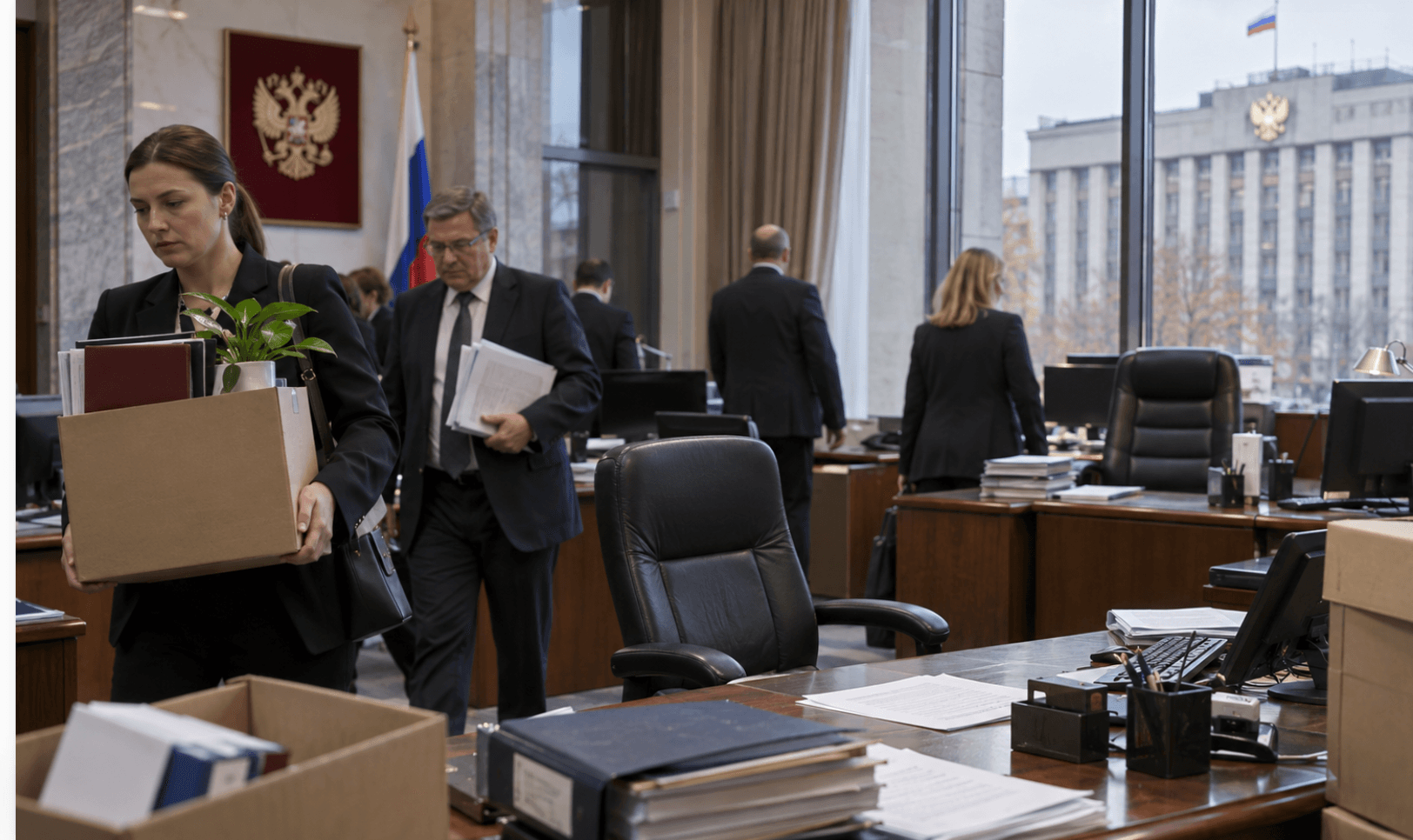
The State Duma's staff apparatus is preparing to shed almost every fifth staff position, while the Federation Council is set to cut 10–15% of posts. RBC reports on the personnel changes in the Russian parliament citing sources in both chambers; Life.ru has also written about this. According to the publication's sources, the lower chamber's staff may be reduced by 15–20%, and the upper chamber's by 10–15%. No mass layoffs are planned: savings are intended to come primarily from vacant positions, since dismissing current employees would require significant spending on severance pay and compensation for unused vacation. Employees of retirement age may also be affected, but no specific decisions about them have been announced yet.
How many positions will disappear is unknown
The exact size of the Duma's staff has not been publicly disclosed for a long time. Back in February 2011, then-speaker Boris Gryzlov cited a figure of 1,482 staff units. Since then, information about changes in staffing has hardly been published, so it is currently impossible to determine how many positions will disappear as a result of the current optimization.
New checks for deputies' aides
At the same time, the State Duma has tightened the hiring rules for deputies' aides. Candidates are now screened through the state information system Poseidon, which analyzes data on income, spending and property to identify potential corruption risks — using information from the tax service, Rosfinmonitoring, Rosreestr, the traffic police and other agencies. The innovation applies to salaried aides, but not to those working on a voluntary basis. In addition, aides are now required to pass an attestation — a computer-based test on knowledge of the Constitution, key laws and the structure of the State Duma. According to RBC's sources, the questions are not difficult, but so many people wanted to take the test that a queue formed, and some deputies cannot register their staff until they pass the exam.
Context: optimization of the entire state apparatus
RBC links the personnel changes to the broader policy of optimizing the state apparatus: Vladimir Putin's decree No. 922 of October 29, 2024 provides for cutting at least 10% of staff positions in territorial divisions of federal bodies and court apparatuses, with the savings directed toward bonuses. A similar optimization this year was also announced by the Moscow authorities, as Life.ru reported in detail: in March, the city government decided to cut the number of officials in executive bodies and employees of subordinate institutions engaged in administrative work by 15%, as well as to trim spending on the investment program by 10%, postponing some landscaping and cultural and public event projects. The renovation program and social commitments, however, were promised to be preserved in full; the reason cited was a slowdown in budget revenue growth. The idea of cutting some civil servants in order to raise salaries for those who remain was promoted back in August 2024 by Finance Minister Anton Siluanov — this approach was later reflected in the presidential decree.
A problem for deputies
The new procedures have posed a separate challenge for parliamentarians. According to political scientist Pavel Sklyanchuk, a deputy usually has only one or two aides working for them, who have to handle a volume of tasks comparable to the workload of entire ministry departments: it is they who handle a significant share of paperwork and organizational matters. It is especially hard for newly elected deputies who have not yet had time to build their own team.